
Uncategorized
How to Optimize Indoor Air for Employees in 2026

Jun
TL;DR:
- Optimizing indoor air quality in workplaces requires integrating source control, ventilation, filtration, and monitoring into a cohesive system. Effective management depends on establishing clear response protocols, proper sensor placement, and daily operational practices to maintain healthy conditions. Collaborative efforts among building staff, contractors, and employees are essential to sustain measurable IAQ improvements.
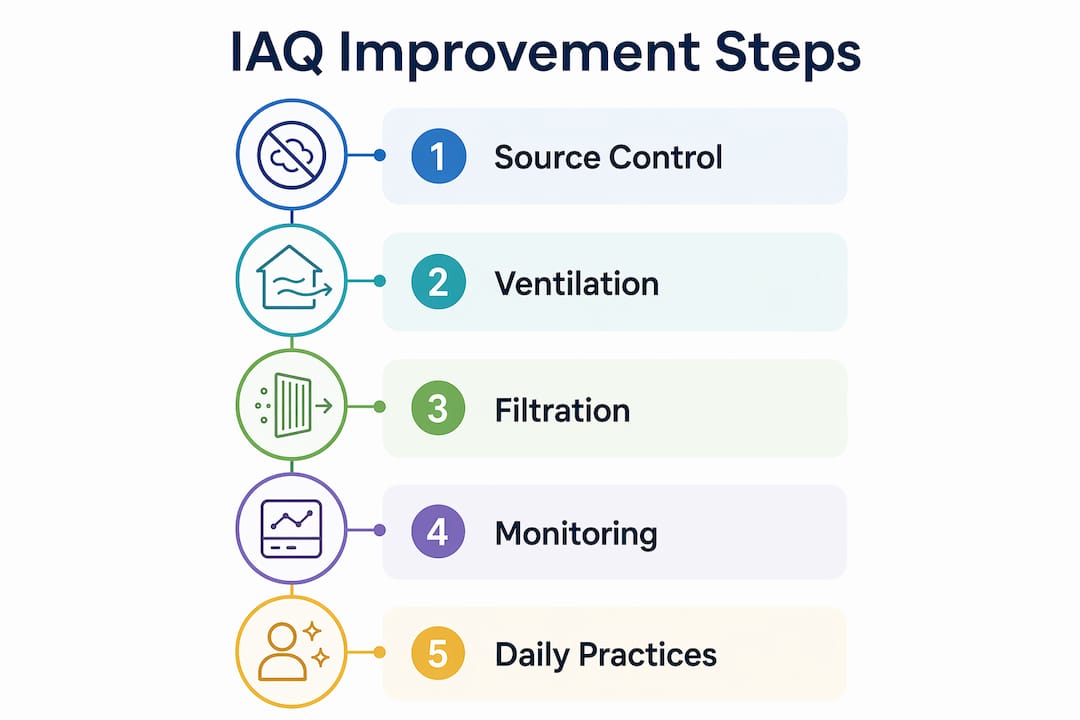
Optimizing indoor air for employees means managing pollutant sources, ventilation, and filtration together as a system, not as separate fixes. The EPA defines this systems approach as the foundation of any effective office indoor air quality (IAQ) program. Poor IAQ costs organizations through absenteeism, reduced concentration, and long-term health claims. The American Lung Association identifies tobacco smoke, chemical irritants, allergens, and occupational dusts as the primary workplace air threats. Employers and facility managers who treat IAQ as an operational priority, not a compliance checkbox, see measurable gains in employee wellness and output.
How to optimize indoor air for employees: start with source control
Source control is the first and most cost-effective lever in any workplace IAQ strategy. The EPA’s hierarchy of controls places pollutant prevention above ventilation or filtration adjustments, because removing a source eliminates the problem rather than diluting it.
Common office pollutant sources
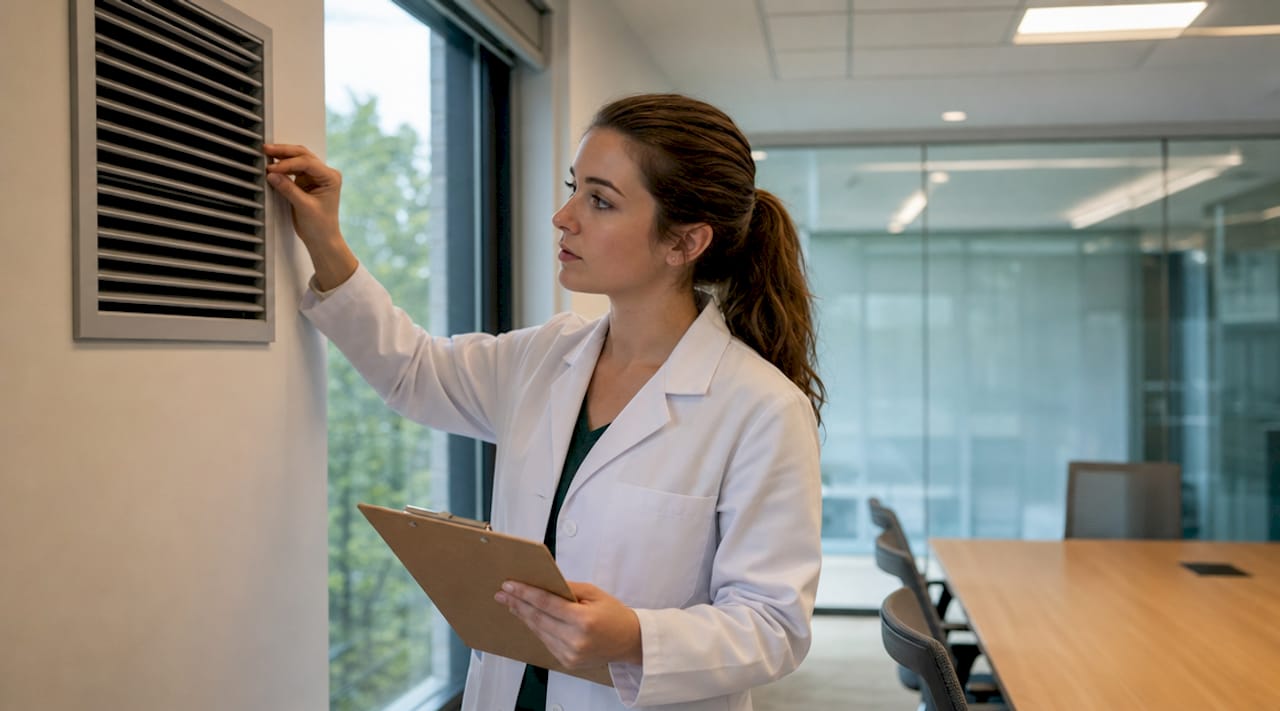
Office environments generate a wider range of contaminants than most facility managers expect. Volatile organic compounds (VOCs) off-gas from new furniture, carpet adhesives, and paint. Laser printers and photocopiers release ultrafine particles and ozone during normal operation. Cleaning products, pesticides, and air fresheners introduce chemical irritants that accumulate in poorly ventilated spaces. Biological contaminants, including mold spores and dust mite allergens, thrive wherever moisture goes uncontrolled.
Renovation work deserves special attention. During remodeling, HVAC systems act as pollutant pathways, spreading construction dust and VOCs throughout the building. The EPA recommends isolating work zones with physical barriers, scheduling trades work during off-hours, and airing out new materials before installation. A single weekend renovation without these precautions can spike VOC readings for days afterward.
The American Lung Association stresses that workplace IAQ issues are often preventable once you understand the specific pollutant profile of your building. That means auditing your cleaning supply list, mapping printer and copier locations relative to workstations, and reviewing pest control contracts for spray-based treatments that can be replaced with baits or gels.
Pro Tip: Request Safety Data Sheets (SDS) from your janitorial contractor for every product used in the building. Flag any product with a VOC content above 150 g/L and replace it with a low-VOC or water-based alternative.
What ventilation strategies actually improve office air quality?
Ventilation dilutes indoor pollutants by replacing stale air with outdoor air, and it remains the single most impactful mechanical control available to facility managers. The challenge is that most commercial HVAC systems are set to minimum code compliance, not to occupant health.
Here are the core ventilation practices that deliver measurable results:
- Increase outdoor air intake during peak occupancy. Most HVAC systems allow damper adjustments through the building automation system (BAS). Raise outdoor air fractions by 10 to 20 percent during your busiest hours and monitor CO2 as a proxy for ventilation adequacy.
- Use exhaust fans in high-emission zones. Kitchens, copy rooms, and chemical storage areas need dedicated exhaust, not just recirculated air. Exhaust fans should run continuously during business hours in these spaces.
- Control humidity between 30 and 50 percent. The EPA recommends maintaining relative humidity in this range to prevent mold growth and reduce dust mite populations. Install humidity sensors in zones prone to moisture, such as basement offices and server rooms.
- Pre-condition the building before occupancy. Running the HVAC system 30 to 60 minutes before employees arrive flushes overnight CO2 buildup and stabilizes temperature. This is especially valuable on Mondays after weekend setback.
- Align HVAC schedules with actual occupancy data. Hybrid work schedules mean Monday and Friday occupancy can be 40 percent lower than Tuesday through Thursday. Syncing your BAS with your space booking system prevents over-ventilating empty floors while under-serving packed ones.
Natural ventilation, where operable windows exist, supplements mechanical systems effectively in mild climates. Opening windows on opposite sides of a floor creates cross-ventilation that can clear localized CO2 spikes faster than any damper adjustment.
Pro Tip: Place CO2 sensors at seated breathing height, roughly 3 to 4 feet from the floor, not at ceiling level. Ceiling-mounted sensors underread actual occupant exposure by a significant margin.
What filtration and air cleaning technologies work best in workplaces?
Filtration removes particles that ventilation cannot eliminate, including fine dust, allergens, and biological aerosols. The right filtration strategy depends on your HVAC system’s capacity and the specific contaminants present in your building.
| Technology | Strengths | Limitations |
|---|---|---|
| High-efficiency HVAC filters (MERV 13+) | Captures fine particles, integrates with existing system | Increases static pressure; requires fan capacity check |
| Portable HEPA air cleaners | Flexible placement, no HVAC modification needed | Effectiveness varies by placement and room size |
| UV-C germicidal irradiation | Inactivates airborne pathogens in HVAC ducts | Does not remove particles; requires professional installation |
| Ionization systems | Can reduce particles without filters | Some units emit ozone; verify third-party testing |
| Activated carbon filters | Adsorbs VOCs and odors | Does not capture particles; requires regular replacement |
The EPA advises against ozone-emitting devices in occupied spaces, regardless of marketing claims. Ozone is a lung irritant at concentrations well below those needed to neutralize pollutants. When evaluating ionizers or plasma systems, require independent test data showing ozone output below 0.05 ppm under normal operating conditions.
Portable air cleaners are genuinely useful, but placement determines their effectiveness. A 2026 MDPI study found that purifier reductions in specific pollutants varied significantly by location and source dominance. Placing a unit across the room from the primary emission source, such as a printer cluster, reduces its effectiveness by a measurable margin. Position purifiers between the source and the breathing zone, not in corners or against walls where air mixing is poor.
Pro Tip: When upgrading HVAC filters to MERV 13, have your mechanical contractor verify that the air handling unit’s fan motor can handle the increased resistance. Undersized motors running against high-resistance filters can fail within months, negating any air quality benefit.
For a data-backed look at how filtration reduces PM2.5 in office environments, the research is clear: integrated filtration systems outperform standalone devices when properly sized and maintained.
How to build an IAQ monitoring and action plan
Monitoring without a response protocol is a data collection exercise, not an IAQ program. Skedda’s research makes this point directly: simple alerts do not improve air quality without prescribed, consistent operational responses integrated into facilities management.
A functional monitoring and action plan follows these steps:
- Establish a baseline. Run monitors for two to four weeks before making any changes. Record CO2, particulate matter (PM2.5), temperature, and relative humidity by zone and by time of day. A 2026 university study documented CO2 levels below 800 ppm under normal conditions, with spikes during high-occupancy periods and VOC increases following renovation work. Your baseline will reveal the same patterns specific to your building.
- Set threshold-to-action rules. Define what happens at specific readings, not just what gets flagged. For example: CO2 above 1,000 ppm triggers a 15 percent increase in outdoor air damper position; CO2 above 1,200 ppm triggers an alert to facilities staff and a room capacity check.
- Zone your monitoring by occupancy type. Conference rooms, open-plan floors, and private offices have different occupancy densities and emission profiles. A single building-wide sensor provides averages that mask problem zones.
- Review data weekly, not monthly. Weekly reviews catch seasonal HVAC issues, occupancy pattern shifts, and equipment malfunctions before they become chronic IAQ problems.
- Build an IAQ playbook. Convert metric readings into timed HVAC actions so responses are automated and reliable, not dependent on a staff member noticing an alert during a busy week.
Pro Tip: Integrate your IAQ monitoring platform with your space booking system. When a conference room is booked for 20 people, the system can automatically pre-cool and increase ventilation 30 minutes before the meeting starts.
For a deeper look at office IAQ monitoring strategies and how they translate to healthier workplaces, the connection between data and action is the critical gap most organizations miss.
What daily practices support a healthy workplace environment?
Operational habits determine whether your ventilation and filtration investments actually deliver clean air to employees. Good housekeeping and policy decisions can eliminate pollutant sources that no filter can fully address.
The following practices form the foundation of day-to-day IAQ management:
- Clean spills and moisture immediately. Mold colonizes damp materials within 24 to 48 hours. A wet ceiling tile or a spilled drink under a desk can become a biological contamination source within days.
- Vacuum with HEPA-equipped equipment. Standard vacuums recirculate fine particles back into the air. HEPA-filtered vacuums capture particles down to 0.3 microns, removing allergens and dust rather than redistributing them.
- Replace spray-based pest control with baits and gels. Aerosol pesticides introduce chemical irritants that linger in carpets and upholstery for weeks. Integrated pest management (IPM) protocols eliminate the same pests without the air quality trade-off.
- Enforce smoke-free policies at building perimeters. Smoking within 25 feet of entrances and air intakes draws tobacco smoke directly into the HVAC system. A 50-foot perimeter policy, enforced consistently, keeps tobacco combustion products out of the building.
- Keep HVAC sensors and vents unobstructed. Furniture rearrangements frequently block supply diffusers or return air grilles, creating dead zones where pollutants accumulate. Conduct a quarterly walkthrough to verify airflow paths remain clear.
Employee engagement amplifies every operational practice. Designate an IAQ representative on each floor who can report odors, moisture issues, or ventilation complaints through a structured channel. Employees notice problems before sensors do, and their feedback closes the gap between data and reality.
Pro Tip: Post a simple IAQ feedback QR code in common areas linked to a shared facilities log. Employees who can report issues in 10 seconds are far more likely to do so than those who need to email a facilities ticket.
The EPA and American Lung Association both confirm that good housekeeping practices combined with smoke-free policies produce significant, measurable IAQ improvements without capital expenditure.
Key takeaways
Effective workplace IAQ requires source control, ventilation, filtration, monitoring, and daily operational practices working together as a single integrated system.
| Point | Details |
|---|---|
| Source control comes first | Identify and eliminate pollutant sources before relying on ventilation or filtration to compensate. |
| Ventilation must match occupancy | Align HVAC schedules and outdoor air fractions with real-time occupancy data, not fixed building schedules. |
| Filtration placement matters | Position portable air cleaners between emission sources and breathing zones, not in corners or against walls. |
| Monitoring needs action rules | Set CO2 and PM thresholds that trigger automatic HVAC responses, not just staff alerts. |
| Daily habits protect investments | HEPA vacuuming, smoke-free perimeters, and unobstructed vents sustain IAQ gains between major interventions. |
What I’ve learned about IAQ that most guides won’t tell you
Most IAQ guides treat the problem as a technical one. Buy better filters, upgrade the HVAC, install sensors. The technical side matters, but the real failure point in most workplaces is the gap between a sensor reading and a human decision.
I’ve seen buildings with $80,000 monitoring systems where CO2 regularly hit 1,400 ppm in conference rooms because nobody had written down what to do when the number turned red. The data was there. The response protocol was not. That is a management failure, not a technology failure.
The other thing most guides understate is the value of talking to your employees before you spend anything. In my experience, a 15-minute conversation with the people who sit in a specific zone will surface the printer that runs all day in an unventilated corner, the cleaning crew that sprays aerosol disinfectant at 6 a.m. before the HVAC starts, and the supply closet that floods every spring. None of those problems show up on a baseline sensor reading. All of them are fixable for close to zero dollars.
The holistic approach works because IAQ is a system. Fixing one variable while ignoring the others produces marginal results. Coordinate with your building management company, your cleaning contractor, and your HVAC service provider as a team, not as separate vendors. When they understand each other’s schedules and products, the interactions that create IAQ problems become visible and preventable.
— Soldierboy
Upgrade your workplace air with Coway air purification
If your monitoring data shows persistent PM2.5 or VOC readings that ventilation alone cannot resolve, a purpose-built air purifier is the most direct solution available to facility managers.
Cowayswaterpurifier.com offers a range of Coway air purification units designed around multi-stage filtration, including HEPA and activated carbon layers that address both particles and chemical irritants simultaneously. The 2026 air purifier selection guide on Cowayswaterpurifier.com walks through capacity ratings, filter replacement cycles, and placement strategies specific to office environments. For employers who need to act on IAQ data quickly, browsing the Coway Air Care product range is a practical starting point for matching unit capacity to room size and occupancy load.
FAQ
What is the most effective way to improve office air quality?
The most effective approach combines source control, increased outdoor air ventilation, and high-efficiency filtration as an integrated system. The EPA confirms that addressing pollutant sources first produces better results than relying on ventilation or filtration alone.
What CO2 level is acceptable in an office environment?
CO2 below 1,000 ppm is the standard target for occupied office spaces. A 2026 university study recorded healthy baseline readings below 800 ppm, with spikes above that threshold correlating directly with high-occupancy periods and reduced ventilation.
Do portable air purifiers actually work in office settings?
Portable HEPA air purifiers reduce airborne particles and allergens effectively when placed correctly. Research shows their effectiveness depends on positioning relative to the emission source, not simply on filter rating or unit size.
How often should HVAC filters be replaced in office buildings?
MERV 13 filters in commercial HVAC systems typically require replacement every 60 to 90 days under normal occupancy. Buildings with high foot traffic, recent renovations, or elevated particulate readings should check filters monthly and replace on condition rather than on a fixed schedule.
What humidity level should offices maintain for employee health?
The EPA recommends maintaining indoor relative humidity between 30 and 50 percent. Levels above 50 percent promote mold growth and dust mite populations, while levels below 30 percent cause respiratory irritation and increase static electricity in electronic equipment.
Recommended
- Office Air Quality Tips for a Healthier Workplace – Coway Water Purifier
- Indoor Air Optimization Process for Healthier Homes – Coway Water Purifier
- Office Wellness via Air Quality: Healthier Workplaces – Coway Water Purifier
- Home air quality checklist for a healthier 2026 – Coway Water Purifier
