
Uncategorized
What Is a Remineralization Filter and Why It Matters

May
TL;DR:
- A remineralization filter restores essential minerals and pH balance to reverse osmosis purified water, improving taste and health benefits. Installing it after the storage tank ensures better mineral intake, with cartridge replacement typically needed every 6 to 12 months. Choosing a premium mineral blend enhances flavor, antioxidant properties, and overall drinking experience.
If you have a reverse osmosis system at home, you already know it strips contaminants from your water with impressive thoroughness. What you may not know is that the same process removes nearly all the calcium, magnesium, and trace minerals your water once contained. Understanding what is a remineralization filter solves that problem directly. A remineralization filter is a post-treatment stage that adds those minerals back into purified water, restoring taste, raising pH, and making your water genuinely pleasant to drink rather than flat and slightly acidic.
Table of Contents
- Key Takeaways
- What is a remineralization filter and how it works
- Types of remineralization filters compared
- Health and taste benefits of remineralization filters
- Choosing, installing, and maintaining your filter
- My take on remineralization after years of working with water systems
- Upgrade your water with Coway’s purification systems
- FAQ
Key Takeaways
| Point | Details |
|---|---|
| RO water needs minerals restored | Reverse osmosis removes beneficial minerals, making water taste flat and potentially acidic without a remineralization stage. |
| Filter position matters | Installing a remineralization filter after the storage tank prevents mineral-rich water from stagnating before it reaches your tap. |
| Two main filter types exist | Calcite-only and premium mineral blend filters differ significantly in taste, pH impact, and antioxidant properties. |
| Taste is the primary benefit | Remineralization mainly improves water’s flavor profile and encourages you to drink more, not serve as a mineral supplement. |
| Cartridge replacement is affordable | Most remineralization cartridges last 6 to 12 months and cost between $25 and $60 to replace. |
What is a remineralization filter and how it works
A remineralization filter sits at the final stage of your water purification system, typically installed after the reverse osmosis membrane and storage tank. Its job is straightforward: water flows through a cartridge packed with mineral media, those minerals dissolve slowly into the water, and what comes out at your tap tastes clean, balanced, and noticeably better.
The minerals most commonly added are calcium, magnesium, and a mix of trace elements. A well-calibrated system targets combined hardness of 40 to 120 mg/L as calcium carbonate, which translates to roughly 16 to 48 ppm calcium and 4 to 15 ppm magnesium. That range mimics what quality spring water naturally contains.
The mechanism relies on controlled dissolution. When ultra-pure RO water contacts the mineral media inside the cartridge, a gentle chemical reaction occurs. The media releases minerals gradually as water passes through, raising pH from the slightly acidic range typical of RO output (often around 5.5 to 6.5) to a much more neutral or mildly alkaline pH of 7.0 to 8.5.
Flow rate and contact time both affect how much mineral is actually transferred to the water. The hydraulic performance and contact time determine how predictable the pH rise and mineral dosing will be across different demand levels. Slower flow generally means slightly higher mineral uptake.
Here is what the remineralization filter process typically addresses:
- pH correction: Brings water from acidic levels up to neutral or mildly alkaline
- Calcium addition: Restores hardness and improves perceived water body and taste
- Magnesium addition: Contributes to taste smoothness and plays a role in antioxidant potential
- Trace mineral balance: Some filters add potassium and other elements in small, controlled amounts
- Corrosion reduction: Mineral-balanced water is less likely to leach metals from pipes and fixtures
Pro Tip: If you notice your RO water tastes hollow or leaves a faint acidic bite, that is your first sign the remineralization stage is missing or the cartridge needs replacement.
Types of remineralization filters compared
Not all remineralization water filters deliver the same result. The two dominant categories are calcite-only filters and premium mineral blend filters, and the difference between them matters more than most product listings suggest.
Two main remineralization filter types exist on the market: calcite-only and premium blend. Here is how they stack up:
| Feature | Calcite-only | Premium mineral blend |
|---|---|---|
| Primary mineral | Calcium carbonate | Calcium, magnesium, potassium, trace elements |
| pH impact | Moderate increase | Consistent increase with broader buffering |
| Taste profile | Mild improvement | Noticeably fuller, smoother flavor |
| Antioxidant (ORP) | None | Negative ORP possible |
| Best for | pH correction, industrial use | Drinking water for daily home use |
| Cartridge lifespan | 6 to 12 months | 6 to 12 months |
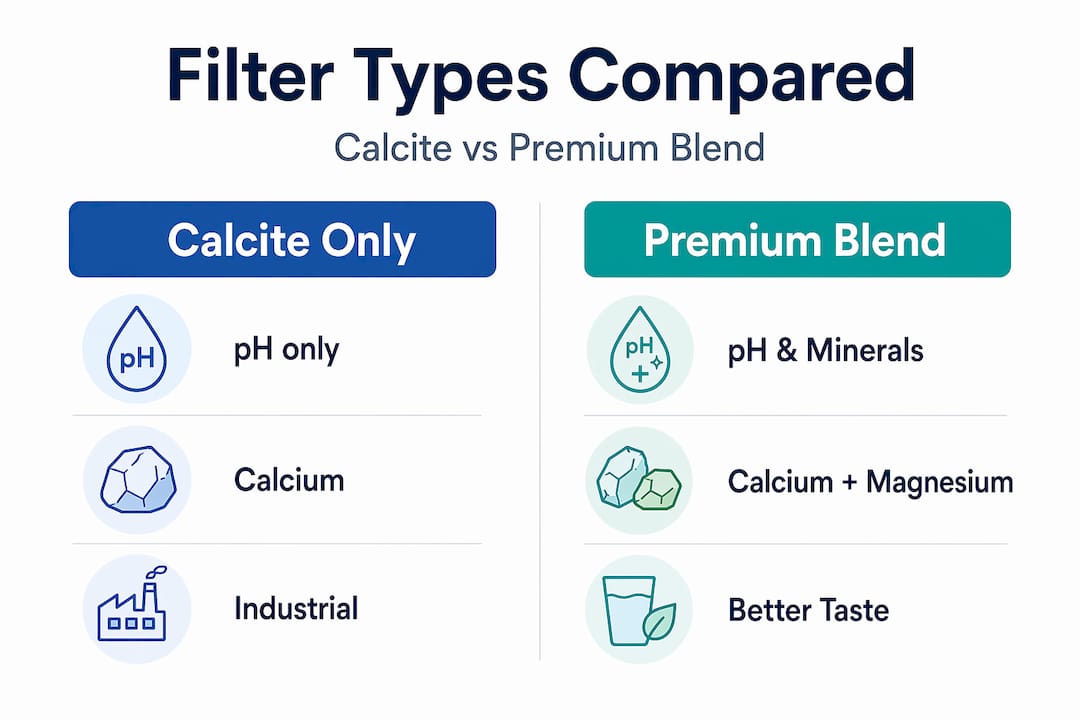
Calcite-only filters are primarily designed for pH neutralization in industrial settings. They do raise pH effectively, but calcite-only filters often lack the balanced minerals that make water taste genuinely good for daily drinking. You get a pH bump without much improvement in mouthfeel or mineral diversity.
Premium mineral blends go further. Filters that incorporate magnesium oxide and coral calcium can produce water with a negative oxidation reduction potential (ORP). Mineral blends with coral calcium and magnesium oxide deliver better antioxidant performance through negative ORP water, something calcite-only filters cannot replicate. That negative ORP is associated with antioxidant behavior at the cellular level, though it is worth being clear that remineralization is not a medical treatment.
Another meaningful difference shows up in specialized uses. For coffee brewing, for example, specialty TDS targets of 90 to 150 ppm with a calcium to magnesium ratio of 3:1 to 5:1 significantly affects extraction quality and flavor clarity. A premium blend filter calibrated for those ratios will outperform a basic calcite cartridge in that context every time.
You can also explore different types of mineralizing purifiers to understand which formats suit different household setups.
Health and taste benefits of remineralization filters
The most immediate benefit you will notice from a remineralization water filter is taste. RO water without remineralization tastes empty. There is a reason bottled spring water feels more satisfying to drink. That satisfaction comes almost entirely from dissolved minerals, not from some mystical source.

The primary benefit of remineralization is improving water’s flavor profile and encouraging hydration by removing the flat, hollow quality of stripped RO water. This is not a minor quality-of-life upgrade. When water tastes better, you drink more of it. For households trying to stay consistently hydrated, that is a meaningful outcome.
Beyond taste, the mineral content itself carries real but modest value. Calcium and magnesium contribute to your daily electrolyte intake, though remineralized water should not be thought of as a primary mineral source. The real win is the combination of palatability and pH balance working together.
“Effective remineralization depends on appropriate mineral ratios and controlled release media for both health and taste optimization.” — Homegetup.com
pH balance is the other major benefit. Slightly acidic RO water can accelerate corrosion in copper pipes and certain fixtures over time. Raising pH through remineralization reduces that risk and produces water that sits comfortably in the neutral to mildly alkaline range, which most people find more pleasant to drink.
Premium blend filters with negative ORP properties also appear to support cellular hydration at a molecular level, though the science on this continues to develop. What is clear is that mineral-balanced water behaves differently in the body than demineralized water, and the remineralization filter process is the most practical way to achieve that balance at home.
Pro Tip: Do not confuse adding baking soda with remineralization. Baking soda raises pH but adds no minerals. It is not a substitute for a proper remineralization filter cartridge.
The role of water filters in home wellness goes well beyond contamination removal. Mineral content and pH both factor directly into how water supports your health and daily hydration habits.
Choosing, installing, and maintaining your filter
Getting the right remineralization filter starts with knowing what you want from your water. If you are primarily correcting pH for drinking, a quality calcite cartridge works well. If you want fuller taste, antioxidant properties, and a better overall drinking experience, invest in a premium mineral blend filter from the start.
Here is a step-by-step approach to selecting and setting up your filter correctly:
- Match the filter to your system. Confirm the filter’s connection size and flow rate rating are compatible with your existing RO setup before purchasing. Most standard home systems use quarter-inch quick-connect fittings.
- Install it after the storage tank, not before. Correct filter placement after the storage tank is critical. If you install the remineralization stage before the tank, mineral-rich water sits stagnant inside, which reduces effectiveness and can encourage bacterial growth over time.
- Flush the cartridge on first use. New mineral media can release a temporary cloudiness or slightly elevated TDS reading. Run two to three liters through before drinking.
- Set a replacement reminder. Cartridge lifespan is typically 6 to 12 months, with replacement costs ranging from $25 to $60 depending on the filter type and brand. Mark your calendar so the cartridge does not quietly degrade past its useful life.
- Monitor pH and TDS periodically. An inexpensive pH meter and TDS meter together cost under $30 and give you direct feedback on whether your filter is still performing. Routine monitoring of pH, TDS, and flow rate is the most reliable way to catch a worn cartridge before water quality drops.
- Check flow rate. A noticeably slower fill rate at the tap often signals the remineralization cartridge or another filter stage is nearing the end of its service life.
The most common mistake people make is skipping the monitoring step entirely and assuming the filter is working because the water still tastes fine. Mineral media can exhaust gradually. By the time taste degrades, the pH correction has already failed for weeks.
For a practical water purification maintenance schedule that covers all filter stages including remineralization, building a consistent maintenance habit makes a real difference in long-term performance.
My take on remineralization after years of working with water systems
I have spent years looking at water purification setups, and one pattern repeats itself constantly. People install a quality reverse osmosis system, feel genuinely proud of how clean their water is, and then wonder why they still prefer reaching for a bottle of store-bought water. The answer is almost always the same: pure RO water with no remineralization stage tastes medicinal and flat. It does its job too well.
What I have learned is that most consumers underestimate how much of water’s appeal is mineral-driven. The smoothness of good spring water, the way high-quality filtered water feels in your mouth, that is not placebo. It is dissolved calcium and magnesium doing exactly what they are supposed to do.
The other misconception I run into regularly is the idea that a premium remineralization filter is unnecessary because cheap calcite cartridges technically work. They do raise pH. But if your goal is water you actually enjoy drinking every day, the difference between a calcite-only filter and a well-formulated mineral blend is noticeable from the first glass. The investment in a quality filter pays for itself in hydration habits alone.
My honest advice: do not treat remineralization as an optional add-on. Treat it as the final and most important step in your purification process. The filtration removes what should not be there. The remineralization filter restores what should.
— Soldierboy
Upgrade your water with Coway’s purification systems
If this article has helped clarify why remineralization matters, Cowayswaterpurifier has the products to put that knowledge into practice. Coway’s water purification systems incorporate advanced multi-stage filtration with mineral enhancement built directly into the design, so you are not cobbling together separate components. From countertop units to under-sink systems, each model is engineered to deliver water that is both clean and genuinely good to drink. Explore the full water purification process explained to see how every stage, including remineralization, works together in Coway’s lineup. You can also browse top under-sink water purifiers to find a model that fits your home and daily water needs.
FAQ
What is a remineralization filter in simple terms?
A remineralization filter is a water filtration stage that adds minerals like calcium and magnesium back into water after reverse osmosis has removed them, improving taste and raising pH to a healthier range.
How does a remineralization filter work?
Water flows through a cartridge packed with mineral media, which dissolves slowly and releases calcium, magnesium, and trace elements into the water, raising pH to between 7.0 and 8.5.
What are the main benefits of remineralization filters?
The primary benefit is better tasting water that encourages you to drink more. Secondary benefits include pH correction, reduced pipe corrosion risk, and modest electrolyte contribution from dissolved minerals.
How often should I replace a remineralization filter cartridge?
Most cartridges last 6 to 12 months and cost between $25 and $60 to replace. Monitor pH and TDS regularly so you catch performance drops before water quality suffers.
Are calcite and premium mineral blend filters the same thing?
No. Calcite-only filters add calcium carbonate and raise pH but lack magnesium and trace minerals. Premium blends add a broader mineral profile and can produce antioxidant-active water with negative ORP, which calcite filters cannot.
Recommended
- Mineral Filters Explained: Benefits, How They Work – Coway Water Purifier
- What is antibacterial filtration? Guide for cleaner water – Coway Water Purifier
- Filter Replacement Cycles: Why Timing Matters – Coway Water Purifier
- Mineralization in Water Filters: Impact on Home Wellness – Coway Water Purifier
