
Uncategorized
Your step-by-step guide to household water safety
May
TL;DR:
- Your household water may appear clean but still contain invisible harmful contaminants like lead and bacteria.
- Routine testing, proper filtration, and maintenance are essential for safeguarding your family’s water quality, especially in private wells.
Your tap water might look crystal clear, but what you can’t see can still harm your family. Bacteria, lead, nitrates, and PFAS (per- and polyfluoroalkyl substances) are colorless, odorless, and tasteless, yet they show up in millions of American homes every year. Taking control of your household water safety doesn’t require a chemistry degree or expensive plumbing work. With a practical routine and the right tools, you can dramatically reduce the risks and give your family the clean, safe water they deserve. CDC guidelines recommend testing your water regularly, especially if you rely on a private well or notice any changes in taste, smell, or appearance.
Table of Contents
- What you need before you start: Tools and requirements
- Step-by-step household water safety routine
- Addressing emergencies and special contaminants
- How to verify your water safety results
- The real challenge: Why water safety is a journey, not a checkbox
- Take the next step toward safer water at home
- Frequently asked questions
Key Takeaways
| Point | Details |
|---|---|
| Annual testing | Test your home’s water yearly for lead, bacteria, and other key contaminants to stay proactive. |
| Certified filters matter | Not all filters are equal—look for the right NSF/ANSI certification for your specific needs. |
| Boiling solves microbes only | Boiling kills germs but does not remove chemicals or heavy metals from your water. |
| Routine flushes | Flush faucets after periods of no use to clear out germs and contaminants from your pipes. |
| Water safety is ongoing | Pipe conditions, filter life, and environmental events mean vigilance, not a one-time fix, is essential. |
What you need before you start: Tools and requirements
Before taking action, make sure you’re prepared with the right tools and know-how.
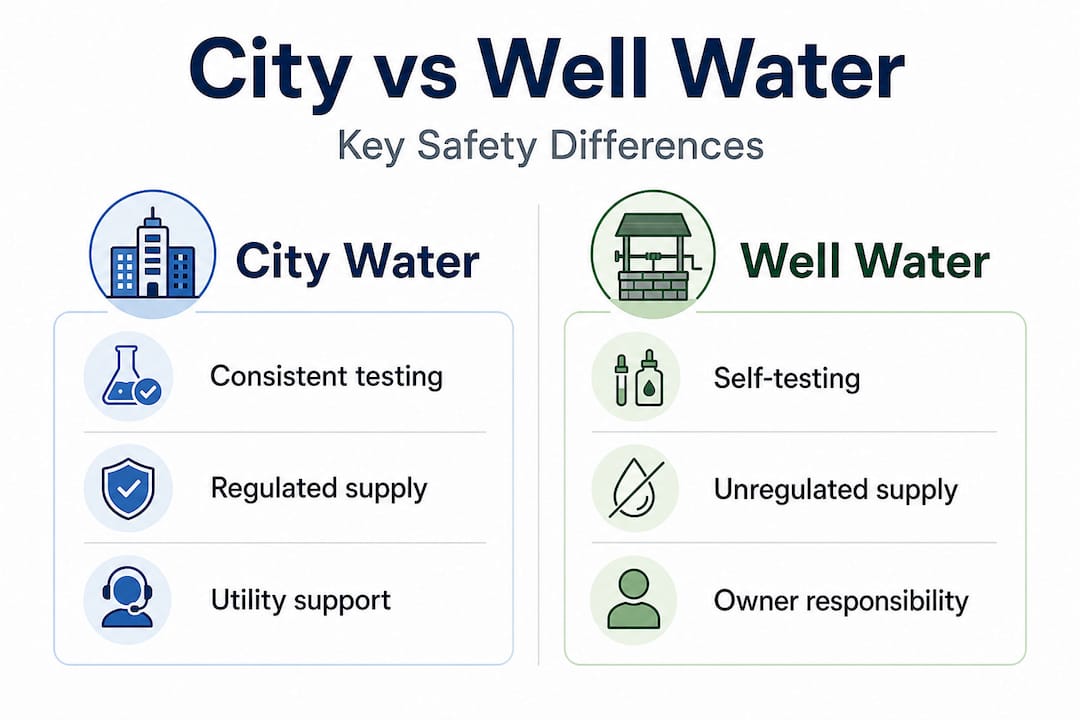
The first thing most homeowners overlook is the difference between city water and private well water. If you get water from a municipal system, your utility handles testing and treatment. But here’s the catch: the water can be perfectly safe when it leaves the treatment plant and still pick up lead or bacteria in your home’s pipes before it reaches your faucet. If you have a private well, none of that regulation applies to you. You are entirely responsible for testing, treating, and maintaining your water supply.
Understanding waterborne contaminants in your water is the foundation of any safety plan. Lead can leach from pipes or solder in homes built before 1986. Nitrates come from agricultural runoff and are especially dangerous for infants. Bacteria and viruses enter well systems after flooding or ground disturbance. PFAS contaminate both well and city water in many regions near industrial sites.
Essential supplies and knowledge checklist
Before you begin a water safety routine, gather these items:
- Water testing kit or certified lab service (for basic screening or detailed analysis)
- NSF/ANSI certified water filter rated for your specific contaminants
- Filter replacement schedule from your manufacturer (typically every 3 to 6 months)
- Copy of your utility’s annual Consumer Confidence Report (city water users only, required by law to be published yearly)
- Clean, sterile sample bottles for lab testing (often provided by the lab)
- Bleach solution for emergency disinfection (unscented, standard household bleach)
Filter certifications that actually matter
Not all filters do the same job. Look for these certifications when shopping:
| Certification | What it targets | Common filter types |
|---|---|---|
| NSF/ANSI 42 | Chlorine, taste, odor | Carbon block, pitcher filters |
| NSF/ANSI 53 | Lead, cysts, health contaminants | Under-sink, countertop |
| NSF/ANSI 58 | PFAS, heavy metals, dissolved solids | Reverse osmosis systems |
| NSF/ANSI 55 | Bacteria, viruses (UV) | UV purifiers |
Choosing the right certified filter is one of the most important decisions you’ll make. Read more about why certified water filters matter for protecting your family’s health before making a purchase.
Pro Tip: Call your local health department or county extension office. They often offer free or subsidized water testing kits, especially for well owners.
Step-by-step household water safety routine
Once equipped, follow this routine to keep your household water safe year-round.
Water safety isn’t a single action. It’s a layered habit built over daily, monthly, and annual timescales. Skipping any layer leaves gaps that contaminants can slip through.
Daily and weekly actions
- Flush stagnant water from pipes every morning. After water sits in your pipes overnight or longer, contaminants like lead and bacteria can accumulate. Run cold water for 2 minutes before using it for drinking or cooking. If you have a water heater, also run the hot tap until the water temperature rises, which pushes out any stagnant water in the water heater lines.
- Inspect your filter’s indicator light or timer. Many modern filters have electronic indicators. Don’t wait until water tastes off to replace the cartridge. A saturated filter can actually release trapped contaminants back into your water.
- Wipe down faucet aerators monthly. These small mesh screens catch sediment but also harbor bacteria. Unscrew them, rinse with clean water, and soak in a mild vinegar solution.
Monthly and seasonal actions
- Check filter housings for leaks or cracks. Even a small leak in an under-sink system can introduce outside contaminants. Tighten connections and replace O-rings as needed.
- Replace filter cartridges on schedule. The role of pre-filters is to catch sediment and chlorine before they overwhelm your main filter. Neglecting the pre-filter shortens the life of every filter downstream.
- Flush your water heater seasonally. Sediment from minerals builds up at the bottom of traditional tank water heaters. This sediment can harbor bacteria and reduce efficiency.
Annual actions
- Test your water at a certified lab. Annual testing for private wells is essential because USGS data shows 13 to 25 percent of private wells exceed safe standards for at least one contaminant. Municipal water users should also test for lead, especially in older homes.
“Testing is your early warning system. A water sample costs far less than treating a waterborne illness or replacing lead-damaged plumbing.”
Pro Tip: Use the step-by-step filtration checklist to make sure no part of your routine gets skipped when life gets busy.
Choosing the right filter for your situation
| Contaminant | Recommended filter type | Certification needed |
|---|---|---|
| Lead | Reverse osmosis or under-sink carbon | NSF/ANSI 53 or 58 |
| Bacteria/viruses | UV purifier | NSF/ANSI 55 |
| PFAS | Reverse osmosis | NSF/ANSI 58 |
| Chlorine/taste | Carbon block or pitcher | NSF/ANSI 42 |
| Nitrates | Reverse osmosis | NSF/ANSI 58 |
Filters certified under NSF/ANSI standards for lead (NSF/ANSI 53) or health contaminants are specifically tested and verified to reduce those compounds below safe action levels. Always check that the filter’s claims match your specific contaminant concerns, not just the certification category.
Understanding why water filters are important at every stage of this routine helps you make smarter decisions rather than guessing.
Addressing emergencies and special contaminants
Besides routine care, unexpected situations call for special steps to keep your water safe.
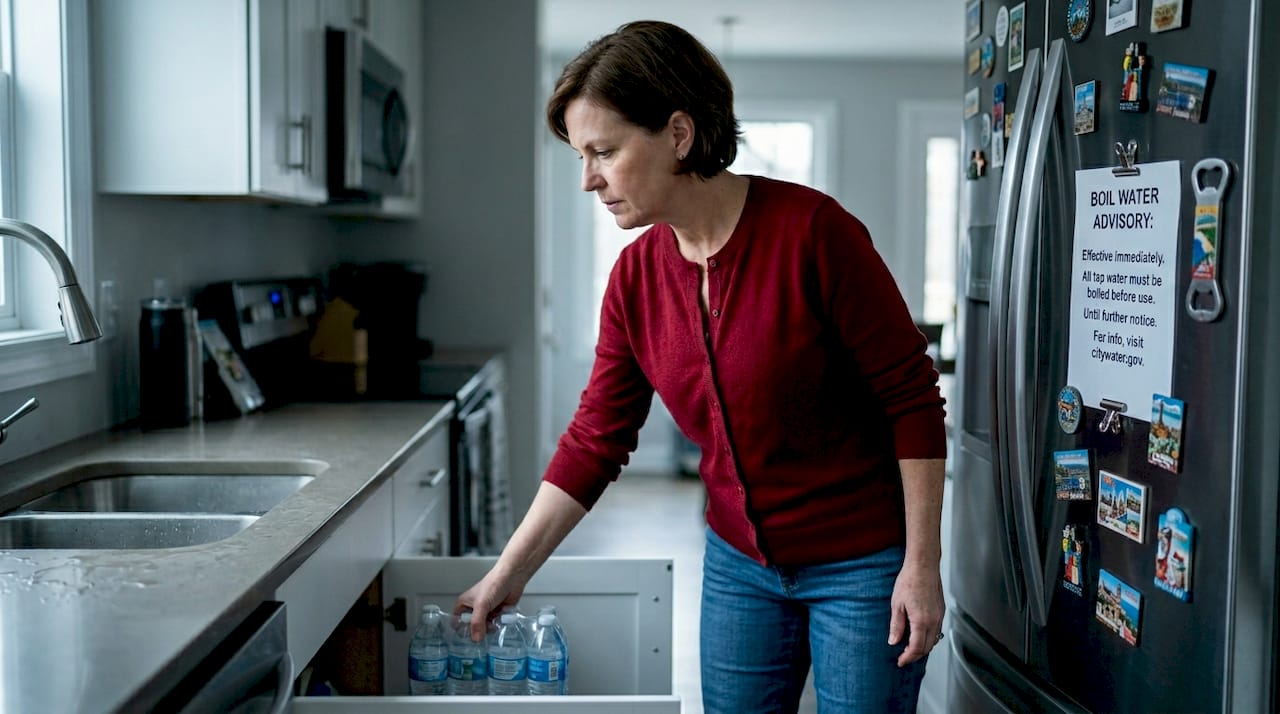
Emergencies hit without warning. A boil water notice, a neighborhood chemical spill, a flood that reaches your well casing. Each of these requires a different response, and mixing up the remedies can leave your family at risk.
Boil water advisories
When your local authority issues a boil water notice, it means microbial contamination is suspected or confirmed. Boil water for 1 minute at a rolling boil to kill bacteria, viruses, and parasites. At elevations above 6,500 feet, boil for 3 minutes because water boils at a lower temperature.
Important: boiling does not remove chemicals, heavy metals, or PFAS. It actually concentrates them because some water evaporates. If a chemical contamination event is the cause of an advisory, boiling is not your solution.
Emergency disinfection when boiling isn’t possible
If you have no way to boil water during an emergency, use unscented liquid household bleach. Add 8 drops (about 1/8 teaspoon) per gallon of clear water and wait 30 minutes before drinking. For cloudy water, double the dose. This method targets microbial threats only.
Statistic callout: The EPA’s maximum contaminant level for PFOA and PFOS (two common PFAS compounds) is 4 parts per trillion, making these among the most tightly regulated contaminants in drinking water. Only reverse osmosis or high-quality activated carbon filters certified for PFAS can reliably reduce them below this level.
Special concerns for well owners after flooding
Flooding can overwhelm a well casing and introduce dangerous contaminants directly into your water supply.
- Do not use the well immediately after flooding recedes.
- Pump the well until the water runs clear.
- Disinfect with a chlorine solution (1 cup of bleach per 100 gallons of well volume).
- Test for bacteria and nitrates before resuming normal use.
- Retest 2 weeks later to confirm the contamination is gone.
Pro Tip: Explore advanced water filtration options for homes in flood-prone areas or near agricultural land, where contamination events are more frequent and more severe.
PFAS and lead: The silent long-term threats
Both PFAS and lead are especially dangerous because their health effects are cumulative and don’t show up immediately. Lead exposure in children causes irreversible neurological damage. PFAS has been linked to thyroid disorders, immune suppression, and certain cancers. Neither contaminant triggers obvious symptoms in the short term, which is exactly why routine testing and proper filtration matter so much.
How to verify your water safety results
Taking safety steps is good, but only regular checks ensure long-term clean water.
Many families install a filter, feel reassured, and never verify whether it’s actually working. That’s a blind spot. Filters lose effectiveness over time. Contamination sources can change. Your pipes can shift. Verification closes the loop and gives you confidence that your safety routine is delivering results.
How to collect accurate water samples
- Do not flush before collecting for lead testing. Collect first-draw samples after the water has sat in your pipes for at least 6 hours without being used. This catches the worst-case lead concentration leaching from pipes and fittings.
- Use sterile bottles provided by your lab. Rinsing the bottle yourself with tap water contaminates the sample. Labs typically ship bottles with instructions.
- Label each sample accurately. Note the time, which faucet you collected from, and whether the filter was in line or bypassed.
- Ship or deliver samples to the lab within the required window. Most labs require samples to arrive within 24 to 48 hours of collection for accurate bacterial counts.
Pro Tip: Collect samples both before and after your filter to verify the filter is actually reducing contaminants. Many labs offer paired sample packages specifically for this purpose.
Understanding test results
| Contaminant | EPA action level | What to do if exceeded |
|---|---|---|
| Lead | 15 micrograms per liter | Replace filter, test pipes, contact utility |
| Nitrates | 10 milligrams per liter | Use certified filter, investigate source |
| Total coliform | 0 (must be absent) | Boil, disinfect, retest, check well integrity |
| Arsenic | 10 micrograms per liter | Upgrade to reverse osmosis system |
| PFOA/PFOS | 4 parts per trillion | Use reverse osmosis, contact utility |
Annual testing at a certified lab gives you a documented record of your water quality over time, which helps you spot trends before they become serious problems. If results come back elevated for any contaminant, don’t panic. Act systematically: confirm with a second sample, identify the likely source, and implement the appropriate filter or treatment upgrade.
Setting a sustainable monitoring schedule
- Every morning: Flush stagnant water before drinking.
- Every 3 to 6 months: Replace filter cartridges per manufacturer guidelines.
- Annually: Lab test for lead, bacteria, nitrates, and any contaminants relevant to your location.
- After any disruption: Test following flooding, plumbing work, or nearby construction.
Maintaining your water filters on schedule is the single most cost-effective action most families can take to preserve water quality between testing cycles.
The real challenge: Why water safety is a journey, not a checkbox
Here’s what most water safety guides don’t tell you: even a perfectly installed, certified filtration system can fail you if you treat it as a one-time fix. Water is not a static thing. It changes with the seasons, with infrastructure aging, with what your neighbors apply to their fields, and with whatever is happening in your municipal pipes six blocks away.
We’ve seen homeowners invest in premium filtration, check it off the list, and then never replace a filter or run a second test for three years. By then, a clogged filter may have become a breeding ground for the very bacteria it was supposed to stop. Meanwhile, municipal water that was perfectly safe at the plant can pick up lead from aging home pipes, especially in homes built before 1986 where lead solder was standard.
The other blind spot people develop is over-reliance on their water utility’s annual report. That Consumer Confidence Report tests water at the treatment facility and at a handful of city-wide sampling points. It does not test inside your home. Your pipes are your responsibility.
Building real water safety means making it a living habit, not a project you complete. Teach your kids to recognize a filter indicator light. Put filter replacement dates on your family calendar. Keep a folder with your last two years of water test results so you can spot upward trends in any contaminant. Invest in certified filtration standards that match your actual risk profile, not just whatever seems popular online.
Water safety is less about fear and more about consistency. The families who maintain clean water year after year aren’t the ones who panicked and bought the most expensive system. They’re the ones who built a simple, repeatable routine and stuck to it.
Take the next step toward safer water at home
If you’re ready to put these steps into action, here’s how to make water safety even easier with trusted solutions.
You now have the knowledge to build a household water safety routine that actually works. The next step is pairing that knowledge with technology that delivers certified, reliable filtration every day. Understanding the full water purification process can help you choose the right system for your home’s specific needs and water profile.
Coway’s lineup of certified water purifiers is built to match the real-world contaminants American families face, from lead and bacteria to PFAS and sediment. Whether you need a compact solution for a smaller kitchen or a high-capacity system for a large household, the countertop ice water purifier is a great place to start exploring what modern filtration can do. Every system comes with free delivery, professional installation, and ongoing maintenance support so your safety routine stays on track without extra effort on your end.
Frequently asked questions
How often should I test my home’s water for safety?
Test annually if you use a private well, and anytime you notice changes in water taste, smell, or color. Annual testing is recommended for private well owners as a baseline regardless of visible water quality.
Which water filter certification is best for lead and PFAS?
Choose filters with NSF/ANSI 53 for lead reduction and NSF/ANSI 58 for PFAS. Reverse osmosis systems certified to NSF/ANSI 58 are currently the most reliable option for PFAS removal.
Does boiling water remove chemical contaminants?
No. Boiling kills germs but does not remove chemicals, heavy metals, or PFAS. In fact, boiling can concentrate chemical contaminants because some water evaporates during the process.
How do I collect a sample for lead testing?
Collect a first-draw sample after at least 6 hours of pipe stagnation, before flushing or using any water. The EPA’s lead testing protocol specifies this method because it captures the highest possible lead concentration in your tap water.
Who is responsible for testing private well water?
Homeowners are fully responsible for private well testing since private wells are not regulated by the EPA or state authorities. As many as 1 in 4 private wells may have at least one contaminant that exceeds safe standards, making annual testing essential.
Recommended
- The ultimate water safety checklist for healthy homes – Coway Water Purifier
- How to test tap water safety: homeowner’s step-by-step guide – Coway Water Purifier
- Essential Guide to Safe Drinking Water for Homeowners – Coway Water Purifier
- 7-Step Home Water Filtration Checklist for Safer Drinking – Coway Water Purifier
