
Uncategorized
Filter change indicators: clean water and air made simple

Mar
Many homeowners overlook filter replacement schedules until a foul odor or reduced flow catches their attention. By then, your purifier has been circulating contaminants for weeks or months. Filter change indicators solve this problem by monitoring usage and alerting you exactly when filters need replacement. This guide reveals how these indicators work and why they protect your family’s health.
Table of Contents
- How Filter Change Indicators Work In Water And Air Purifiers
- Why Timely Filter Changes Matter For Health And Purifier Performance
- Spotting Filter Change Signals: Indicators, Symptoms, And Schedules
- Comparing Manual Vs Electronic Filter Change Indicators: Pros And Cons
- Keep Your Home’s Water And Air Pure With Coway
- What Are Common Signs That My Air Purifier Filter Needs Changing?
Key takeaways
| Point | Details |
|---|---|
| Smart monitoring technology | Filter change indicators use sensors or timers to track filter usage and remaining lifespan automatically. |
| Health protection benefits | Timely filter replacement prevents exposure to contaminants and maintains purifier effectiveness at optimal levels. |
| Variable replacement schedules | UV filters last one year, HEPA filters 6 to 12 months, carbon filters 3 to 6 months, and pre-filters 1 to 6 months. |
| Energy and cost impact | Neglecting filter changes increases energy consumption by 5% to 15% while reducing purifier efficiency up to 50%. |
| Indicator types differ | Electronic indicators offer precision through sensors while manual types rely on user tracking and are more affordable. |
How filter change indicators work in water and air purifiers
Filter change indicators combine sensors and timers to monitor filter usage continuously. Brita faucet filter indicators track water flow and calculate filter lifespan, alerting you when replacement is due. They measure parameters like water flow rate and total volume processed to estimate how much life remains in your filter.
The typical indicator contains five essential components working together. These components include a sensor, microprocessor, LED or digital display, battery, and reset button. The sensor detects water passing through or air volume processed. The microprocessor analyzes this data against programmed filter capacity limits. When the threshold is reached, the display changes color or shows a digital alert.
Indicators notify users through multiple signal types. Light based systems use green, yellow, and red LEDs to show good, caution, and replace status. Digital displays show percentage remaining or days until replacement. Some advanced models send smartphone notifications or integrate with home automation systems.
Different indicator technologies serve various needs and budgets:
- Manual sliders require you to set the installation date and track replacement schedules yourself
- Electronic sensors automatically count water volume or air processing hours
- Time trackers estimate filter life based on calendar days since installation
- Smart indicators combine multiple data points for the most accurate replacement timing
Understanding filter replacement cycles helps you interpret indicator signals correctly. The technology removes guesswork from maintenance, ensuring your purifier operates at peak performance every day.
Why timely filter changes matter for health and purifier performance
Timely filter changes prevent you from consuming or breathing contaminants that accumulate over time. Filter indicators help avoid consumption of unclean water by signaling precisely when filters lose effectiveness. Bacteria, heavy metals, chlorine, VOCs, and particulates bypass saturated filters, entering your home environment.

Dirty filters reduce purifier efficiency dramatically. Clogged air purifier filters significantly reduce efficiency, leading to increased exposure to pollutants even while the device runs continuously. Water purifiers with exhausted filters allow contaminants to pass through at concentrations approaching untreated levels. Your purifier becomes a false sense of security rather than actual protection.
Energy costs climb when filters remain unchanged beyond their lifespan. A dirty air filter increases energy consumption by 5% to 15% as motors work harder to push air or water through clogged media. This added strain appears on your utility bills monthly and shortens the purifier’s operational life.
“Neglected filters force purifier components to work overtime, leading to premature motor failure and costly repairs that exceed routine filter replacement expenses by 300% to 500%.”
Purifier lifespan depends heavily on filter maintenance habits. Clogged filters create back pressure that damages pumps, fans, and electronic controls. What should last 10 to 15 years might fail within 5 years when filters are ignored. Indicators ensure you never forget replacement, protecting both your health and your wallet.
The consequences extend beyond individual devices to household health patterns:
- Respiratory issues increase when air purifier filters fail to capture allergens and particles
- Digestive problems arise from waterborne contaminants passing through exhausted filters
- Skin irritation develops from showering in inadequately filtered water
- Long term exposure to heavy metals and chemicals creates cumulative health risks
Investment in timely filter changes costs far less than medical bills or replacement purifiers. Indicators transform this maintenance from a memory challenge into an automated system.
Spotting filter change signals: indicators, symptoms, and schedules
Common visual signs reveal filter condition before indicators alert you. Visual inspection is a primary method for assessing filter status and catching problems early. Discoloration from white or blue to brown or gray indicates saturation with contaminants. Heavy buildup of particles, sediment, or mineral deposits blocks filter surfaces. Light blockage occurs when you hold a filter to light and see reduced transparency.
Performance symptoms signal declining filtration effectiveness. Increased allergy reactions happen when air filters no longer capture pollen, dust, and pet dander efficiently. Persistent odors indicate carbon filters have reached capacity and can no longer absorb smells. Reduced airflow or water pressure shows physical blockage from accumulated particles. Strange tastes in filtered water suggest exhausted media allowing contaminants through.
Filter replacement schedules vary significantly by type and usage. Different filter types have varying replacement schedules based on their function and your environment. Understanding these timelines helps you anticipate needs:
| Filter Type | Replacement Frequency | Primary Function |
|---|---|---|
| UV lamps | 12 months | Sterilize microorganisms |
| HEPA filters | 6 to 12 months | Capture particles 0.3 microns and larger |
| Carbon filters | 3 to 6 months | Absorb odors, chemicals, and VOCs |
| Sediment pre-filters | 1 to 6 months | Remove large particles and debris |
| Reverse osmosis membranes | 24 to 36 months | Remove dissolved solids |
Indicators provide objective alerts that supplement visual and performance checks. They remove ambiguity about replacement timing, especially for filters hidden inside units. Regular inspections combined with indicator clues ensure you never miss the optimal change window.
Pro Tip: Mark your calendar with the installation date even if your purifier has electronic indicators. This backup system helps if the indicator malfunctions or batteries die unexpectedly.
Environmental factors influence replacement frequency beyond standard schedules. High pollution areas require more frequent air filter changes. Hard water accelerates sediment filter saturation. Households with pets need more frequent HEPA replacements. Step by step filter maintenance adjusts for these variables, keeping your system optimized.
Comparing manual vs electronic filter change indicators: pros and cons
Manual indicators rely on user tracking to monitor filter life. These simple devices include sliders, dials, or stickers that you adjust when installing a new filter. You reference the indicator periodically and replace the filter when the timeline expires. They cost nothing beyond the included component and never need batteries.
Electronic indicators use sensors and timers for accurate, automatic alerts. Brita filter indicators track water flow and time since installation to calculate remaining filter life with precision. They account for actual usage rather than calendar time alone, providing alerts tailored to your consumption patterns.
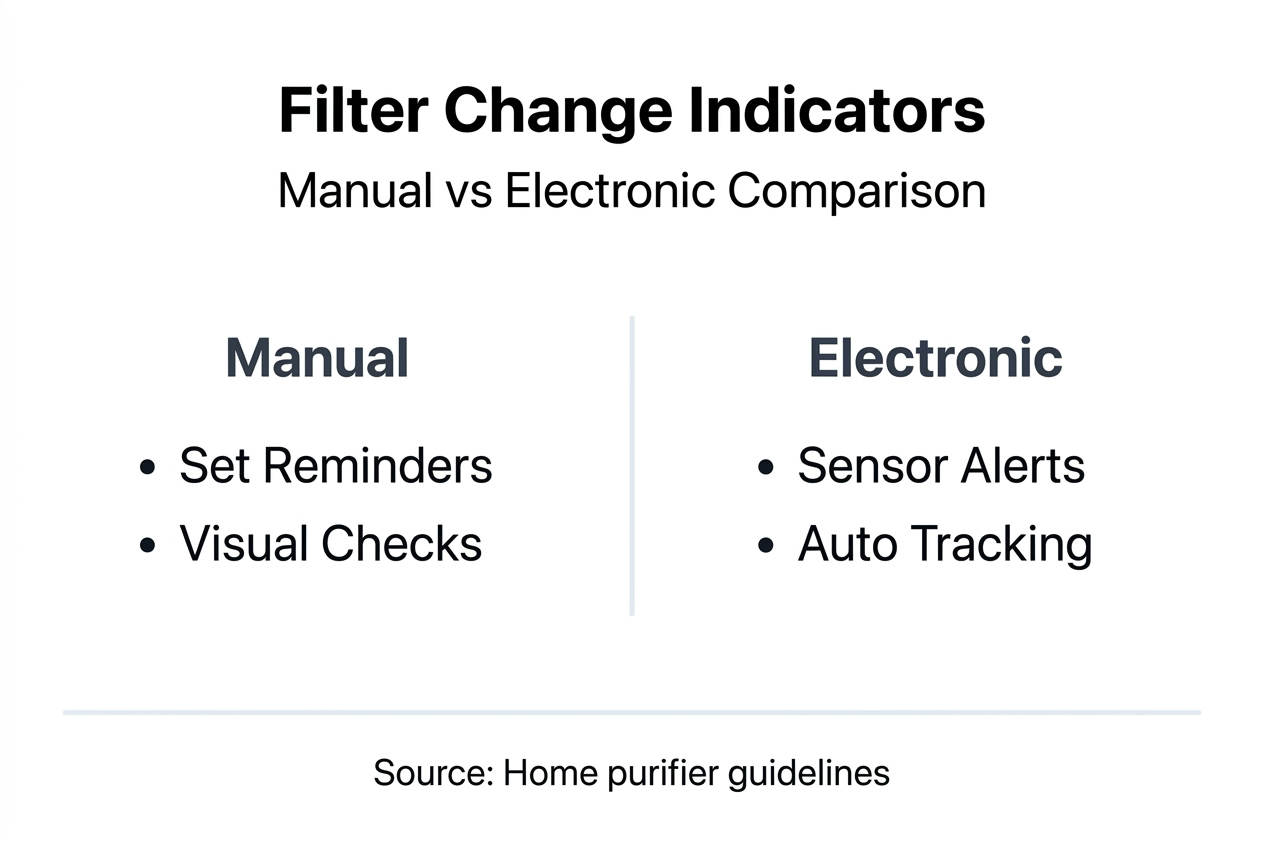
| Feature | Manual Indicators | Electronic Indicators |
|---|---|---|
| Accuracy | Estimates only | Precise usage tracking |
| Cost | Free or minimal | Higher initial cost |
| Power needs | None | Batteries or electrical |
| User involvement | Requires remembering to check | Automatic alerts |
| Reliability | Depends on user diligence | Depends on battery and sensor |
| Best for | Budget conscious users | Households with variable usage |
Electronic types offer precision but require ongoing power. Battery replacement adds a minor maintenance task. Sensor failures can occur, though quality units include backup timer functions. The upfront cost is higher, but many users find the convenience worth the investment.
Manual types are simple and cost effective but prone to user error. You might forget to check the indicator or misremember the installation date. They work well for disciplined users who maintain consistent replacement schedules. For households with multiple purifiers, manual tracking becomes cumbersome.
Choosing between types depends on several factors:
- Budget constraints favor manual indicators for basic monitoring needs
- Variable usage patterns benefit from electronic tracking accuracy
- Tech savvy households appreciate smart connectivity features
- Reliability preferences determine whether you trust electronics or manual systems
Pro Tip: If your purifier has a manual indicator, photograph it with your phone after each filter change. The timestamp creates a digital record you can reference anytime.
Maintaining purifier efficiency requires consistent monitoring regardless of indicator type. Both systems work effectively when users understand their operation and respond to alerts promptly. The best indicator is the one you actually use, whether that’s a high tech sensor or a simple calendar reminder based on regular filter replacement importance.
Keep your home’s water and air pure with Coway
Now that you understand how filter change indicators protect your family’s health, it’s time to experience purification systems designed for effortless maintenance. Coway offers state of the art water and air purifiers with smart filter indicators that eliminate guesswork from replacement schedules.
Our solutions ensure you never miss a filter change through intuitive alerts and user-friendly designs. Whether you need comprehensive water purification or advanced air cleaning, Coway’s technology adapts to your household needs. Explore our water purification process guide to understand how multi-stage filtration delivers exceptional results.
Choosing the right purifier protects your investment and your health. Our air purifier selection guide for 2026 helps you match features to your specific requirements. Trust Coway for reliable, easy to maintain purification systems backed by research and customer satisfaction.
What are common signs that my air purifier filter needs changing?
Visual signs include filter discoloration from white to gray or brown and visible particle buildup on filter surfaces. Light blockage becomes apparent when you hold the filter up and see reduced transparency through the media.
Performance symptoms signal declining effectiveness before indicators alert you. Lingering odors that weren’t present when the filter was new indicate carbon saturation. Increased allergy reactions like sneezing, congestion, or itchy eyes suggest the HEPA filter no longer captures allergens effectively.
Indicators and air quality sensors provide digital alerts based on usage data. Electronic systems track operating hours and air volume processed to calculate remaining filter life. Some advanced purifiers include particulate sensors that measure air quality and adjust replacement alerts accordingly.
How do electronic filter change indicators estimate filter lifespan?
They combine sensor data on water flow and timer data for accuracy, tracking both volume processed and time elapsed. Calculations adjust for usage intensity, so heavy use triggers earlier alerts than light use over the same period. This personalized approach ensures replacement timing matches your actual consumption patterns rather than generic estimates.
Can ignoring filter change indicators harm my health or increase costs?
Yes, dirty filters reduce purifier effectiveness, raise pollutant exposure, and increase energy costs by 5% to 15% as motors work harder. Contaminated filters allow harmful substances to circulate through your home, undermining the entire purpose of purification. Maintaining timely changes protects your family’s health while reducing utility bills and preventing expensive purifier repairs or premature replacement.
How often should I replace different types of purifier filters?
Replacement frequency varies significantly by filter type and purpose. UV lamps require annual replacement to maintain sterilization effectiveness. HEPA filters last 6 to 12 months depending on air quality and usage intensity. Carbon filters need changing every 3 to 6 months as they absorb odors and chemicals to capacity. Sediment pre-filters require the most frequent replacement, typically every 1 to 6 months based on water quality and household consumption volume.
Recommended
- Understanding Why Change Purifier Filters Matters for Health – Coway Water Purifier
- Energy-Efficient Purification: Cleaner Air and Water at Home – Coway Water Purifier
- The Essential Guide to Regular Filter Replacement – Coway Water Purifier
- Water Quality Checklist 2026: 30% More Confident Choices – Coway Water Purifier
