
Uncategorized
Benefits of Pure Water for Health – Why Purity Matters

Dec
Most American households trust the clearness of their water, yet less than 1 percent of natural water actually meets scientific definitions of pure water. This topic matters because everyday choices about what you drink and how you treat water can affect your health more than you might think. Get clarity about pure water and discover the truth behind common misconceptions, so you can make informed decisions for your family’s safety.
Table of Contents
- Pure Water Defined and Common Misconceptions
- Types of Pure Water and How They Differ
- Major Contaminants and Health Impact
- How Water Filtration Systems Ensure Purity
- Key Benefits Over Tap or Bottled Water
Key Takeaways
| Point | Details |
|---|---|
| Understanding Water Purity | Pure water is defined scientifically and exists on a spectrum rather than as a binary state. Misconceptions, like assuming all clear water is pure, are common. |
| Types of Pure Water | Laboratory classifications define different types of pure water, including Ultrapure, Intermediate, and Low Purity, each suited for specific applications. |
| Health Risks of Contaminants | Water contaminants, such as heavy metals and pathogens, pose significant health risks and require comprehensive purification to ensure safety. |
| Benefits of Filtration Systems | Purified water systems outperform tap and bottled options by effectively removing contaminants, providing cost savings, and reducing environmental impact. |
Pure Water Defined and Common Misconceptions
Pure water represents more than just a transparent liquid – it’s a complex substance with specific scientific characteristics that many people misunderstand. Water purification terms reveal that truly pure water is scientifically defined as a neutral pH liquid with extraordinary solvent properties. According to research from the United States Geological Survey, pure water acts as a universal solvent capable of dissolving more substances than any other liquid on earth.
Contrary to popular belief, pure water is exceptionally rare in natural environments. The scientific definition challenges common misconceptions about water quality. Water in streams, lakes, and even tap systems contains dissolved minerals, microorganisms, and trace elements that prevent it from being categorically pure. Purity in water is not a binary state but a spectrum measured through precise scientific standards that evaluate chemical composition, mineral content, and potential contaminant levels.
Common misconceptions about pure water include:
- Believing all clear water is pure
- Assuming tap water meets scientific purity standards
- Thinking boiling automatically creates pure water
- Believing bottled water represents pure water
Understanding water purity requires recognizing its dynamic nature. Water purification processes involve multiple sophisticated techniques designed to remove impurities and create water that meets rigorous scientific standards. Professional water treatment approaches use advanced filtration methods like reverse osmosis, activated carbon filtering, and ultraviolet sanitization to approach true water purity.
Types of Pure Water and How They Differ
Pure water exists in multiple categories, each defined by unique purification levels and specific applications. Water filtration methods reveal a complex spectrum of water purity that goes far beyond simple classifications. Scientific standards distinguish water types based on their chemical composition, mineral content, and intended usage.
Laboratory settings provide the most precise categorization of water purity. Types of water purifiers demonstrate that water can be classified into distinct grades. According to specialized research, laboratory water is categorized into three primary types:
-
Type I (Ultrapure Water): Highest purity level
- Used in sensitive scientific research
- Minimal trace contaminants
- Essential for cell cultures and advanced clinical analyzers
-
Type II (Intermediate Purity): Moderate purification
- Suitable for general laboratory applications
- Lower conductivity compared to Type I
- Used in routine scientific procedures
-
Type III (Low Purity): Basic purification
- Used for less critical laboratory tasks
- Broader range of acceptable impurities
- Appropriate for general washing and preliminary screening
Beyond laboratory classifications, water purification involves sophisticated techniques like deionization and extensive filtration. Deionized water, created by removing charged particles through ion-exchange resins, represents another critical water type. Ultrapure water undergoes rigorous treatments to eliminate nearly all impurities, making it indispensable for precise scientific applications such as polymerase chain reaction (PCR) and high-performance liquid chromatography (HPLC).

Major Contaminants and Health Impact
Water contaminants represent a critical health risk that extends far beyond simple visibility or taste. Water purification processes reveal the complex landscape of potential harmful substances that can infiltrate our drinking water. Scientific research highlights multiple categories of dangerous elements that compromise water quality and pose significant health challenges.
According to environmental research, water can contain a wide range of hazardous substances that directly impact human health. The most dangerous contaminants include:
-
Heavy Metals
- Lead
- Arsenic
- Mercury
- Potential neurological damage
- Long-term cognitive impairment risks
-
Biological Contaminants
- Pathogenic bacteria
- Viruses
- Parasitic organisms
- Potential gastrointestinal illnesses
- Compromised immune system responses
-
Chemical Pollutants
- Pesticide residues
- Industrial chemicals
- Pharmaceutical remnants
- Potential endocrine disruption
- Reproductive system complications
The health implications of these contaminants are profound and multifaceted. Prolonged exposure to contaminated water can trigger a spectrum of medical conditions ranging from acute gastrointestinal disorders to chronic neurological challenges. Understanding these risks underscores the critical importance of comprehensive water purification and rigorous quality control measures in protecting public health.
How Water Filtration Systems Ensure Purity
Water filtration systems represent a sophisticated defense against contamination, employing multiple advanced technologies to transform potentially hazardous water into safe, consumable liquid. Water filtration methods demonstrate a complex approach to removing dangerous impurities through precise scientific techniques. Modern purification processes integrate multiple strategies to achieve comprehensive water quality protection.
The core mechanisms of water filtration involve several critical purification technologies:
-
Mechanical Filtration
- Removes physical particles
- Traps sediment and larger contaminants
- Uses fine mesh and physical barriers
-
Chemical Filtration
- Neutralizes harmful chemical compounds
- Activated carbon absorption
- Removes chlorine, pesticides, and organic pollutants
-
Biological Filtration
- Eliminates microorganisms
- Ultraviolet sterilization
- Destroys bacteria and viruses
Ultrapure water systems utilize continuous monitoring techniques to guarantee exceptional quality. These advanced filtration approaches systematically target different contamination levels, ensuring water meets rigorous scientific standards. The intricate process involves multiple stages of purification, from initial mechanical screening to final chemical and biological treatments, creating a comprehensive defense against potential health risks.
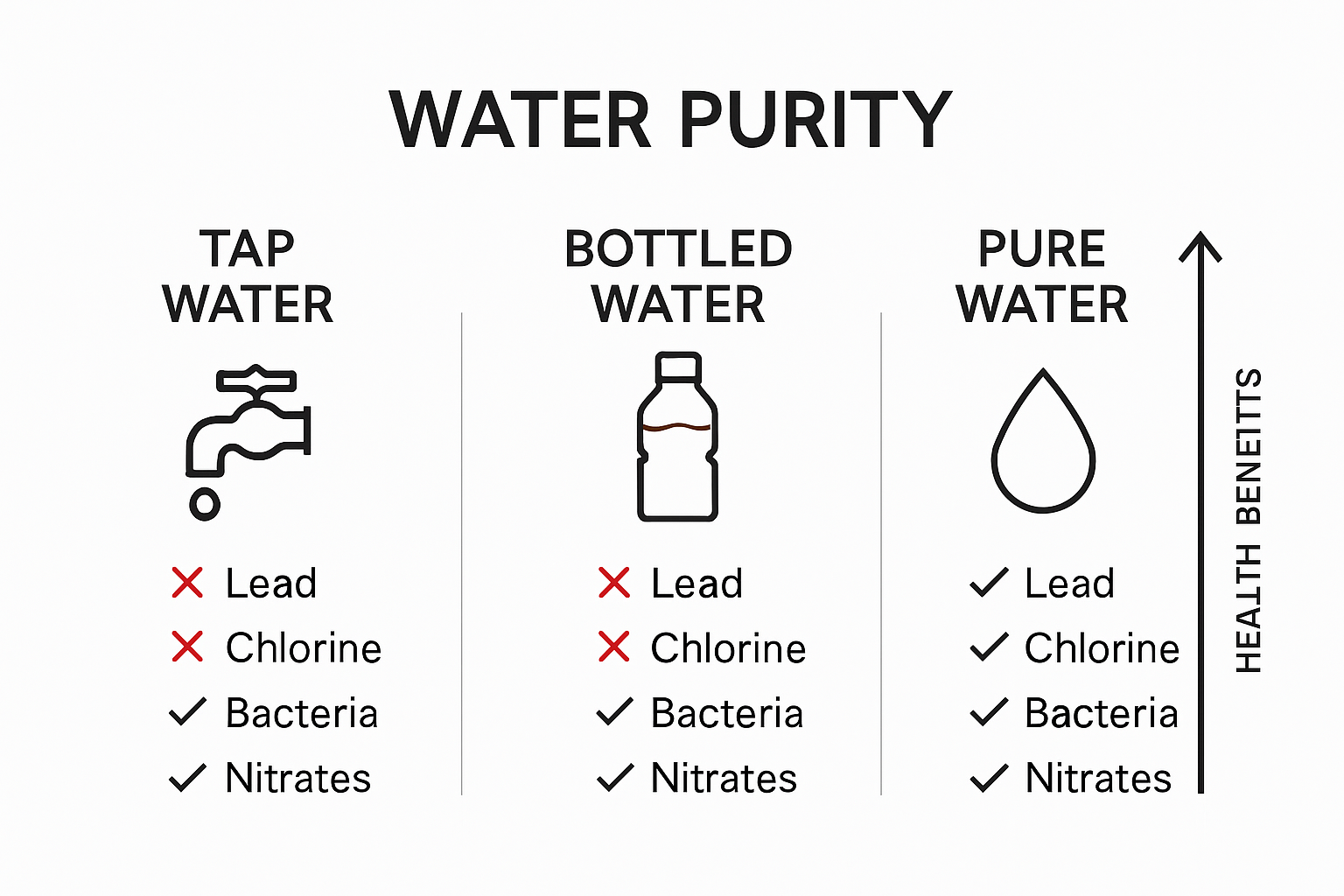
Key Benefits Over Tap or Bottled Water
Pure water systems dramatically outperform traditional tap and bottled water sources in multiple critical aspects of health and quality. Difference between tap and filtered water reveals a stark contrast in contaminant levels, nutritional integrity, and overall safety. Purified water offers consistent quality that eliminates the unpredictable risks associated with municipal water supplies or commercially packaged alternatives.
Key advantages of purified water over tap and bottled alternatives include:
-
Contaminant Removal
- Eliminates heavy metals
- Removes chemical pollutants
- Filters out microbiological threats
- Neutralizes chlorine and pesticide residues
-
Cost Effectiveness
- Eliminates repeated bottled water purchases
- Reduces plastic waste
- Lower long-term household expenses
- Prevents potential health treatment costs
-
Environmental Impact
- Reduces plastic bottle consumption
- Minimizes carbon footprint
- Decreases waste in landfills
- Supports sustainable water consumption practices
Scientific research demonstrates that purified water provides remarkable consistency in quality. These advanced filtration systems create a reliable water source that prevents contamination and ensures exceptional purity, making them superior to both tap water infrastructure and commercial bottled water products. The comprehensive approach to water treatment guarantees a level of safety and reliability that traditional water sources simply cannot match.
Experience the True Benefits of Pure Water for Your Health
The article highlights how contaminants like heavy metals and biological pollutants threaten your health and how purified water systems are essential for safe hydration. If you want to overcome risks such as chemical pollutants and microorganisms that ordinary water sources cannot fully eliminate, then advanced filtration technology is the solution. Using terms like “ultrapure water” and “water filtration systems,” the article shows that scientific purity and rigorous contaminant removal make a real difference for your wellbeing.
Discover how our cutting-edge Coway water purifiers combine multiple purification methods, including mechanical filtration, activated carbon absorption, and UV sanitization, to deliver consistently pure water at home. Explore a variety of models that suit your unique needs from countertop to under-sink units with comprehensive benefits such as free delivery and installation. Learn more about why investing in pure water technology today is a crucial step to protect your family’s health.
Ready to elevate your water quality and safeguard your health? Check out Uncategorized Archives – Coway Water Purifier for details on our innovative products.
Take control over what you drink by visiting Coway Water Purifier now and find the perfect purifier for your home. Don’t wait until the risks become your reality. Act now for pure, healthy water every day. Learn more in our Uncategorized Archives – Coway Water Purifier and secure your wellness with Coway’s trusted solutions.
Frequently Asked Questions
What are the health benefits of drinking pure water?
Drinking pure water helps eliminate contaminants that can lead to various health issues, including gastrointestinal illnesses and neurological damage. It ensures better hydration and supports overall bodily functions.
How does pure water differ from tap water?
Pure water is treated and filtered to remove harmful substances, while tap water may contain traces of heavy metals, chemicals, and biological contaminants. This makes pure water a safer option for consumption.
What types of impurities does pure water remove?
Pure water filtration systems are designed to eliminate heavy metals like lead and arsenic, biological contaminants such as bacteria and viruses, and chemical pollutants including pesticides and industrial chemicals, ensuring higher water quality.
How can I ensure the purity of my drinking water?
You can ensure the purity of your drinking water by using advanced water filtration systems that employ multiple purification methods, such as mechanical filtration, chemical treatment, and biological sterilization.
Recommended
- Understanding Why Purify Tap Water for Health and Safety – Coway Water Purifier
- Complete Guide to Why Water Filters Are Important – Coway Water Purifier
- The Essential Guide to Purified Water for Offices – Coway Water Purifier
- The Essential Guide to Safe Drinking Water – Coway Water Purifier
- Understanding the Effects of Water Contamination – My WordPress
- Stay Hydrated: Discover PER4M Hydration Benefits – MyGymSupplements
