
Uncategorized
Eco-Friendly Water Purification Guide for Healthy Homes

Feb
Every parent wants reassurance that the water flowing from their faucet is safe and gentle for their family. With growing concerns about chemical residues and hidden contaminants, many American homeowners are searching for smarter ways to protect their loved ones without harming the environment. By focusing on eco-friendly water purification solutions, you can address hidden health risks and create a sustainable routine that puts both your family’s wellness and the planet first.
Table of Contents
- Step 1: Assess Home Water Quality and Needs
- Step 2: Select Sustainable Filtration Solutions
- Step 3: Install Eco-Friendly Water Purifier Correctly
- Step 4: Maintain Systems Using Green Practices
- Step 5: Test Purified Water for Safety and Efficacy
Quick Summary
| Key Takeaway | Explanation |
|---|---|
| 1. Test Your Water Quality First | Assessing your water quality is essential for understanding contaminants and determining the best purification solutions for your home. |
| 2. Choose Sustainable Filtration Technologies | Selecting eco-friendly water filters can help remove contaminants effectively while minimizing environmental impact through energy efficiency and materials used. |
| 3. Ensure Proper Installation | Correct installation of your water purifier maximizes efficiency and longevity, preventing leaks and ensuring optimal performance. |
| 4. Maintain Systems with Green Practices | Regular maintenance using eco-friendly techniques helps extend the lifespan of your system while protecting the environment from harmful chemicals. |
| 5. Regularly Test Purified Water | Conducting periodic tests on your purified water verifies its safety and identifies any issues with your filtration system that need addressing. |
Step 1: Assess Home Water Quality and Needs
Knowing the quality of your home’s water is crucial for protecting your family’s health and choosing the right purification system. Water quality assessment involves understanding what contaminants might be present and determining your household’s specific water requirements.
Begin by conducting a comprehensive water analysis through multiple strategies. Local water quality databases can help you identify potential contaminants specific to your area. These resources provide detailed insights into chemical compositions, potential pollutants, and regional water system characteristics. You’ll want to examine several key factors:
- Hardness levels
- pH balance
- Presence of heavy metals
- Microbial contamination risks
- Mineral content
The assessment process includes obtaining a professional water test or using home testing kits that analyze multiple parameters. Some homeowners opt for comprehensive laboratory testing, which provides the most accurate and detailed results. These tests typically cost between $100-$500 and can detect over 100 potential contaminants.
Understanding your water’s specific composition enables targeted filtration strategies.
After identifying your water’s characteristics, you can make informed decisions about appropriate purification methods. This might involve selecting specific filter types, considering whole-house systems, or implementing point-of-use solutions tailored to your unique water profile.
Pro tip: Request a water quality report from your local municipal water supplier to get baseline information about your community’s water supply.
Step 2: Select Sustainable Filtration Solutions
Choosing the right water filtration system is essential for maintaining both environmental sustainability and household water quality. The goal is to select a solution that effectively removes contaminants while minimizing ecological impact.
Start by evaluating different filtration technologies that align with eco-friendly principles. Sustainable water purification methods offer multiple approaches to clean water production. Consider these key criteria when selecting your filtration solution:
- Energy efficiency ratings
- Recyclable or biodegradable filter materials
- Minimal water waste during filtration
- Long-term filter lifespan
- Reduction of plastic packaging
Different filtration technologies offer unique benefits. Activated carbon filters work well for removing chlorine and organic compounds, while reverse osmosis systems provide comprehensive contaminant removal. Ceramic filters offer excellent microbial protection with minimal environmental impact.
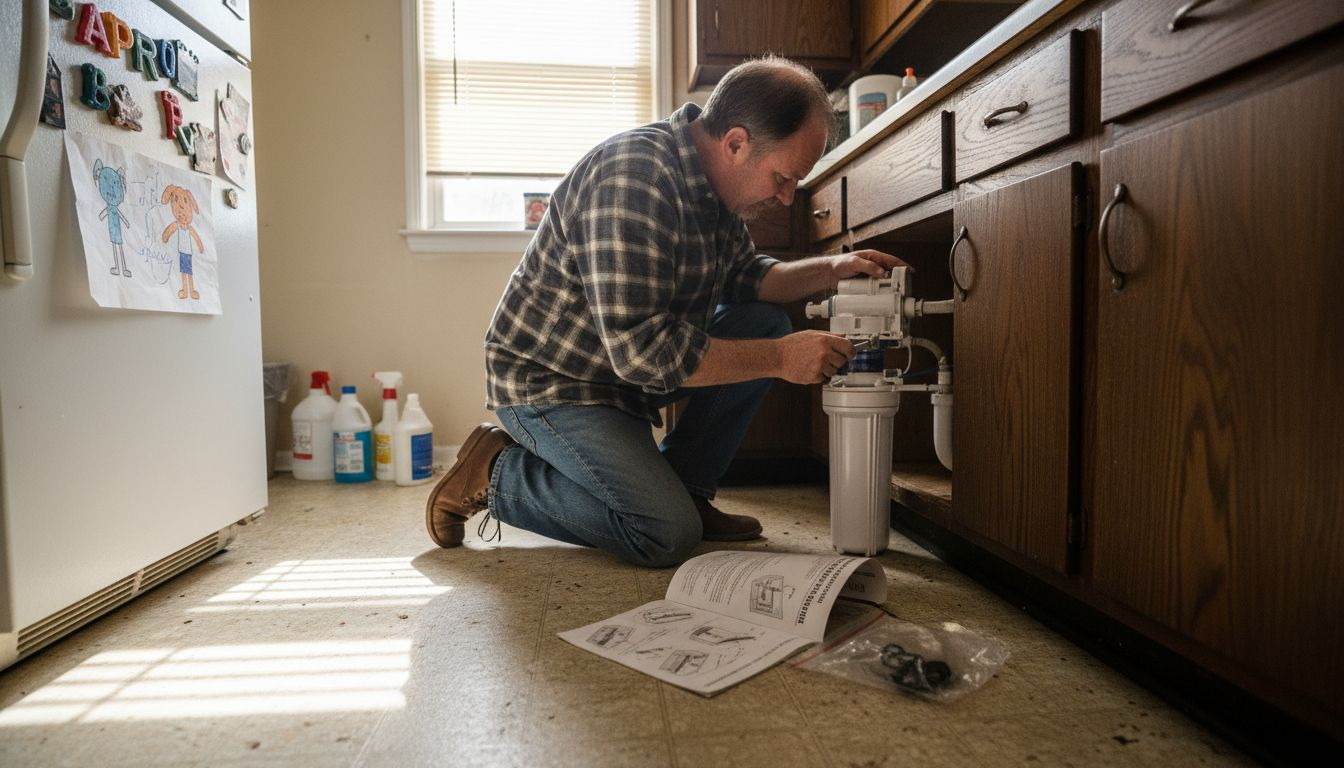
Here’s a quick comparison of common water filtration technologies:
| Filtration Method | Main Benefits | Sustainability Impact |
|---|---|---|
| Activated Carbon | Removes chlorine, odors | Low energy use, recyclable filters |
| Reverse Osmosis | Removes most contaminants | Moderate energy use, water waste |
| Ceramic | Blocks bacteria and protozoa | Long lifespan, biodegradable materials |
| UV Purification | Destroys microbes | High energy use, minimal waste |
Sustainable water filtration balances effective purification with ecological responsibility.
Carefully compare the environmental footprint of each filtration method. Some systems use significantly less water and energy, making them more sustainable choices for environmentally conscious households.
Pro tip: Look for water filtration systems with third-party certifications that validate their environmental performance and sustainability claims.
Step 3: Install Eco-Friendly Water Purifier Correctly
Installing an eco-friendly water purifier requires careful planning and precise execution to ensure optimal performance and minimal environmental impact. Residential water treatment systems demand thoughtful approach to maximize efficiency and sustainability.
Prepare for installation by gathering the necessary tools and understanding your specific purification system. Key preparation steps include:
- Checking local water pressure specifications
- Measuring available installation space
- Verifying electrical and plumbing compatibility
- Acquiring appropriate mounting hardware
- Reviewing manufacturer’s installation guidelines
The installation process varies depending on your chosen system type. Under-sink models typically require direct plumbing connection, while countertop units need minimal technical expertise. Whole-house systems demand more complex installation and might require professional assistance.
Proper installation ensures maximum water purification efficiency and system longevity.
When installing, prioritize minimizing waste and selecting components with sustainable materials. Pay close attention to sealing connections, preventing leaks, and ensuring proper water flow through your new eco-friendly purification system.
Pro tip: Photograph each installation step for future reference and potential troubleshooting, which can help avoid unnecessary component replacements.
Step 4: Maintain Systems Using Green Practices
Maintaining your water purification system requires a strategic approach that prioritizes environmental sustainability and long-term performance. Water system maintenance techniques play a crucial role in preserving both system efficiency and ecological responsibility.
Develop a comprehensive maintenance routine that focuses on green practices and minimal environmental impact. Key maintenance strategies include:
- Using biodegradable cleaning solutions
- Replacing filters at manufacturer-recommended intervals
- Monitoring system performance quarterly
- Avoiding harsh chemical treatments
- Conducting regular visual inspections
Preventive maintenance is essential for extending your water purifier’s lifespan while reducing waste. Eco-friendly cleaning methods can help minimize chemical runoff and protect your home’s environmental footprint. Sustainable replacement practices ensure you’re not unnecessarily discarding system components.
Green maintenance practices protect both your water quality and the broader ecosystem.
Regularly track your system’s performance metrics, looking for signs of reduced efficiency or potential issues. Proactive maintenance helps prevent major repairs, reduces resource consumption, and maintains optimal water purification standards.
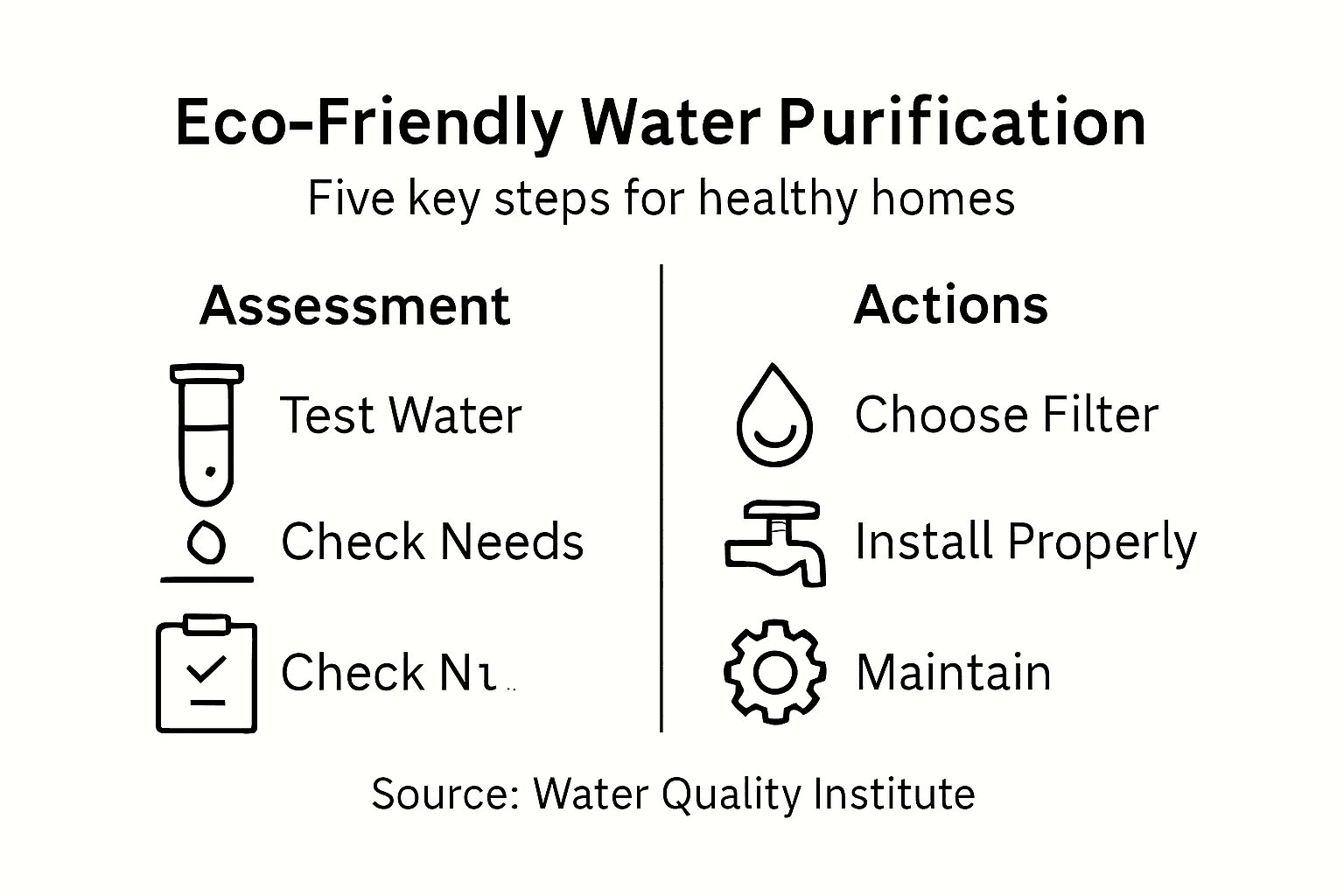
Key steps for maintaining water purification systems using green practices:
| Maintenance Action | Environmental Benefit | Long-Term Impact |
|---|---|---|
| Use biodegradable cleaners | Reduces chemical runoff | Improves ecosystem health |
| Scheduled filter changes | Limits unnecessary waste | Boosts system reliability |
| Regular inspections | Prevents leaks and inefficiency | Extends filter lifespan |
| Avoid harsh chemicals | Minimizes toxic residues | Maintains water quality |
Pro tip: Keep a maintenance log to track filter replacements, cleaning dates, and system performance, which helps identify potential issues before they become costly problems.
Step 5: Test Purified Water for Safety and Efficacy
Verifying the quality of your purified water is a critical final step in ensuring your family’s health and the effectiveness of your water treatment system. Water testing procedures provide essential insights into your water’s safety and performance.
Choose a comprehensive testing approach that covers multiple potential contaminants. Key testing parameters include:
- Microbiological indicators
- Heavy metal concentrations
- pH and mineral content
- Chemical contaminant levels
- Potential bacterial presence
Professional laboratory testing offers the most accurate results, while home testing kits provide a quick initial assessment. Comprehensive water analysis helps you understand the true efficacy of your purification system.
Regular water testing is your first line of defense in maintaining household water safety.
Interpret test results carefully, looking for any deviations from recommended safety standards. If contaminants are detected, consult with water quality experts to determine appropriate remediation strategies or adjust your current filtration approach.
Pro tip: Schedule annual professional water testing and maintain a detailed record of results to track your water quality over time and identify any emerging trends or potential issues.
Secure Your Healthy Home with Eco-Friendly Water Purification Solutions
If you are concerned about water quality and want to protect your family with sustainable and effective purification, now is the time to explore reliable solutions designed for your unique needs. The article highlights challenges such as selecting the right filtration technology, ensuring proper installation, and maintaining systems with green practices to guarantee safe, contaminant-free water.
At Coway Water Purifier, we understand the importance of balancing advanced purification methods with environmental responsibility. Our range of water purifiers offers energy-efficient filtration, UV sanitization, and long-lasting filters that reduce waste while delivering the purest water straight to your home. Whether you need a countertop unit or a whole-house system, our products are designed with innovation and sustainability in mind.
Take control of your home’s water quality today by visiting our Uncategorized Archives to explore expert advice and detailed product options. Don’t wait until water impurities affect your family’s health. Visit Coway Water Purifier now to find your perfect eco-friendly water purification system and enjoy protection, peace of mind, and a greener lifestyle.
Frequently Asked Questions
How can I assess the water quality in my home?
To assess your water quality, conduct a comprehensive water analysis by checking local water quality databases or using home testing kits. Obtain a professional water test for the most accurate results and identify contaminants such as heavy metals and microbial risks.
What eco-friendly filtration solutions should I consider?
Choose filtration systems that prioritize sustainability, like activated carbon filters or ceramic filters. Evaluate their energy efficiency, lifespan, and materials to ensure minimal environmental impact while effectively removing contaminants from your water.
How do I install an eco-friendly water purifier correctly?
Follow the manufacturer’s installation guidelines specific to your chosen filtration system, ensuring compatibility with your plumbing and electrical setups. Prepare your space by collecting necessary tools and verifying local water pressure specifications to ensure optimal performance.
What maintenance practices are considered green for water purification systems?
Utilize biodegradable cleaning solutions and monitor system performance regularly to ensure efficiency. Schedule filter replacements as recommended by the manufacturer to reduce unnecessary waste and improve the longevity of your water purification system.
How often should I test my purified water for safety?
Conduct water testing at least once a year to verify the safety of your purified water. Regularly check for contaminants such as heavy metals and microbial indicators to ensure your filtration system is effectively protecting your family’s health.
What should I do if I find contaminants in my purified water?
If contaminants are detected, consult with water quality experts to assess the situation and determine appropriate remediation strategies. Adjusting your filtration system based on test results can help maintain high water quality standards.
Recommended
- Eco-Friendly Filtration: Health And Environmental Impact – Coway Water Purifier
- Role of Sustainability in Water Purification: Complete Guide – Coway Water Purifier
- Understanding Sustainable Water Purification Methods – Coway Water Purifier
- 7 Key Benefits of Water Purification for Your Home – Coway Water Purifier
- Wat Zijn Voedselveilige Rietjes: Complete Uitleg – Earth Saver Straws
- 7 Duurzaamheidsvoordelen elektra voor huiseigenaren uitgelegd – Holland Electric Duurzaam
- How to Choose Energy Storage for Smart Homeowners
