
Uncategorized
How to Ensure Purified Water at Home or Business
Dec
Over 60 percent of American households use some form of water filtration, yet many are unaware of what lurks in their tap water. Concerns about contaminants and health risks make understanding water quality more urgent than ever. By learning how to assess, purify, and maintain your water supply, you gain the power to safeguard both your health and your peace of mind.
Table of Contents
- Step 1: Assess Your Water Quality and Needs
- Step 2: Select the Right Water Purification System
- Step 3: Install the Purification Device Properly
- Step 4: Maintain and Replace Filtration Components
- Step 5: Test and Verify Purified Water Quality
Quick Summary
| Key Insight | Explanation |
|---|---|
| 1. Assess Water Quality First | Thoroughly test your water for contaminants to identify the best purification approach for your needs. |
| 2. Choose Appropriate Purification | Select a system based on your water quality assessment; different systems target specific contaminants effectively. |
| 3. Follow Installation Guidelines | Properly install the purification system according to guidelines to ensure optimal performance and avoid leaks. |
| 4. Regular Maintenance is Crucial | Change filters and inspect your system regularly to maintain water quality and prevent contamination. |
| 5. Verify Purified Water Quality | Conduct ongoing testing to ensure your purification system effectively delivers safe drinking water. |
Step 1: Assess Your Water Quality and Needs
Understanding your home or business water quality starts with a comprehensive assessment. Water quality testing helps identify potential contaminants and determines the most appropriate purification strategy for your specific needs. Understanding why testing drinking water is critical can help protect your health and make informed decisions about water treatment.
To begin your water quality assessment, obtain a professional water testing kit or contact your local water utility for detailed analysis. Most comprehensive tests examine multiple parameters including microbial contamination, chemical composition, heavy metals, and potential organic compounds. Key factors to evaluate include pH levels, total dissolved solids, chlorine content, hardness, and the presence of specific contaminants like lead, arsenic, or nitrates. Water testing results will provide a clear blueprint for selecting the right purification system tailored to your unique water profile.
Be prepared to invest time in understanding your water test results. Different regions and water sources have varying contamination risks, so what works for one household might not be ideal for another. Consider consulting a water quality professional who can help interpret complex test results and recommend targeted filtration solutions that address your specific water challenges.
Pro tip: Always request a comprehensive water quality report that includes both standard tests and advanced screening for emerging contaminants. This detailed approach ensures you have the most accurate information for protecting your water supply.
Below is a quick reference for key water quality indicators and their significance:
| Indicator | What It Reveals | Why It Matters |
|---|---|---|
| pH Level | Acidity or alkalinity | Affects plumbing, taste |
| Total Dissolved Solids (TDS) | Mineral and salt content | Indicates purity, health risk |
| Chlorine Content | Disinfection level | Too high affects taste |
| Lead/Arsenic/Nitrates | Harmful contaminants | Health hazards |
| Hardness | Calcium and magnesium | Causes scale, dry skin |
Step 2: Select the Right Water Purification System
Choosing the optimal water purification system requires careful consideration of your specific water quality assessment results and unique household or business needs. Exploring water purification methods provides insights into the diverse technologies available for ensuring clean and safe drinking water.
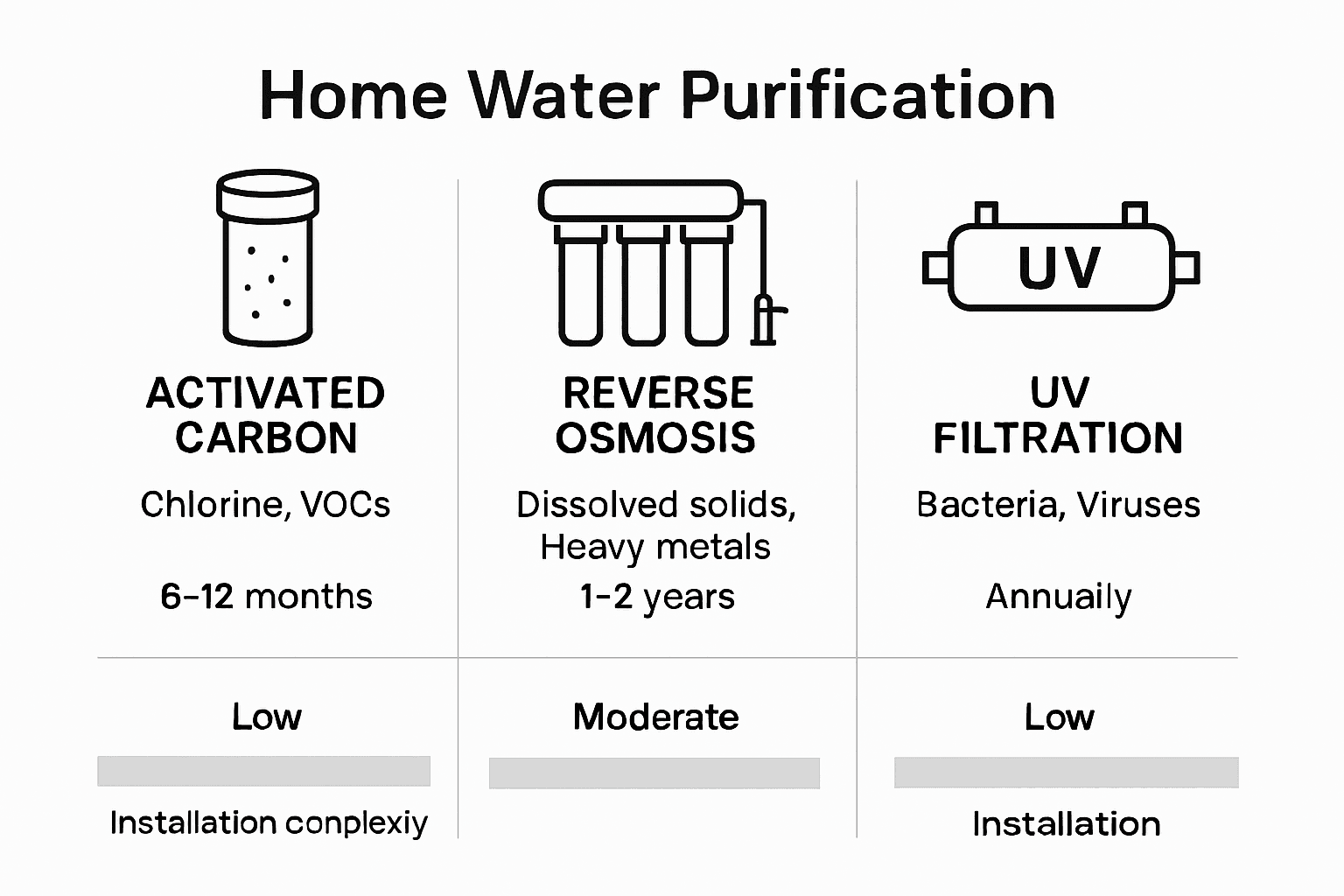
The EPA recommends evaluating water treatment technologies based on their specific filtration mechanisms, performance standards, and targeted contaminant removal capabilities. Different purification systems excel at removing distinct types of impurities. Reverse osmosis systems are highly effective for eliminating dissolved solids and heavy metals, while activated carbon filters work best for removing chlorine, sediment, and organic compounds. Ultraviolet purification systems provide excellent microbial protection, effectively neutralizing bacteria and viruses without introducing chemicals.
Consider practical factors beyond filtration performance. Assess the system’s water consumption rate, maintenance requirements, installation complexity, and long term operational costs. Compact under-sink models might suit small households, while larger commercial establishments may require more robust whole house filtration solutions. Your water quality test results will serve as the ultimate guide in determining the most appropriate purification technology for your specific environment.
Pro tip: Request detailed performance certifications from manufacturers and compare independent laboratory test results before making a final purchasing decision. This approach ensures you select a water purification system with proven effectiveness and reliability.
Here is a summary comparing common water purification technologies and the contaminants they target:
| Purification Method | Best For Removing | Typical Maintenance Frequency |
|---|---|---|
| Reverse Osmosis | Heavy metals, dissolved solids | Annually for membrane, 6 months for pre-filters |
| Activated Carbon Filter | Chlorine, organic compounds, odors | 3-6 months depending on usage |
| Ultraviolet Purification | Bacteria, viruses | Lamp every 12 months |
| Sediment Filter | Dirt, sand, rust | 3-6 months |
Step 3: Install the Purification Device Properly
Successful water purification system installation requires precision and careful attention to detail. Water Quality Association installer training guidelines emphasize the critical importance of following manufacturer specifications and understanding your specific plumbing configuration before beginning the installation process.
Start by thoroughly reviewing the installation manual and gathering all necessary tools and materials. Verify that you have the correct adapters, mounting hardware, and connection components for your specific water source. Most water purification systems require shutting off the main water supply and creating a dedicated connection point. Pay special attention to alignment and sealing to prevent potential leaks or contamination. Some systems might need additional modifications like creating mounting points under sinks or connecting to existing water lines with precision.
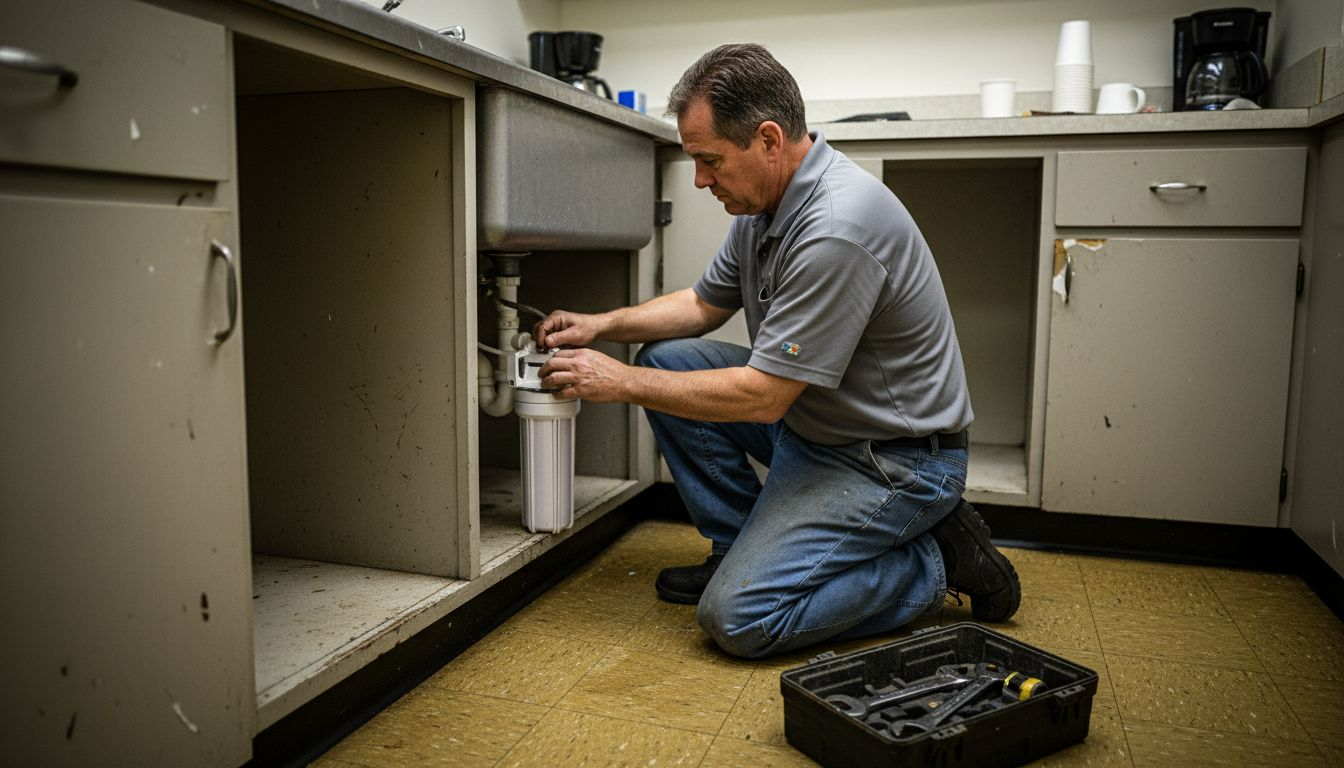
Depending on your specific purification system, you may need specialized tools or professional assistance. Compact under sink models typically require basic plumbing skills, while whole house systems often demand more complex installation procedures. Always prioritize creating a secure, leak free connection that maintains the integrity of your water supply while ensuring optimal filtration performance.
Pro tip: Take photographs of your installation process and keep all original packaging and documentation. These records can be invaluable for future maintenance, warranty claims, or troubleshooting potential issues with your water purification system.
Step 4: Maintain and Replace Filtration Components
Regular maintenance and timely filter replacement are critical for ensuring your water purification system continues to deliver clean and safe drinking water. EPA WaterSense guidelines emphasize the necessity of periodic system maintenance to guarantee optimal performance and water quality.
Track your filter replacement schedule meticulously. Most water purification systems require filter changes every three to six months, depending on usage and water quality. Watch for indicators such as reduced water flow, unusual taste, or changes in water clarity. Different filtration components like sediment filters, carbon filters, and reverse osmosis membranes have varying replacement intervals. Consult your system’s manual for specific recommendations and consider setting digital reminders or marking your calendar to ensure you do not miss critical maintenance windows.
Inspect your filtration system regularly for signs of wear, mineral buildup, or potential damage. Clean external components according to manufacturer instructions and always use manufacturer recommended replacement filters to maintain system integrity. Proper maintenance not only extends your system’s lifespan but also ensures consistent water quality and prevents potential contamination risks.
Pro tip: Keep a maintenance log documenting each filter replacement, including date, filter type, and any observations about water quality or system performance. This record can help you track the effectiveness of your water purification system and identify potential issues early.
Step 5: Test and Verify Purified Water Quality
Comprehensive EPA data assessment methods highlight the critical importance of thorough water quality verification beyond simple filtration. Ensuring your water purification system delivers safe drinking water requires multiple testing approaches to validate its performance and effectiveness.
Utilize a combination of home testing methods and professional laboratory analysis to comprehensively evaluate your water quality. Home test kits can quickly check basic parameters like pH levels, chlorine content, and the presence of common contaminants. These kits typically provide rapid results for fundamental indicators, allowing you to conduct initial screenings. However, for more advanced and precise assessments, professional laboratory testing remains the gold standard. Professional tests can detect trace contaminants, heavy metals, microbiological agents, and potential chemical pollutants that home kits might miss.
Consider establishing a regular testing schedule that aligns with your water purification system’s maintenance routine. Quarterly or biannual testing provides consistent insight into your water quality and system performance. Pay close attention to changes in water taste, odor, or appearance, as these can be early indicators of potential filtration system issues or emerging water quality concerns.
Pro tip: Maintain a detailed water quality testing log documenting each test result, including date, testing method, and specific findings. This systematic record can help you track long term water quality trends and provide valuable documentation for future reference.
Ensure Pure and Safe Water Effortlessly with Trusted Solutions
The challenge of achieving consistently purified water at home or business is real. From understanding complex water quality indicators to selecting and maintaining the right purification system, the process can feel overwhelming. If you are seeking peace of mind and reliable protection against contaminants such as heavy metals, bacteria, and chlorine, Coway offers advanced filtration technologies developed to meet your unique water needs. Our products bridge the gap between scientific water analysis and user-friendly purification systems designed for everyday safety and health.
Explore a range of innovative water purifiers on Coway Water Purifier that combine reverse osmosis, activated carbon filters, and UV purification to deliver crystal-clear water. Whether you need a compact under-sink model or a robust whole-house unit, you can find options tailored to your environment with professional installation and maintenance support. Ready to take control of your water quality today Visit Uncategorized Archives – Coway Water Purifier to discover solutions that simplify your water care routine and ensure your well-being. Start your journey to safer water with expert guidance and cutting-edge technology at Coway Water Purifier.
Frequently Asked Questions
How can I assess the quality of my home or business water?
To assess water quality, obtain a professional water testing kit or contact your local water utility for a detailed analysis. This test will help identify contaminants and inform your next steps in ensuring safe drinking water.
What factors should I consider when choosing a water purification system?
When selecting a purification system, consider your water quality test results, the specific contaminants you need to address, and practical factors like maintenance requirements and installation complexity. Evaluate different technologies to find the one that best matches your water profile and needs.
How often should I replace the filters in my water purification system?
Most water purification systems require filter changes every three to six months. Track your replacement schedule, and change filters promptly to maintain optimal performance and ensure clean drinking water.
What troubleshooting steps should I take if my purified water has a strange taste or appearance?
If your purified water has an unusual taste or appearance, first check for clogged filters or overdue replacements. Inspect your purification system for leaks or mineral buildup, and consider conducting additional water testing to identify potential issues.
How can I verify that my water purification system is effective?
To verify the effectiveness of your purification system, utilize a combination of home testing methods and professional laboratory analysis. Set a regular testing schedule, such as quarterly, to monitor water quality and ensure your purification system continues to provide safe drinking water.
What are some common contaminants to test for in my drinking water?
Common contaminants to test for include lead, chlorine, nitrates, and total dissolved solids. Focus on these key metrics to determine the necessary purification solutions for your water quality concerns.
Recommended
- How to Ensure Safe Drinking Water for Home and Business – Coway Water Purifier
- The Essential Guide to Purified Water for Offices – Coway Water Purifier
- Complete Office Water Purification Guide for Healthier Spaces – Coway Water Purifier
- 7 Effective Water Purification Methods for Your Home – Coway Water Purifier
