
Uncategorized
Role of Air Purifiers: Everything You Need to Know
Nov
Over 90 percent of people worldwide breathe air that falls short of health standards, according to the World Health Organization. Clean indoor air is more than a comfort—it is a necessity for your health and well-being. But with conflicting claims and persistent myths about air purifiers, understanding what really works can be confusing. This guide clears up the confusion and highlights the latest facts, filters, and features, so you can make smart choices for a healthier home.
Table of Contents
- Defining Air Purifiers And Common Myths
- Types Of Air Purifiers And Filtration Methods
- How Air Purifiers Improve Indoor Air Quality
- Key Features And Technological Innovations
- Benefits, Limitations, And Cost Implications
Key Takeaways
| Point | Details |
|---|---|
| Air Purifiers Are Not All-Powerful | They cannot completely eliminate all indoor pollutants and their effectiveness varies based on several factors. |
| Selecting the Right Technology | Understanding different filtration methods, such as HEPA and activated carbon, is crucial for addressing specific air quality challenges. |
| Recognize Maintenance Needs | Regular maintenance and filter replacement are necessary to maintain efficiency and performance. |
 |
|
| Evaluate Cost Implications | Consider ongoing costs, including maintenance and energy use, when investing in air purification systems. |
Defining Air Purifiers and Common Myths
An air purifier is a sophisticated device designed to remove harmful contaminants and improve indoor air quality by filtering out pollutants, allergens, and microscopic particles from the surrounding environment. According to Wikipedia, these devices work by capturing various airborne substances that can potentially impact respiratory health and overall wellness.
Contrary to popular belief, air purifiers are not magical solutions that eliminate every single pollutant. LiveScience highlights several critical myths about these devices that consumers should understand:
- Myth 1: Air purifiers can completely remove all indoor pollutants
- Myth 2: They universally improve health without any limitations
- Myth 3: All air purifiers perform equally across different environments
The reality is that an air purifier’s effectiveness depends on multiple factors, including:
- The specific filtration technology used
- The types of pollutants present in the environment
- The size and configuration of the space being purified
- Regular maintenance and filter replacement
To maximize the potential of an air purifier, homeowners must understand its capabilities and limitations. Understanding How Air Purifiers Work for Healthier Homes can provide deeper insights into selecting the right device for your specific needs. By recognizing that these devices are tools to support air quality rather than guaranteed health solutions, you can make more informed decisions about indoor air management.
Types of Air Purifiers and Filtration Methods
Air purifiers utilize diverse filtration technologies designed to target specific types of indoor air pollutants. According to Wikipedia, these devices employ multiple methods to improve air quality, each addressing different contamination challenges.
The primary types of air purification technologies include:
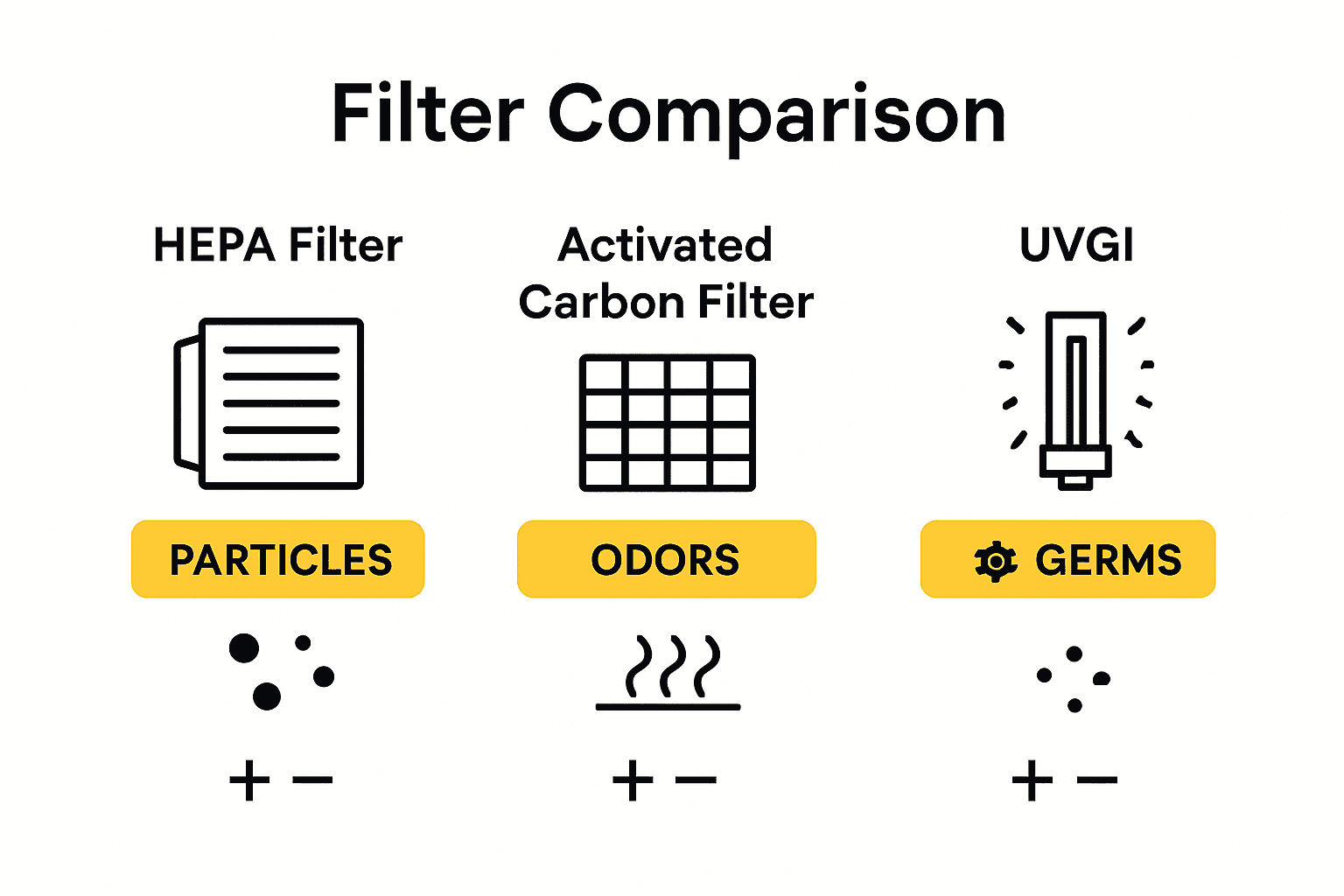
- HEPA Filters: High-efficiency particulate air filters capable of capturing microscopic particles as small as 0.3 microns
- Activated Carbon Filters: Specialized in absorbing odors, gases, and chemical pollutants
- Ultraviolet Germicidal Irradiation (UVGI): Designed to neutralize microorganisms like bacteria and viruses
- Electrostatic Precipitators: Use electrical charges to trap particles on charged plates
Each filtration method offers unique advantages. HEPA filters excel at removing dust, pollen, and pet dander, while activated carbon filters are exceptional at eliminating odors and chemical vapors. What is a HEPA Filter? Understanding Its Importance provides more detailed insights into these remarkable filtration technologies.
Understanding the specific capabilities of different air purification technologies helps consumers make informed decisions.
 By selecting a purifier with the right combination of filtration methods, you can effectively target the specific air quality challenges in your home or office environment.
How Air Purifiers Improve Indoor Air Quality
Air purifiers play a critical role in transforming indoor environments by systematically removing harmful airborne contaminants. According to Wikipedia, these devices effectively capture dust, pollen, smoke, and other microscopic particles that can compromise respiratory health and overall well-being.
The primary mechanisms through which air purifiers enhance indoor air quality include:
- Particle Removal: Capturing airborne particles like dust, pet dander, and pollen
- Smoke Filtration: Reducing smoke particles from cooking, tobacco, or external sources
- Allergen Reduction: Minimizing potential triggers for respiratory allergies
- Chemical Vapor Absorption: Neutralizing harmful gases and volatile organic compounds
Indoor Air Quality: Everything You Need to Know highlights the importance of understanding how different filtration technologies target specific pollutants. For instance, HEPA filters excel at trapping microscopic particles, while activated carbon filters are exceptional at absorbing odors and chemical vapors.
Research from ArXiv emphasizes the critical role of advanced filtration in managing complex air quality challenges, particularly during events like wildfires. By selecting an air purifier with comprehensive filtration capabilities, you can create a healthier indoor environment that protects you and your family from potentially harmful airborne contaminants.
Key Features and Technological Innovations
Air purification technology has experienced remarkable advancements, with cutting-edge innovations dramatically improving filtration efficiency and performance. Researchers are pushing the boundaries of traditional air purification methods, developing sophisticated solutions that go beyond simple particle removal.
Recent technological breakthroughs include:
- Smart Sensor Technologies: Real-time air quality monitoring
- Advanced Filtration Materials: Graphene and ceramic network filters
- Self-Regenerating Filters: Innovative cleaning and maintenance capabilities
- Multi-Functional Filtration Systems: Simultaneous particle and gas removal
According to research from ArXiv, groundbreaking developments in graphene-enhanced ceramic network filters can now capture over 95% of microorganisms and particles larger than 1 μm. These revolutionary filters can even be regenerated through Joule-heating, significantly extending their operational lifespan and maintaining peak performance.
Complete Guide to Air Purifier Technologies explores how emerging technologies are transforming air purification. Further research from ArXiv highlights V-shaped filters with integrated catalytic technologies, demonstrating the potential for comprehensive air quality solutions that simultaneously address particulate matter and gaseous pollutants. These innovations represent a significant leap forward in creating healthier, cleaner indoor environments.
Benefits, Limitations, and Cost Implications
Air purifiers offer significant health and environmental benefits, but understanding their true potential requires a nuanced examination of their capabilities and constraints. Consumers must carefully evaluate the complex landscape of air purification technologies to make informed decisions.
Key benefits and limitations include:
- Positive Impacts:
- Reduction of airborne allergens
- Improved respiratory health
- Elimination of odors and chemical pollutants
- Potential Limitations:
- Varying effectiveness across different environments
- Ongoing maintenance requirements
- Potential additional energy costs
According to LiveScience, air purifiers can effectively reduce certain allergens and pollutants, but their performance significantly depends on the specific technology used and the types of pollutants present. Some purifiers may even emit low levels of ozone, which could potentially exacerbate asthma symptoms for sensitive individuals.
8 Indoor Air Quality Tips for a Healthier Home provides additional context for understanding air purification investments. Research from ArXiv emphasizes the critical importance of appropriate filter selection, highlighting that maintenance and replacement costs are essential considerations. Consumers should anticipate ongoing expenses, including regular filter replacements and potential increases in electricity consumption, when budgeting for an air purification system.
##Elevate Your Indoor Air Quality with Trusted Solutions
Understanding the role of air purifiers is the first step toward healthier living. The article highlights key challenges such as selecting the right filtration technology, maintaining your device, and effectively reducing allergens and pollutants. These concerns can leave you feeling overwhelmed about which product truly fits your home’s needs. With Coway’s advanced air purification options, you can overcome these challenges with confidence. Our products incorporate cutting-edge filtration methods proven to capture microscopic particles, neutralize odors, and improve overall air quality.
Discover how Coway air purifiers bring innovation and reliability to your home environment. Explore models designed with health and convenience in mind, backed by expert maintenance services. Take control of your indoor air today by visiting Uncategorized Archives – Coway Water Purifier for a full look at our offerings.
Ready to breathe cleaner air and protect your family’s well-being now Discover the full range of Coway’s air purification solutions at https://cowayswaterpurifier.com and make a smart choice for your home’s health. Don’t wait for air quality to become a problem act now and experience the benefits of scientifically advanced air purification firsthand.
Frequently Asked Questions
What are air purifiers, and how do they work?
Air purifiers are devices designed to improve indoor air quality by filtering out harmful contaminants, allergens, and microscopic particles from the air. They use various filtration technologies to capture pollutants, enhancing respiratory health and overall wellness.
What types of air purification technologies are available?
The main types of air purification technologies include HEPA filters, activated carbon filters, ultraviolet germicidal irradiation (UVGI), and electrostatic precipitators. Each type targets specific pollutants effectively, such as dust, odors, and microorganisms.
Can air purifiers eliminate all indoor pollutants?
No, air purifiers cannot completely remove all indoor pollutants. Their effectiveness is influenced by factors such as the filtration technology used, the types of pollutants present, and the maintenance of the device.
What are the key benefits of using an air purifier?
Key benefits include the reduction of airborne allergens, improved respiratory health, and the elimination of odors and chemical pollutants. Using an air purifier can significantly contribute to creating a healthier indoor environment.
Recommended
- Why Filter Indoor Air: Complete Homeowner Guide – Coway Water Purifier
- Complete Guide to Air Purifier Technologies – Coway Water Purifier
- Understanding Indoor Pollutants and Air Purifiers – Coway Water Purifier
- Understanding How Air Purifiers Work for Healthier Homes – Coway Water Purifier
