
Uncategorized
Complete Guide to Why Choose Under-Sink Purifiers
Nov
Over 60 percent of households worry about contaminants in their tap water, driving many to search for better purification options. Clean drinking water is not just a convenience, it is crucial for your family’s health and peace of mind. This guide breaks down how under-sink water purifiers use advanced technology to deliver safe, great-tasting water right from your kitchen tap while offering practical insight into choosing the best system for your needs.
Table of Contents
- Defining Under-Sink Water Purifiers
- Key Features And Filtration Technologies
- Installation Process And Maintenance Requirements
- Benefits For Homes And Businesses
- Cost Analysis And Alternative Solutions
Key Takeaways
| Point | Details |
|---|---|
| Comprehensive Filtration | Under-sink water purifiers utilize advanced technologies like reverse osmosis to remove a wide range of contaminants, ensuring high-quality drinking water. |
| Installation & Maintenance | Proper installation and regular maintenance, including filter replacements, are essential for optimal performance and water quality. |
| Cost Considerations | While under-sink purifiers may have higher initial costs, they offer long-term savings by reducing reliance on bottled water. |
| Environmental Benefits | These systems significantly decrease plastic waste and the environmental impact of bottled water consumption, promoting sustainable water use. |
Defining Under-Sink Water Purifiers
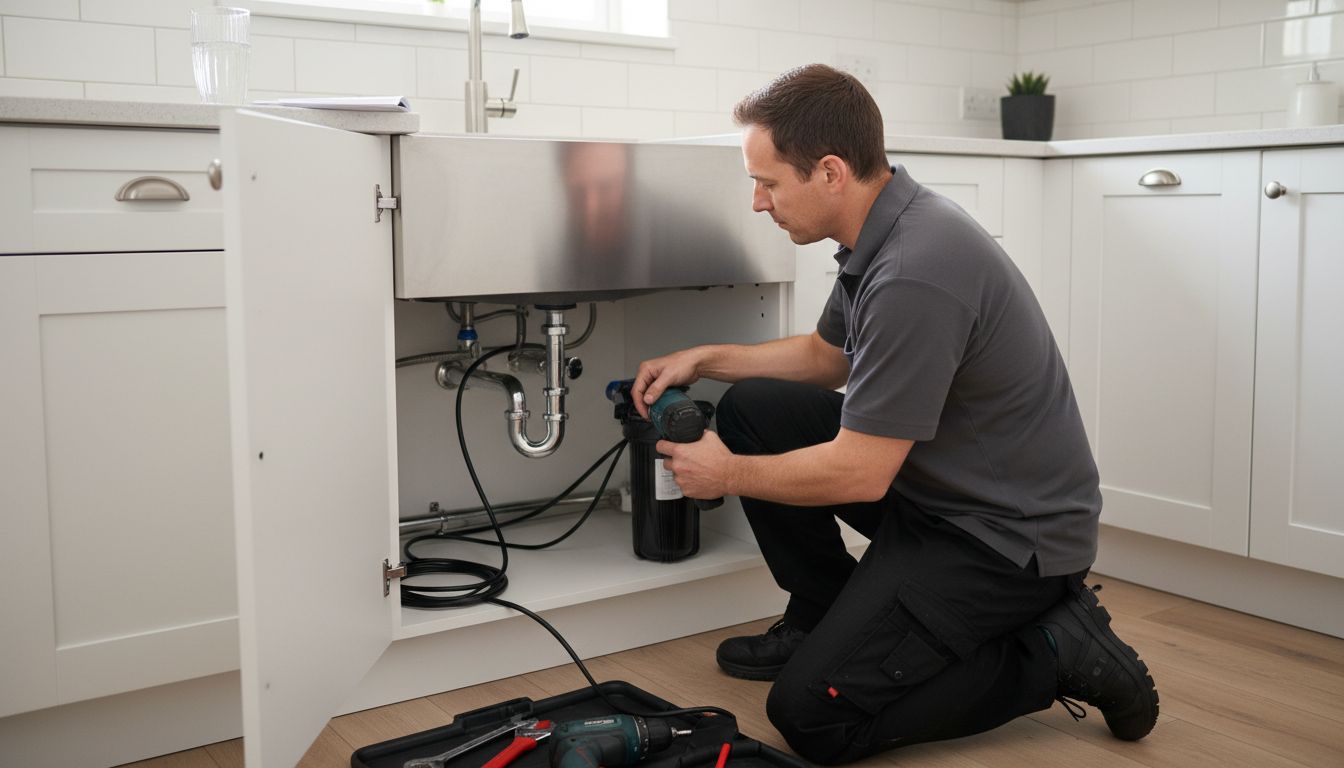
Under-sink water purifiers represent a sophisticated home water treatment solution designed to transform your drinking water directly at the point of use. According to Wikipedia, these innovative systems are installed beneath kitchen sinks, providing purified water directly from the tap by incorporating advanced filtration technologies to remove contaminants like sediments, chlorine, and heavy metals.
At the core of most under-sink water purification systems is reverse osmosis technology. Wikipedia explains that this method uses a semi-permeable membrane to comprehensively eliminate dissolved solids, bacteria, and viruses, dramatically enhancing water quality and safety. Unlike countertop or pitcher filters that provide limited filtration, under-sink purifiers offer a comprehensive, integrated solution that connects directly to your home’s water supply.
Key characteristics of under-sink water purifiers include:
- Compact design that fits discreetly beneath kitchen sinks
- Direct connection to water supply for continuous filtration
- Multi-stage filtration processes targeting various contaminants
- Ability to remove microscopic impurities invisible to the naked eye
- Improved water taste and clarity
For homeowners seeking a comprehensive guide to under-sink filtration systems, understanding these systems represents the first step toward transforming your home’s water quality. By integrating cutting-edge filtration technology directly into your kitchen infrastructure, under-sink water purifiers offer a seamless, efficient approach to ensuring safe, clean drinking water for your family.
Key Features and Filtration Technologies
Under-sink water purifiers leverage sophisticated filtration technologies to transform ordinary tap water into safe, high-quality drinking water. Wikipedia reveals that reverse osmosis stands out as a premier filtration method, utilizing a semi-permeable membrane to comprehensively remove dissolved salts, bacteria, and viruses from water, ensuring exceptional purification standards.
Another innovative technology employed in these systems is copper-zinc filtration. According to Wikipedia, this method utilizes a unique redox reaction between copper and zinc to effectively eliminate chlorine, neutralize heavy metals, and inhibit bacterial growth. This multi-layered approach ensures water undergoes rigorous treatment before reaching your glass.
Key filtration technologies typically include:
Here’s a comparison of common water filtration technologies used in under-sink purifiers:
| Technology | Main Function | Typical Contaminants Removed |
|---|---|---|
| Reverse Osmosis (RO) | Uses membrane to filter dissolved solids | Salts Bacteria Viruses |
| Activated Carbon | Adsorbs impurities, improves taste | Chlorine Sediments Odors |
| Copper-Zinc Filtration | Redox reaction targets metals, bacteria | Heavy Metals Chlorine |
| UV Sterilization | Destroys microbes with ultraviolet light | Bacteria Viruses |
| Sediment Pre-Filter | Captures large particles | Sand Dirt Rust |
- Reverse Osmosis (RO): Removes up to 99% of dissolved contaminants
- Activated Carbon Filtration: Reduces chlorine, sediments, and improves taste
- Copper-Zinc Filtration: Targets heavy metals and prevents bacterial proliferation
- UV Sterilization: Destroys microorganisms at a cellular level
- Sediment Pre-Filters: Captures larger particles before advanced filtration
To understand these technologies more comprehensively, explore our guide on filtration technology’s critical role in modern water purification systems. Each filtration stage represents a strategic defense against potential water contamination, transforming your under-sink purifier into a sophisticated guardian of your family’s drinking water quality.
Installation Process and Maintenance Requirements
Under-sink water purifiers require careful installation and consistent maintenance to ensure optimal performance and water quality. Wikipedia highlights that installing these systems involves connecting the unit directly to existing plumbing beneath the kitchen sink, a process that typically demands basic plumbing skills and careful attention to detail.
Wikipedia emphasizes that maintenance is crucial for reverse osmosis systems, involving regular replacement of pre-filters, post-filters, and periodic membrane replacement. This systematic approach ensures continuous effective contaminant removal and extends the system’s overall longevity.
Key installation and maintenance considerations include:
-
Professional installation recommended for complex plumbing configurations
-
Annual filter replacement to maintain water quality
-
Membrane replacement every 2-3 years
-
Regular system sanitization
-
Periodic water quality testing
For homeowners seeking comprehensive insights, our guide on understanding modern water purification technologies offers detailed guidance on maintaining your under-sink water purification system. By investing time in proper installation and consistent maintenance, you’ll ensure a reliable source of clean, safe drinking water for years to come.
Benefits for Homes and Businesses
Under-sink water purifiers represent a transformative solution for both residential and commercial water treatment needs. Wikipedia reveals that these systems provide immediate access to purified water, dramatically reducing reliance on bottled water and associated environmental and financial costs while ensuring direct contamination removal at the point of use.
Wikipedia emphasizes that reverse osmosis technology offers significant advantages by effectively eliminating a comprehensive range of contaminants, including dissolved salts and potentially harmful pathogens. This makes under-sink purifiers an ideal solution for environments ranging from family kitchens to professional food preparation spaces, where water quality directly impacts health and performance.
Key benefits across homes and businesses include:
- Immediate access to clean, purified water
- Significant cost savings compared to bottled water
- Reduction in plastic waste and environmental impact
- Improved water taste and clarity
- Enhanced protection against waterborne contaminants
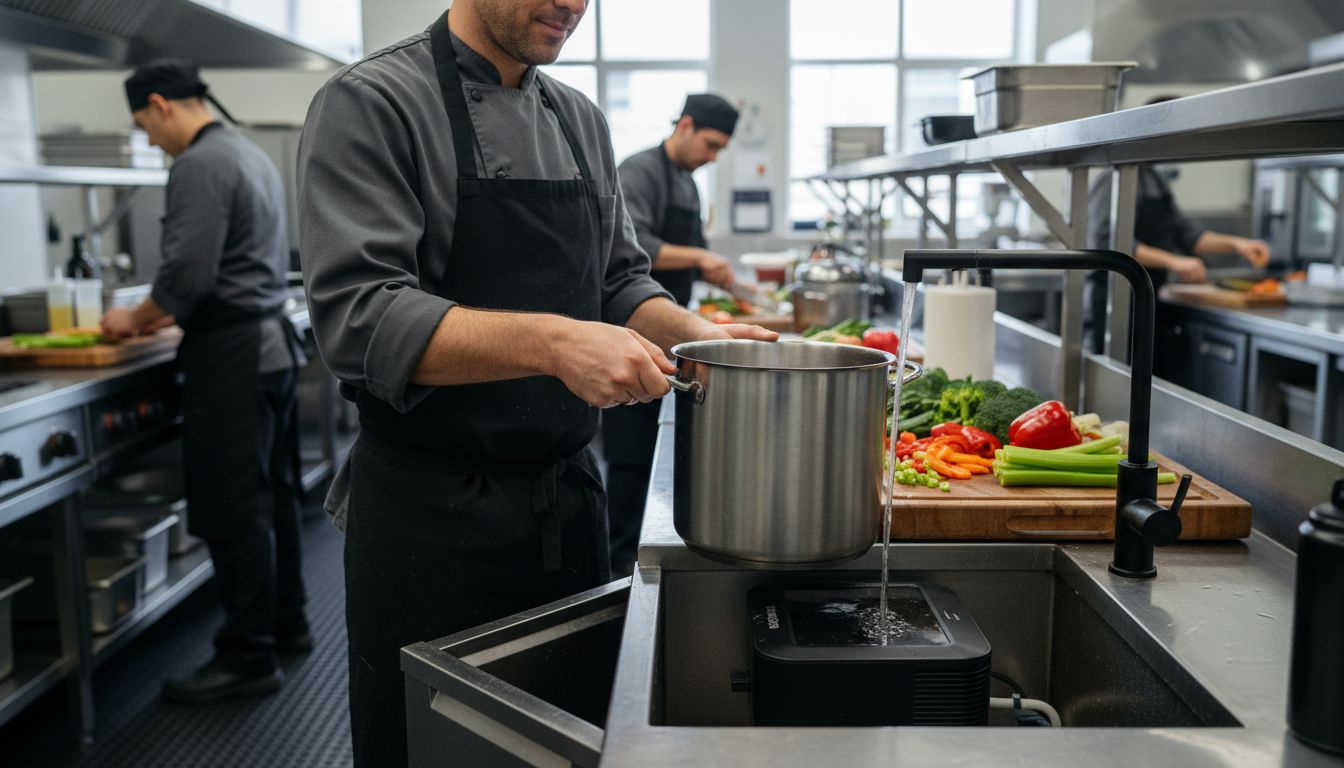
- Consistent water quality for cooking and drinking
- Compact design requiring minimal space
To gain deeper insights into selecting the right water purification technology, explore our guide on understanding the role of filtration technology. Whether you’re a homeowner prioritizing family health or a business owner maintaining strict quality standards, under-sink water purifiers offer a reliable, efficient solution for superior water treatment.
Cost Analysis and Alternative Solutions
Under-sink water purification systems represent a significant investment in home and business water treatment, with costs varying widely based on filtration technology and system complexity. Wikipedia highlights that these systems encompass initial installation expenses and ongoing maintenance costs for periodic filter replacements, making a comprehensive financial analysis crucial for potential buyers.
Wikipedia notes that reverse osmosis systems typically involve higher upfront and maintenance costs compared to alternative filtration methods. While these systems offer comprehensive contaminant removal, alternative filtration solutions like activated carbon filters provide more budget-friendly options with varying degrees of water purification efficiency.
Comparative water filtration options include:
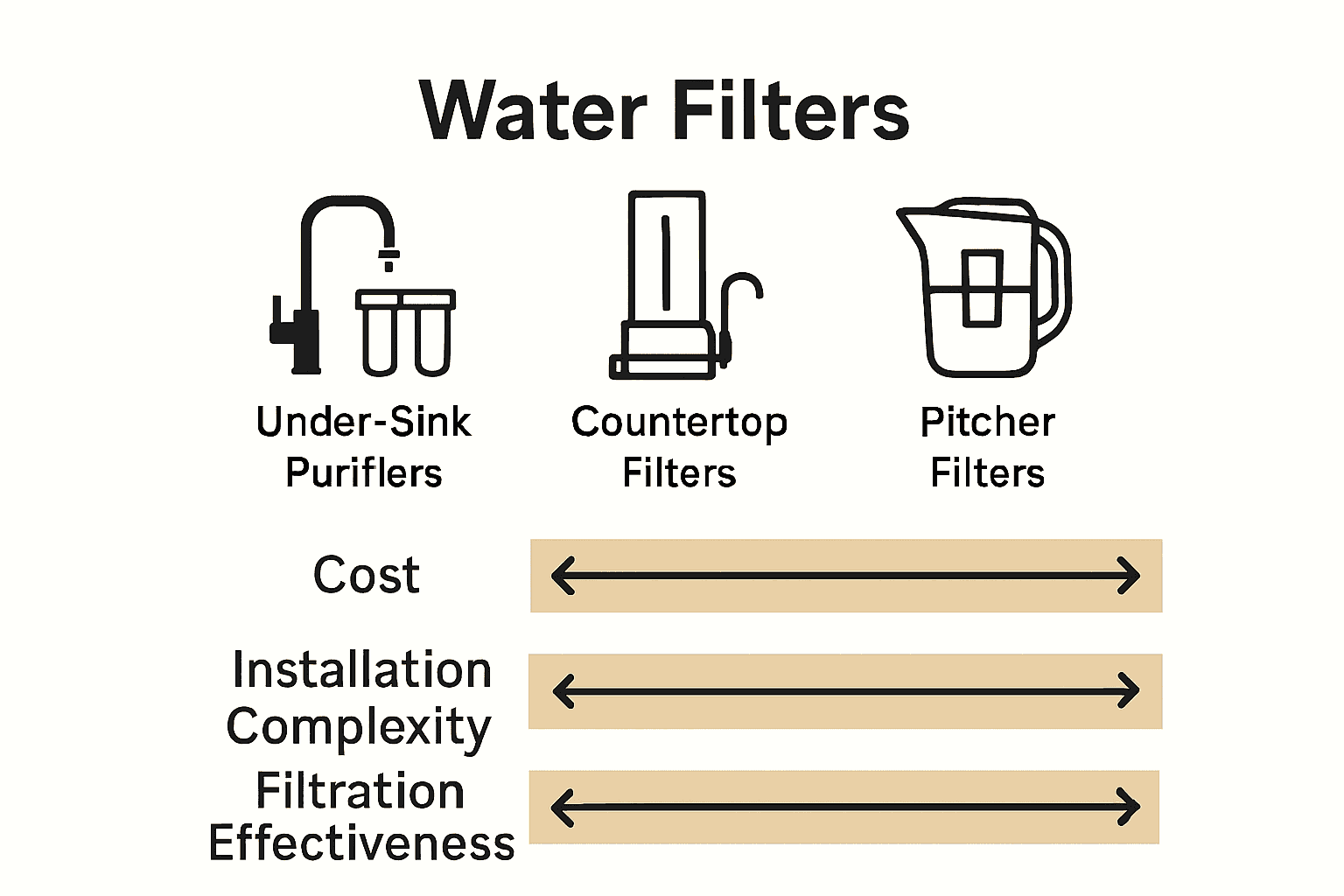
- Under-sink Purifiers: High initial cost, comprehensive filtration
- Countertop Filters: Lower cost, limited filtration capacity
- Whole-House Systems: Extensive coverage, significant installation expenses
- Activated Carbon Filters: Most affordable, basic contaminant removal
- Pitcher Filters: Minimal cost, lowest filtration effectiveness
To make an informed decision about water purification investments, explore our guide on understanding modern water purification technologies. Understanding the nuanced balance between initial expenses, maintenance costs, and filtration capabilities will help you select the most appropriate water treatment solution for your specific needs.
Transform Your Home Water Experience with Under-Sink Purifiers
If you have been wondering how to secure clean, safe drinking water right from your kitchen tap then under-sink water purifiers are the solution you need. The article highlights common challenges like contaminants, complicated installation, and maintenance which can feel overwhelming. With advanced filtration technologies such as reverse osmosis and copper-zinc filtration these systems deliver pure water reliably while saving counter space and reducing plastic waste.
Don’t let worries about water quality affect your family’s health or your business’s standards. Explore the range of expertly designed water purifiers that combine powerful filtration with easy installation and consistent maintenance support at Coway Water Purifier. Discover how you can enjoy the peace of mind that comes with crisp clear water ready anytime.
Ready to take control of your water quality now Visit our Uncategorized Archives – Coway Water Purifier to find the perfect under-sink model for your needs. Act today for healthier water tomorrow and experience hassle-free service and free installation at Coway Water Purifier. Your family’s health deserves nothing less.
Frequently Asked Questions
What are under-sink water purifiers and how do they work?
Under-sink water purifiers are advanced home water treatment systems installed beneath kitchen sinks that provide purified water directly from the tap using filtration technologies like reverse osmosis to remove contaminants.
What contaminants can under-sink purifiers remove?
Under-sink purifiers can effectively remove a wide range of contaminants, including sediments, chlorine, heavy metals, bacteria, viruses, and dissolved solids, depending on the filtration technologies used.
How often do I need to maintain an under-sink water purifier?
Regular maintenance is essential for optimal performance. Users should replace pre-filters and post-filters annually and the reverse osmosis membrane every 2-3 years to ensure effective filtration and water quality.
What filtration technologies are commonly used in under-sink water purifiers?
Common filtration technologies include reverse osmosis (RO), activated carbon filtration, copper-zinc filtration, UV sterilization, and sediment pre-filters, each targeting specific contaminants to ensure comprehensive water purification.
Recommended
- Complete Guide to Under Sink vs Countertop Purifiers – Coway Water Purifier
- 7 Advantages of Under-Sink Purifiers for Your Home – Coway Water Purifier
- What is Under-Sink Water Purifier? Understanding Its Importance – Coway Water Purifier
- Complete Guide to Under Sink Filtration Systems – Coway Water Purifier
- Understanding Why Invest in Water Filtration Systems – 8th Bend Plumbing Heating and Cooling
