
Uncategorized
What Is Ultrafiltration? A Family Water Safety Guide
Jun
TL;DR:
- Ultrafiltration is a pressure-driven membrane process that physically removes bacteria, viruses, and solids from water, maintaining beneficial minerals. It is effective for biological safety, uses minimal energy, and requires regular maintenance to preserve its lifespan. For most city households, point-of-use ultrafiltration alone provides reliable, chemical-free drinking water protection.
Ultrafiltration is a pressure-driven membrane filtration process that physically removes bacteria, viruses, and suspended solids from water by forcing it through semi-permeable membranes with pores measuring 0.01 to 0.1 micrometers. Unlike chemical disinfection, it works purely by size exclusion: contaminants too large to pass through the membrane are trapped and flushed away, while water and dissolved minerals flow through freely. The membranes are typically made from PVDF (polyvinylidene fluoride) or PES (polyethersulfone), and the system operates at pressures between 0.5 and 3 bar. For families who want genuinely safe drinking water without adding chemicals to the equation, ultrafiltration delivers a compelling combination of performance and simplicity.
What is ultrafiltration and how does it work?
The ultrafiltration process operates on one principle: physical size exclusion. Water is pushed through a semi-permeable membrane under pressure or vacuum, and anything larger than the membrane’s pores stays behind. Bacteria, viruses, protozoa, sediment, and colloidal particles are all physically blocked. Dissolved minerals like calcium and magnesium, which are small enough to pass through the pores, remain in your drinking water.
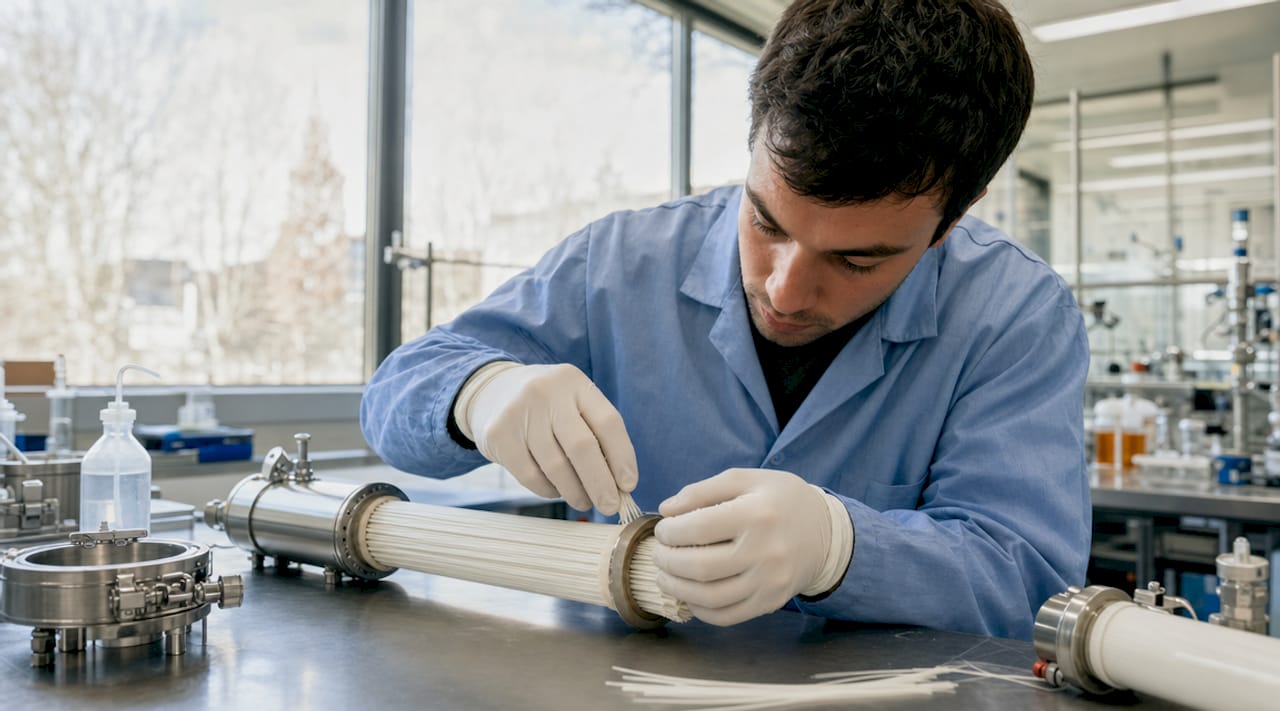
The most common membrane configuration in home and municipal systems is the hollow fiber design. Imagine thousands of tiny straws bundled together, each with microscopic pores along the walls. Water flows from the outside of the fibers inward (or inside-out, depending on the system), and the purified water collects in a central chamber. This design maximizes surface area in a compact footprint, which is why you find it in both under-sink units and large-scale water treatment systems.
To understand where ultrafiltration sits in the filtration spectrum, compare it to its neighbors. Microfiltration has larger pores (0.1 to 10 micrometers) and removes sediment and some bacteria but misses viruses. Nanofiltration has smaller pores and begins to remove some dissolved salts. Reverse osmosis goes further still, removing nearly everything including minerals. Ultrafiltration sits squarely in the middle: thorough enough to eliminate pathogens, gentle enough to preserve the minerals your body needs.
Pro Tip: If your water source is municipal tap water, ultrafiltration alone is often sufficient for biological safety. If you rely on well water or a source with known heavy metal contamination, pair ultrafiltration with a carbon block or reverse osmosis stage for complete coverage.
What are the benefits and limitations of ultrafiltration?
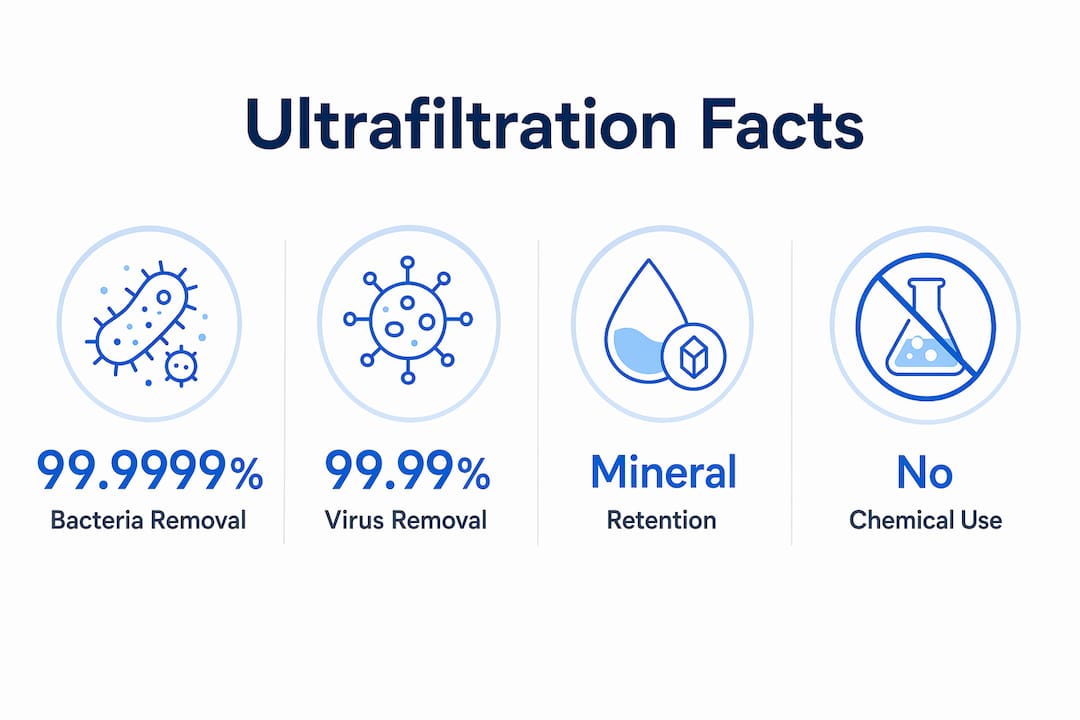
The headline benefit is pathogen removal without chemistry. Ultrafiltration achieves up to 99.9999% bacterial removal and 99.99% viral removal. That is a 6-log reduction for bacteria and a 4-log reduction for viruses, numbers that meet or exceed the standards set by the U.S. EPA for drinking water treatment. No chlorine, no chloramines, no disinfection byproducts.
The mineral preservation advantage is real and measurable. Because UF membranes retain minerals while blocking pathogens, your filtered water still contains calcium, magnesium, and potassium. Reverse osmosis strips all of these out, which is why RO water often tastes flat and requires remineralization cartridges to restore palatability. Ultrafiltration skips that step entirely.
The limitation worth knowing upfront: ultrafiltration does not remove dissolved salts or heavy metals like lead, arsenic, or nitrates. If your water report shows elevated heavy metals or your area has hard water problems, a standalone UF system will not solve those issues. You need to layer it with reverse osmosis or a water softener for full treatment.
Ultrafiltration vs. reverse osmosis vs. microfiltration
| Method | Pore size | Removes pathogens | Retains minerals | Removes heavy metals | Energy use |
|---|---|---|---|---|---|
| Microfiltration | 0.1–10 µm | Bacteria only | Yes | No | Low |
| Ultrafiltration | 0.01–0.1 µm | Bacteria and viruses | Yes | No | Low to moderate |
| Reverse osmosis | 0.0001 µm | Bacteria and viruses | No | Yes | Higher |
Pro Tip: For most city households on treated municipal water, ultrafiltration offers the best balance of safety and taste. Reserve reverse osmosis for situations where your water report flags dissolved contaminants like lead or nitrates.
The environmental case for ultrafiltration is also worth noting. Because it is a physical barrier technology, it eliminates the need for chemical disinfectants and produces no chemical byproducts. It also uses less energy than reverse osmosis and wastes less water, since UF systems typically recover 90 to 95 percent of feed water versus 50 to 75 percent for standard RO units.
How to maintain your ultrafiltration system properly
Maintenance is where most homeowners underestimate ultrafiltration. The membranes are durable, but they require consistent care to perform at specification. The good news is that modern home UF systems automate most of the routine work.
Here are the core maintenance tasks every UF system owner should know:
- Automated backwash cycles: Most systems run backwash cycles every 15 to 45 minutes, each lasting 30 to 60 seconds. During backwash, water flows in reverse through the membrane to dislodge accumulated particles. This happens automatically and requires no action from you.
- Chemically enhanced cleaning (CIP): Every 1 to 12 months, depending on your source water quality, the membranes need a chemical soak to remove biofilm, scaling, or organic buildup that backwashing cannot clear. Skipping CIP leads to irreversible flux loss and shortened membrane life.
- Sediment pre-filter replacement: Installing a sediment pre-filter rated at 5 to 20 microns upstream of your UF membrane is non-negotiable. Sharp particles, sand, and oily contaminants can physically puncture hollow fibers, causing permanent damage that no cleaning will fix.
- Source water monitoring: If your water source changes seasonally (common with well water or surface water), source water variability requires you to adjust backwash frequency and cleaning schedules. A system tuned for summer water quality may foul faster in spring runoff conditions.
- Pressure checks: A drop in output flow rate or a rise in transmembrane pressure is the earliest sign of fouling. Check these readings quarterly if your system provides a pressure gauge or flow meter.
The most common mistake homeowners make is treating ultrafiltration as a set-and-forget technology. The automated backwash creates that impression, but the CIP schedule and pre-filter replacement are manual responsibilities. Neglect either one and you will shorten membrane life from a potential 5 to 10 years down to 2 to 3 years.
What are the main applications of ultrafiltration at home and beyond?
Ultrafiltration fits into home water systems in two primary configurations. Understanding which one applies to your situation helps you choose the right product.
- Point-of-use (POU) systems are installed at a single tap, typically under the kitchen sink or on the countertop. They treat only the water you drink and cook with. These are the most common home configurations and the most affordable entry point into UF technology.
- Point-of-entry (POE) systems treat all water entering the home. They protect every faucet, shower, and appliance. POE setups are more common in homes with well water or in areas where biological contamination affects the whole supply.
- UF as RO pre-treatment: In multi-stage systems, ultrafiltration acts as a pre-treatment stage before reverse osmosis. It removes the bulk of biological and particulate load, protecting the finer RO membrane from fouling and extending its service life significantly.
- Municipal water treatment: Cities like Singapore and Amsterdam use large-scale UF membrane systems as part of their drinking water treatment trains, replacing or supplementing conventional sand filtration and chemical coagulation.
- Food and beverage processing: Ultrafiltration in food processing is used to concentrate proteins in dairy production (cheese and whey protein), clarify juices, and sterilize beverages without heat. The same size-exclusion principle that protects your drinking water also preserves flavor compounds in cold-pressed juice.
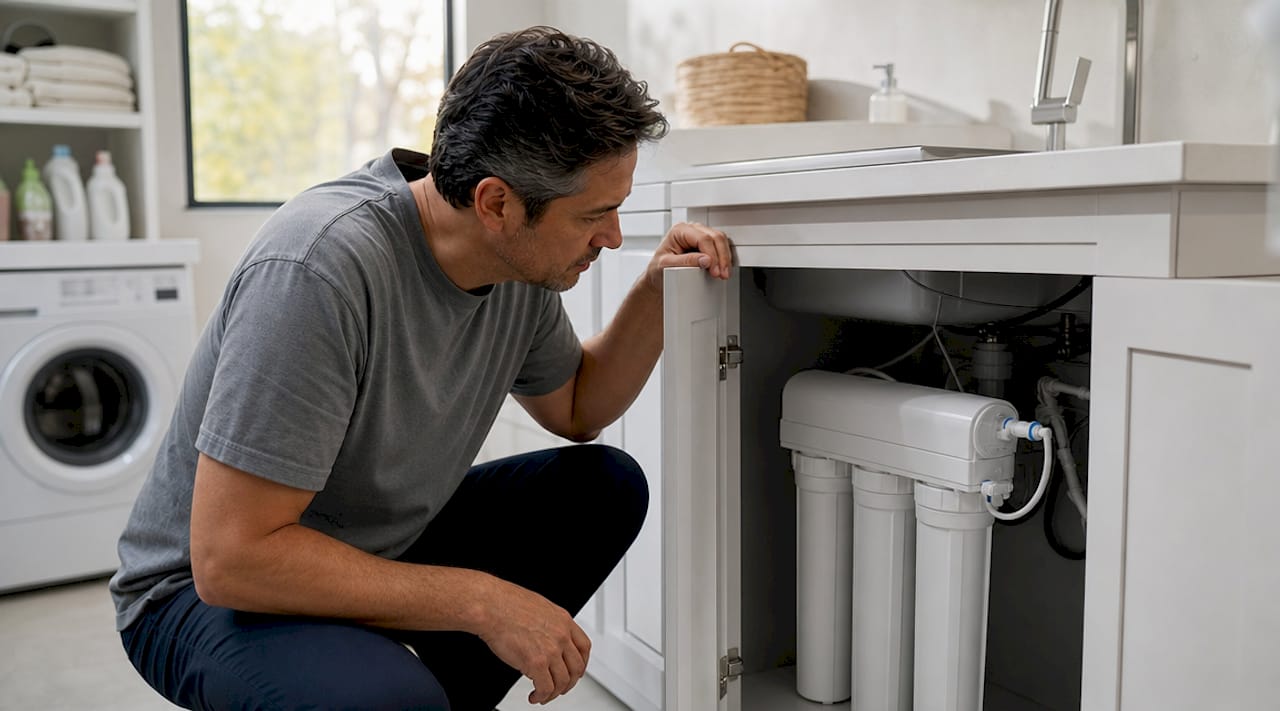
For families, the most practical takeaway is that a POU ultrafiltration system under your kitchen sink delivers hospital-grade biological protection for the water you actually consume. Pair it with UV filtration for an additional layer of pathogen inactivation if your source water has a history of contamination events.
Key takeaways
Ultrafiltration is the most effective chemical-free method for removing bacteria and viruses from drinking water while preserving the minerals your body needs.
| Point | Details |
|---|---|
| Pathogen removal performance | UF achieves up to 99.9999% bacterial and 99.99% viral removal without chemical disinfectants. |
| Mineral preservation advantage | UF retains calcium, magnesium, and potassium that reverse osmosis removes, improving taste and health value. |
| Known limitation | UF does not remove dissolved heavy metals or salts; pair with reverse osmosis for contaminated source water. |
| Maintenance is non-negotiable | Sediment pre-filters and periodic CIP cleaning prevent irreversible membrane fouling and extend system life. |
| Best home application | Point-of-use under-sink or countertop UF systems deliver reliable biological protection for drinking and cooking water. |
Why I think ultrafiltration is underrated for family homes
Most conversations about home water filtration default to reverse osmosis as the gold standard. I understand the appeal. RO removes nearly everything, and that thoroughness feels reassuring. But after spending years evaluating water purification systems, I have come to believe that RO is oversold to households that do not need it, and ultrafiltration is consistently underrated.
Here is what I have observed: the majority of families on municipal water supplies face biological risk, not dissolved chemical risk. Their water is treated, but aging pipes and distribution system failures introduce bacteria and viruses. Ultrafiltration addresses that risk precisely and completely, without stripping out the minerals that make water taste good and contribute to daily calcium and magnesium intake.
The maintenance reality also favors UF for most households. RO systems require membrane replacement, remineralization cartridge management, and pressure tank maintenance. A well-maintained UF system with a quality sediment pre-filter is genuinely simpler to own long-term. The automated backwash handles the daily work, and a CIP cleaning once or twice a year keeps performance consistent.
Where I do recommend going beyond UF is in homes with well water, older plumbing with lead solder joints, or water reports showing elevated nitrates or arsenic. In those cases, layering UF with a carbon block or reverse osmosis stage is the right call. But for the typical city household? Ultrafiltration alone, maintained properly, is more than enough.
— Soldierboy
Explore Coway’s ultrafiltration water purifiers
Cowayswaterpurifier offers a range of water purification systems built around advanced membrane technology, including ultrafiltration-based configurations for countertop, under-sink, and whole-home setups. Each system is designed with health and safety as the baseline, not an add-on.
If you want to understand how ultrafiltration fits into a complete water purification process, Cowayswaterpurifier’s detailed guide walks through every stage from pre-filtration to final output. For families ready to choose a specific system, the under-sink purifier comparison covers seven expert-selected models with clear performance and maintenance breakdowns. Free delivery, installation, and ongoing maintenance support are included with every purchase.
FAQ
What does ultrafiltration remove from water?
Ultrafiltration removes bacteria, viruses, protozoa, suspended solids, and colloidal particles through physical size exclusion. It does not remove dissolved salts, heavy metals, or chemical contaminants.
Is ultrafiltration safe for drinking water?
Ultrafiltration is safe and effective for drinking water, achieving up to 99.9999% bacterial removal and 99.99% viral removal without chemical disinfectants. It meets U.S. EPA standards for biological water treatment.
What is the difference between ultrafiltration and reverse osmosis?
Ultrafiltration uses larger pores (0.01 to 0.1 micrometers) and retains beneficial minerals, while reverse osmosis uses much finer membranes and removes nearly all dissolved substances including minerals and heavy metals.
How often does an ultrafiltration membrane need to be replaced?
With proper maintenance including regular backwashing and periodic CIP cleaning, UF membranes typically last 5 to 10 years. Neglecting pre-filtration or cleaning schedules can reduce that lifespan to 2 to 3 years.
Can ultrafiltration work as a standalone home water purifier?
For households on treated municipal water, ultrafiltration works as a standalone solution for biological safety. Homes with well water or elevated heavy metals should pair UF with reverse osmosis or a carbon block filter for complete protection.
Recommended
- Improve Drinking Water Safety: Essential Steps for Families – Coway Water Purifier
- Water safety standards explained for healthier homes – Coway Water Purifier
- The Essential Guide to Safe Drinking Water – Coway Water Purifier
- Essential Guide to Safe Drinking Water for Homeowners – Coway Water Purifier
