
Uncategorized
How to Reduce Indoor Pollutants for a Healthier Home
May
TL;DR:
- Indoor air can be 2 to 5 times more polluted than outdoor air, posing significant health risks.
- Reducing pollutants through source control, ventilation, and proper filtration effectively improves indoor air and water quality.
The air inside your home may be making you sick, and most people have no idea. Indoor air can be 2 to 5 times more polluted than the air outside, and Americans spend roughly 90% of their time indoors. Knowing how to reduce indoor pollutants is not a niche concern. It is one of the most practical health decisions you can make for yourself and anyone sharing your space. This guide covers both air and water pollutants, giving you a clear, realistic plan from identifying problems to verifying results.
Table of Contents
- Key takeaways
- Common indoor pollutants and where they come from
- Preparing your home: assessments and tools you need
- Step-by-step methods to reduce indoor air pollutants
- Practical ways to reduce indoor water pollutants
- Monitoring and verifying your results over time
- My honest take on what actually works
- How Cowayswaterpurifier makes this easier
- FAQ
Key takeaways
| Point | Details |
|---|---|
| Indoor air is often worse than outdoor | Pollution levels inside can be 2 to 5 times higher, making home-based action urgent. |
| Source control beats everything else | Removing or reducing pollutant sources is more effective than relying on purifiers alone. |
| Test before you treat | Radon and water quality tests give you a baseline so your efforts are targeted, not guesswork. |
| Humidity control is non-negotiable | Keeping indoor humidity between 30% and 50% stops mold before it starts. |
| Water needs attention too | Filtration and UV sterilization remove chemical and biological contaminants from your drinking water. |
Common indoor pollutants and where they come from
Before you can fix a problem, you need to know exactly what you are dealing with. Indoor pollutants fall into two broad categories: what is in your air and what is in your water. Both categories carry real health risks, and both are more common in typical homes than most people realize.
Air pollutants to know:
- Volatile organic compounds (VOCs): Released by paints, cleaning products, furniture, and adhesives. They cause headaches, eye irritation, and long-term organ damage with chronic exposure.
- Radon: A naturally occurring radioactive gas that seeps through foundation cracks. It is the second leading cause of lung cancer in the United States.
- Carbon monoxide: Produced by gas stoves, fireplaces, and attached garages. Odorless and deadly at high concentrations.
- Mold and biological pollutants: Triggered by moisture and poor ventilation. They aggravate allergies and respiratory conditions.
- Particulate matter (PM2.5): Tiny particles from candles, cooking, and tobacco smoke that penetrate deep into the lungs.
Water pollutants to know:
- Lead: Leaches from older pipes and fixtures, especially in homes built before 1986. Poses severe neurological risks, particularly for children.
- Chlorine and chloramines: Added during municipal treatment to kill bacteria, but linked to unpleasant taste and potential long-term health effects at elevated levels.
- Bacteria and viruses: Can enter through well water, damaged infrastructure, or contaminated storage tanks.
- Sediment and heavy metals: Include rust, sand, arsenic, and nitrates from agricultural runoff or corroded plumbing.
The sources are everywhere. Cleaning products, building materials, combustion appliances, old plumbing, and even personal care products all contribute. Recognizing the origin of the problem is your first step toward meaningful improvement.
Preparing your home: assessments and tools you need
Jumping into fixes without testing first is one of the most common mistakes homeowners and renters make. You might spend money on an air purifier when radon mitigation is the real priority. Start with a baseline.
Initial assessments to complete:
- Test for radon with a short-term or long-term test kit (available at hardware stores for under $30). The EPA recommends action when levels reach 4 pCi/L or higher.
- Order a certified water quality test through your municipality or a private lab to check for lead, bacteria, nitrates, and chlorine levels.
- Measure indoor humidity with a basic hygrometer. You are looking for a reading between 30% and 50%.
- Walk through each room and note visible signs of mold, condensation, or musty odors.
Essential tools and supplies:
| Tool or material | Purpose | Where to get it |
|---|---|---|
| Radon test kit | Detect radon gas levels in your home | Hardware stores, Amazon |
| Hygrometer | Monitor indoor humidity in real time | Home improvement stores |
| HEPA air purifier | Capture airborne particles and allergens | Specialty retailers, online |
| Water quality test kit | Identify chemical and biological contaminants | Local utility provider or lab |
| MERV 13 HVAC filter | Filter fine particles through your home’s air system | HVAC suppliers, hardware stores |
| Carbon monoxide detector | Alert you to dangerous CO levels | Any major retailer |
Pro Tip: Before buying any air purifier, measure the square footage of the room where you plan to use it. This single step will save you from purchasing an underpowered unit that runs all day without meaningful results.
Once you have your test results, you can build a pollution control plan tailored to what is actually in your home rather than what you assume might be there.
Step-by-step methods to reduce indoor air pollutants
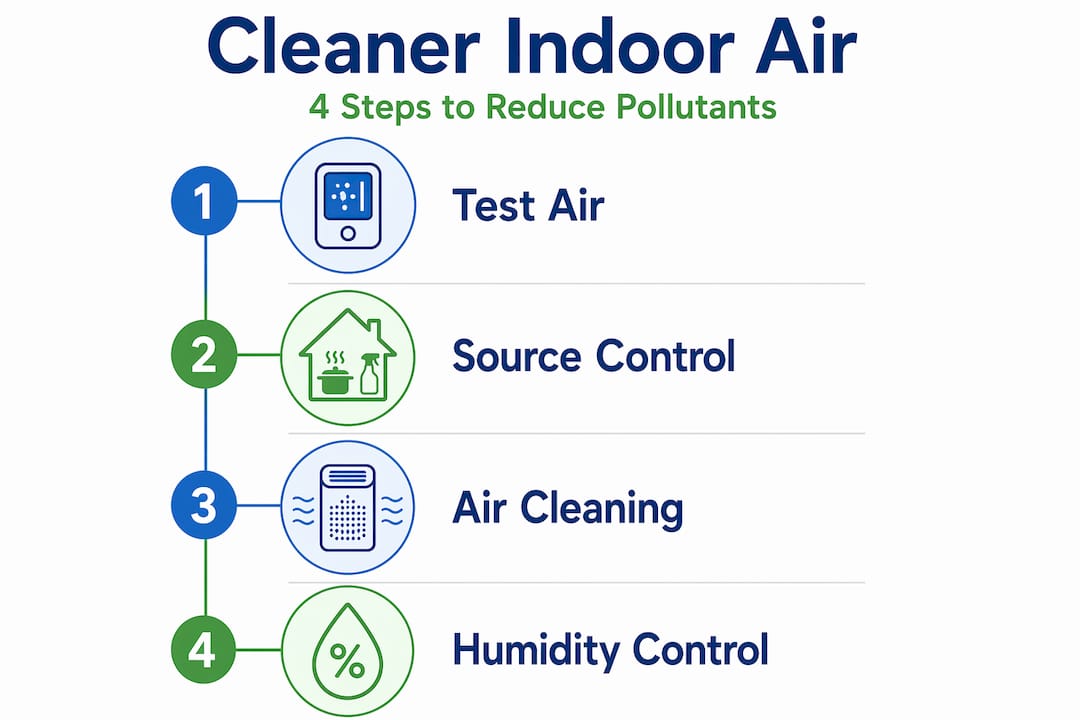
The EPA recommends a three-part strategy for improving indoor air quality: source control first, then better ventilation, and finally air cleaning. That order matters. Here is how to apply all three.
Step 1: Eliminate or reduce pollution sources
- Switch to fragrance-free, VOC-free cleaning products. Look for products labeled “zero-VOC” on the packaging.
- Stop smoking indoors entirely, and ask guests to do the same.
- Fix any water leaks immediately. Moisture left for even 24 to 48 hours creates conditions for mold growth.
- When renovating, choose low-VOC paints and formaldehyde-free materials.
- Ventilate your garage before entering from a connected door, and never idle a vehicle inside it.
Step 2: Improve ventilation throughout your home
- Open windows on opposite sides of your home to create cross-ventilation when outdoor air quality is good.
- Run bathroom and kitchen exhaust fans during and for 15 minutes after any activity that produces moisture or fumes.
- Check your HVAC system’s fresh air intake to make sure it is not blocked or damaged.
- Replace HVAC filters with a MERV 13-rated filter if your system supports it. This rating captures mold spores, pollen, and fine dust effectively.
Step 3: Add air cleaning where it counts
Place an air purifier in the room where you spend the most time, typically your bedroom or living room. When selecting a unit, CADR is the metric that tells you the most. CADR measures filtration efficiency combined with airflow, not just raw fan speed. A purifier with a high fan speed but a poor filter will push dirty air around the room. Look for units with AHAM Verifide certification to avoid misleading marketing. For a 200-square-foot bedroom, you want a CADR of at least 133.
Step 4: Control humidity
Keep indoor humidity between 30% and 50% at all times. Use a dehumidifier in basements and bathrooms. If you run a humidifier in winter, clean it weekly. Uncleaned humidifiers aerosolize mold and bacteria, turning a wellness device into a pollution source.
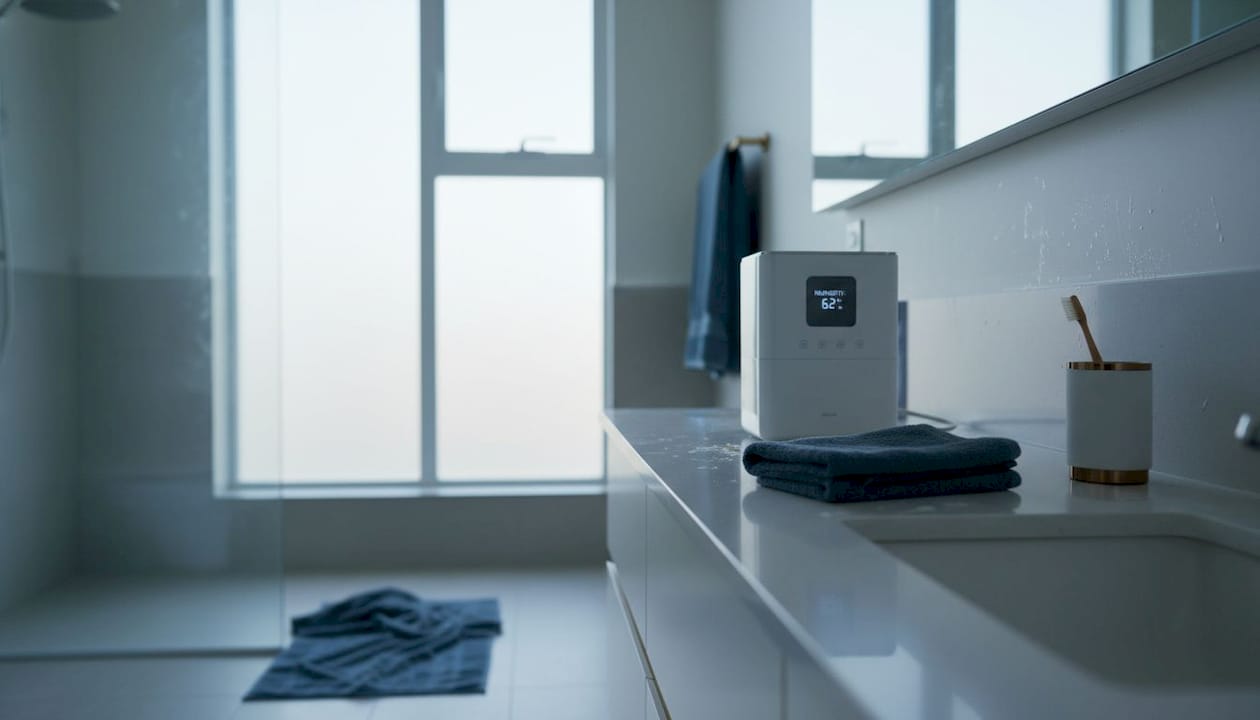
Pro Tip: One of the fastest ways to improve indoor air quality at home is to change your HVAC filter on a regular schedule, not just when you remember. Set a recurring phone reminder every 60 to 90 days.
For a full room-by-room checklist, the air purification checklist from Cowayswaterpurifier is a solid starting point.
Practical ways to reduce indoor water pollutants
Clean air gets most of the attention, but your drinking water carries its own risks. These steps apply whether you own your home or rent.
- Get your water tested first. Contact your local water utility for a free annual report, and supplement it with a home test kit for lead and bacteria if your building is older.
- Install a point-of-use filter at your kitchen tap. Look for filters certified by NSF International for the specific contaminants found in your water test results.
- Consider under-sink reverse osmosis if your contamination profile is serious. Reverse osmosis removes up to 99% of dissolved solids, including lead, arsenic, and nitrates.
- Add UV sterilization for biological threats. UV sterilization kills microorganisms without adding chemicals to your water, making it a clean solution for well water or areas with bacterial risk.
- Flush your taps regularly if you are in an older building. Running cold water for two minutes before drinking or cooking clears out water that has been sitting in lead pipes.
Additional tips for renters specifically:
- If your landlord is unresponsive to plumbing concerns, document everything in writing. In most states, landlords are legally required to provide safe drinking water.
- Countertop or pitcher-style filters require zero installation and are fully portable when you move.
- Check whether your building uses copper or galvanized steel pipes. Galvanized pipes corrode over time and release zinc and iron into tap water.
Homeowners have more options but also more responsibility. Annual inspections of your water heater, pipes, and any filtration system you own are not optional if you want sustained results.
Monitoring and verifying your results over time
Reducing indoor pollutants is not a one-time project. It requires periodic verification to know your efforts are working and to catch new problems early.
| Method | How often | Cost range | What it tells you |
|---|---|---|---|
| Radon retest | Every 2 years | $15 to $30 | Whether radon levels have changed after mitigation |
| Water quality test | Annually | $30 to $150 | Status of lead, bacteria, and chemical levels |
| Hygrometer reading | Daily or weekly | One-time $10 to $30 | Current humidity and mold risk |
| Air purifier filter check | Every 60 to 90 days | Cost of replacement filter | Whether filtration is still effective |
| HVAC inspection | Annually | $80 to $150 | Duct condition, filter status, fresh air intake |
Regular testing and monitoring is what separates homeowners who genuinely improve their air quality from those who buy equipment and assume the problem is solved.
Watch for these signs that a problem persists: recurring musty odors even after cleaning, unexplained allergy or asthma flares, visible condensation on windows in non-winter months, or discolored water from the tap.
Pro Tip: Mold does not die when humidity drops. It goes dormant. If you have had a mold problem and fixed the moisture source, keep humidity below 50% indefinitely. Any sustained rise above 60% can reactivate dormant spores within 24 to 48 hours.
When in doubt, call a certified industrial hygienist for air quality or a licensed plumber for water systems. Professional help is not a sign of failure. It is often the fastest path to a real fix.
My honest take on what actually works
I have worked alongside homeowners and renters for years, and I keep seeing the same pattern. People buy a shiny air purifier, feel good about it for a week, and then forget that the leaky bathroom faucet is still growing mold behind the drywall. The machine is treating a symptom. The source is still producing pollution.
Source control is not glamorous. Switching cleaning products, fixing a drip, sealing a crack in your foundation wall. None of that makes a compelling social media post. But in my experience, those unglamorous actions do more for your indoor air quality than any device you can buy.
The marketing around air purifiers and water filters has gotten very sophisticated. Some products inflate airflow numbers to make CADR look better than it is. Others claim to eliminate pollutants they can only dilute. My advice is straightforward: look for third-party certifications, not marketing language. The indoor vs. outdoor pollution comparison is a useful read if you want to understand what you are actually up against before spending a dollar.
Consistency wins. A $40 filter changed on schedule outperforms a $400 purifier with a neglected filter every single time.
— Soldierboy
How Cowayswaterpurifier makes this easier
Putting all of these steps into practice takes the right equipment, and that is where Cowayswaterpurifier’s product lineup earns its place. Their air purifiers carry verified CADR ratings, so you are not guessing whether a unit is powerful enough for your room size.
For water, Cowayswaterpurifier offers filtration systems that combine activated carbon, multi-stage filtration, and UV sterilization to address both chemical and biological threats at once. The water purification process guide breaks down exactly how each technology layer works and which contaminants each stage targets, so you can match a system to your specific water test results.
If you are ready to select an air purifier that fits your room and your health priorities, the 2026 air purifier selection guide on Cowayswaterpurifier walks you through CADR ratings, filter types, and what to look for by room size. Free installation and maintenance support make it easier to stay consistent, which is ultimately what protects your health.
FAQ
How do I know if my indoor air quality is poor?
Common signs include persistent headaches, unexplained allergy symptoms, musty odors, and visible mold or condensation. A home radon test kit and a CADR-certified air quality monitor can confirm suspicions within days.
What is the fastest way to improve indoor air quality at home?
Opening windows for cross-ventilation and switching to VOC-free cleaning products give you immediate results with zero equipment cost. For sustained improvement, pair those changes with a certified HEPA air purifier placed in your main living space.
How often should I test my drinking water at home?
Test annually at a minimum, and immediately after any plumbing work, a flood, or if you notice changes in taste, color, or odor. Renters in older buildings should test for lead specifically, since corroded pipes are the most common source.
Does controlling humidity really prevent mold?
Yes, but only if you maintain it consistently. Mold goes dormant when humidity drops but reactivates quickly when moisture returns, so keeping levels below 50% is an ongoing commitment, not a one-time fix.
Can renters reduce indoor pollutants without modifying the property?
Absolutely. Portable HEPA air purifiers, countertop water filters, pitcher filters, and hygrometers require no installation and move with you. Switching to low-VOC cleaning products and ventilating consistently are the highest-impact zero-modification changes you can make.
Recommended
- Indoor Air Optimization Process for Healthier Homes – Coway Water Purifier
- Understanding Indoor Pollutants and Air Purifiers – Coway Water Purifier
- Essential air quality improvement checklist for a healthier home – Coway Water Purifier
- 7 Most Common Indoor Air Pollutants and How to Reduce Them – Coway Water Purifier
