
Uncategorized
Healthy Workplace Water Tips: Boost Hydration & Wellness
Apr
TL;DR:
- Employees need adequate access to high-quality, filtered water to improve focus and productivity.
- Installing visible, touchless water stations and promoting hydration habits helps build a supportive wellness culture.
- Tailoring hydration strategies for high-heat, older, or high-stress staff reduces dehydration risks effectively.
Hydration is one of the most underrated levers for workplace performance. When employees are even mildly dehydrated, focus drops, decision-making slows, and energy fades before lunch. Yet most offices treat water access as an afterthought, sticking a single water cooler in the break room and calling it done. OSHA requires sanitary, free, and accessible drinking water for all employees, especially in heat, but compliance alone is not a wellness strategy. This guide walks office managers and HR professionals through evidence-based steps to build a workplace where staying hydrated is easy, habitual, and genuinely supported.
Table of Contents
- Understand workplace hydration needs and requirements
- Install quality water stations for access and hygiene
- Create hydration habits: Reminders, challenges, and education
- Handle special cases: Heat, vulnerable staff, and monitoring
- Why most workplace hydration programs fall short
- Upgrade your office hydration solutions with Coway
- Frequently asked questions
Key Takeaways
| Point | Details |
|---|---|
| Legal hydration minimums | Offices must provide sanitary, free water and follow OSHA’s requirements, especially in hot environments. |
| Quality station placement | Strategically placed, bottleless filtered water stations increase hygiene and boost intake. |
| Make water visible and social | Reminders, group challenges, and leadership modeling drive hydration habits at work. |
| Address special needs | High heat, older staff, and long hours require monitoring and sometimes electrolyte solutions. |
Understand workplace hydration needs and requirements
Before you can build a hydration program, you need to know what “enough” actually looks like. The general benchmarks are straightforward: daily water intake varies by person, but research points to clear targets most workplaces ignore.
| Group | Daily water target |
|---|---|
| Women | 11.5 cups (about 2.7 liters) |
| Men | 15.5 cups (about 3.7 liters) |
| General rule | Half your body weight in ounces |
According to wellness research, daily benchmarks of 11.5 cups for women and 15.5 cups for men represent the minimum most adults need, and office environments with dry air, long hours, and stress push those numbers higher. That means a 160-pound employee should be drinking around 80 ounces of water daily, roughly ten standard glasses.
On the legal side, OSHA mandates accessible, sanitary drinking water at every workplace. This is not optional. In heat-exposed environments, the requirement scales up to at least one quart per employee per hour. For standard office settings, the mandate is less specific, but the spirit is clear: water must be free, clean, and reachable.
Here is what that means practically for your team:
- Calculate team-wide needs. Multiply the average body weight of your staff by 0.5 to estimate daily ounces per person.
- Account for office conditions. Dry HVAC systems, high-stress roles, and long shifts all increase fluid needs.
- Track consumption patterns. Notice when and where employees skip water, and use that data to guide station placement.
- Understand the quality factor. Understanding filtered water benefits is just as important as tracking quantity.
One underappreciated insight: most employees do not drink enough water simply because the available water tastes bad or feels inconvenient to access. Fixing the supply side is step one.
Install quality water stations for access and hygiene
Understanding hydration needs, the next critical area is how you provide quality water options. The type of dispenser you choose shapes how often employees actually use it.
| Feature | Bottleless filtered dispenser | Traditional bottled cooler |
|---|---|---|
| Water quality | Consistent, filtered | Varies by supplier |
| Hygiene | Higher with touchless models | Risk of bottle contamination |
| Cost over time | Lower | Higher (bottle delivery fees) |
| Environmental impact | Lower plastic waste | Higher plastic waste |
| Maintenance | Filter changes, serviced | Bottle swaps, cleaning |
Filtered, touchless dispensers improve hygiene and convenience, supporting higher intake and measurably reducing absenteeism. Touchless models remove the shared-surface problem entirely, which matters in open-plan offices where dozens of hands touch the same lever daily.

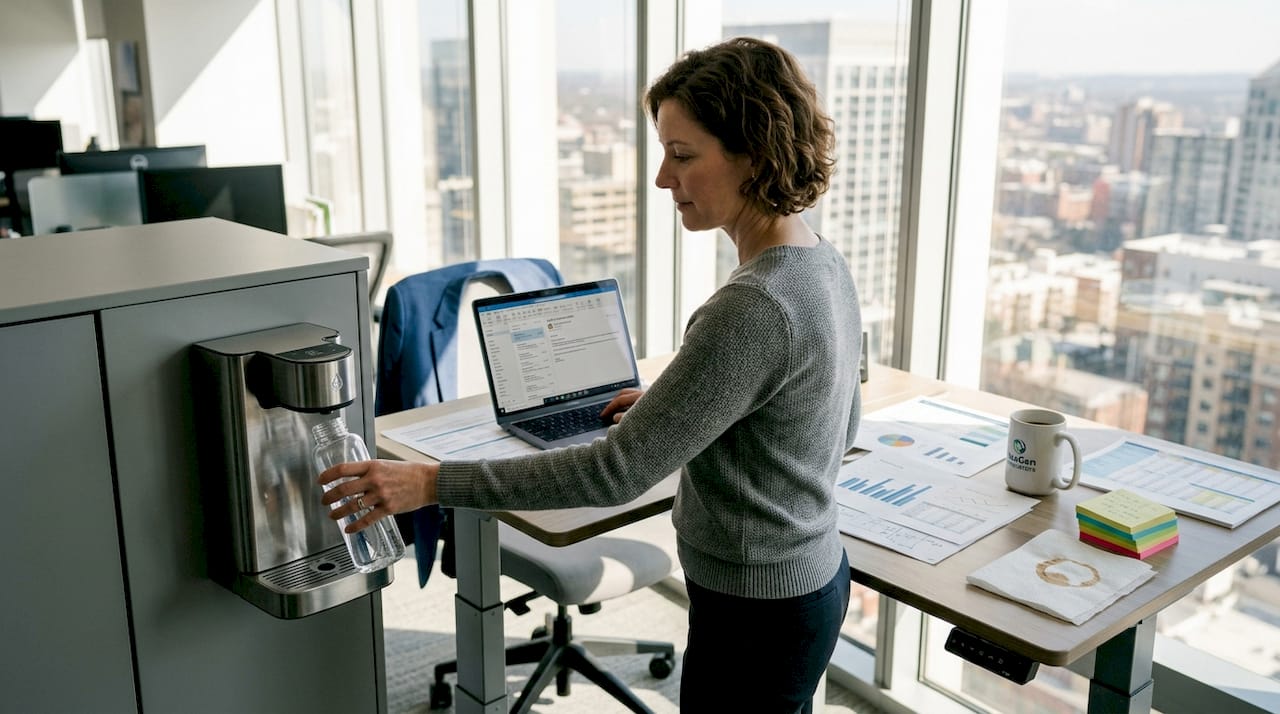
Placement strategy matters just as much as equipment. Best practice is one station per floor, or one per major work zone, so no employee has to travel more than one floor to reach water. When water feels far away, people simply skip it.
Key decisions to guide your setup:
- Bottleless vs. bottled. Bottleless filtered units are cleaner, cheaper long-term, and more sustainable. Explore contactless water dispenser benefits to see how modern units compare.
- Touchless vs. manual. Touchless dispensers reduce germ spread and feel more premium, which nudges employees to use them more.
- Temperature options. Offering cold, room temperature, and hot water increases appeal across seasons and preferences.
- EPA-certified units. Look for EPA WaterSense stations that meet efficiency and safety benchmarks.
Pro Tip: Place a water station within direct line of sight of the main workspace, not hidden in a back hallway. Visibility alone increases usage by reminding employees to drink throughout the day.
Understanding why water filters matter helps you make a stronger case to leadership when budgeting for upgrades. Filtered water is not a luxury; it is the baseline for a credible wellness program.
Create hydration habits: Reminders, challenges, and education
With upgraded stations in place, building healthy water habits is the next step. Access alone does not create behavior. You need systems that prompt, reward, and reinforce daily water intake.
Here is a practical framework to get started:
- Set up digital reminders. Use Slack, Teams, or a free hydration app to send gentle nudges at 10 a.m., 1 p.m., and 3 p.m. Brief prompts like “Time for a water break” take seconds and work.
- Distribute branded water bottles. Give each employee a measured bottle (at least 24 oz) so they can track intake visually throughout the day.
- Launch a monthly team challenge. Track who hits their daily goal most consistently. Small prizes or public recognition go a long way.
- Host a quarterly education session. Cover the real risks of dehydration and the less obvious signs like headaches, irritability, and poor concentration.
- Make it social. Pair water breaks with short stretch breaks or informal team check-ins to build positive associations.
Team challenges and reminders measurably increase workplace water intake and overall engagement with wellness programs. The social element is key. When hydration becomes a team behavior rather than a personal responsibility, participation climbs.
Manager modeling is one of the most underused tools in workplace wellness. When leadership is visibly drinking water in meetings, keeping a bottle at their desk, and joining hydration challenges, staff follow.
Pro Tip: Pair your hydration challenge with a shared leaderboard displayed on a common screen. Friendly competition works better than passive reminders alone.
For deeper staff education, a solid office water education resource helps employees understand not just how much to drink, but why water quality matters for their daily energy and long-term health.
Handle special cases: Heat, vulnerable staff, and monitoring
Not all teams have the same risks, so here is how to tailor hydration for special cases. A one-size-fits-all approach misses the employees who need the most support.
Older adults face dehydration at rates of 17 to 28% in workplace settings, and heat exposure compounds that risk significantly. Aging reduces the thirst sensation, meaning older staff may not feel thirsty even when they are already dehydrated.
| Special case | Recommended action |
|---|---|
| Heat-exposed roles | Minimum 1 quart/hour, shade breaks, electrolytes |
| Older employees | Scheduled reminders, check-ins, cooler workspaces |
| Employees with medical needs | Coordinate with HR and healthcare providers |
| Long shifts (over 8 hours) | Electrolyte options alongside water |
| High-stress or cognitive roles | Prioritize cold, filtered water access near desks |
For dehydration risks in high-heat environments, the consequences are serious: heat exhaustion, cognitive errors, and in severe cases, heat stroke. Even office environments with poor ventilation or summer heat can create risk.
Key monitoring and adaptation steps:
- Use urine color as a simple gauge. Light yellow is ideal. Dark yellow signals dehydration. Nearly clear may indicate overhydration, which carries its own risks.
- Offer electrolytes for intense conditions. Sports drinks or electrolyte tablets are appropriate when employees sweat heavily or work shifts longer than two hours in warm conditions.
- Create a heat response protocol. For facilities without strong air conditioning, establish water breaks every 20 minutes and a designated cool rest area.
- Check in with high-risk staff. Older employees, those on medications that affect fluid balance, and pregnant staff need proactive check-ins, not just passive access.
Understanding purified water health benefits helps you communicate the full picture to staff, especially those skeptical that water quality makes a real difference to how they feel at work.
Why most workplace hydration programs fall short
Here is an uncomfortable truth most wellness consultants skip: the majority of workplace hydration programs fail not because of budget or effort, but because they focus on quantity while ignoring quality and culture.
Companies install water coolers, post reminder flyers, and check the compliance box. Then they wonder why employees still reach for coffee and soda all day. The real issue is that water quality drives voluntary consumption far more than availability alone. If the water tastes flat, smells like chlorine, or comes from a visibly grimy dispenser, employees will avoid it regardless of how many reminders you send.
Rigid, generic policies make this worse. A hydration memo that tells everyone to drink eight glasses a day does not account for body size, work intensity, age, or personal preference. It feels bureaucratic, not supportive.
The programs that actually work treat hydration as part of company culture, not a compliance task. That means investing in filtered water quality that employees genuinely enjoy, building social rituals around water breaks, and letting managers lead by example rather than by memo. Wellness culture is built through daily, visible actions, not annual policy updates.
Upgrade your office hydration solutions with Coway
Ready to put these insights into practice? The gap between knowing what employees need and actually delivering it comes down to the right equipment and a trusted partner.
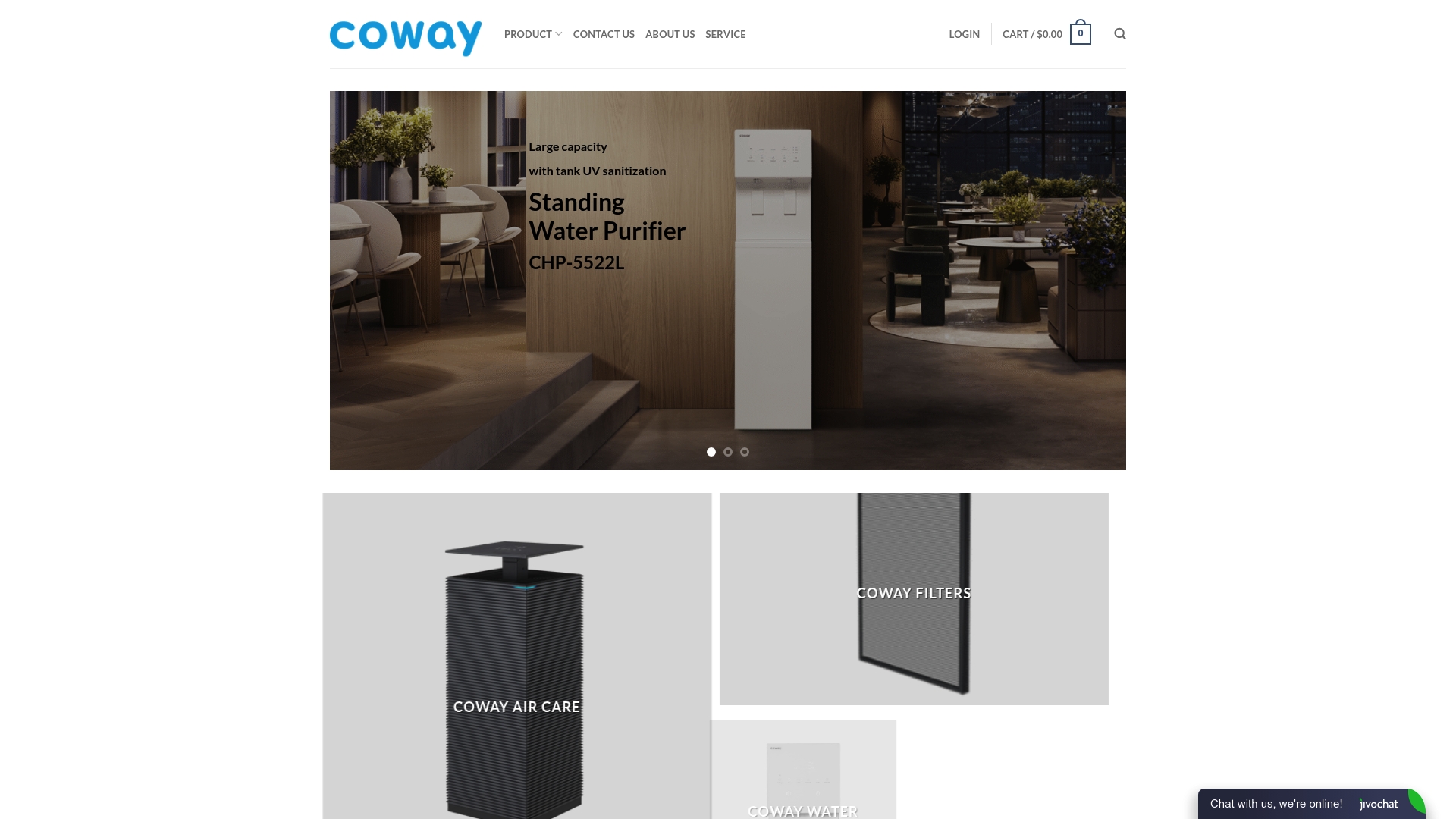
Coway’s workplace-ready water purifiers combine advanced multi-stage filtration, UV sanitization, and touchless dispensing in units built for daily, high-volume use. Whether you need a countertop ice water purifier for a shared workspace or a full-floor solution, Coway offers free delivery, professional installation, and ongoing maintenance so your team always has access to clean, great-tasting water. To understand exactly what goes into every glass, explore the full water purification process and see why quality matters as much as quantity for real workplace wellness.
Frequently asked questions
How much water should offices provide per employee?
Employers should ensure at least 1 quart per employee per hour in hot conditions, and always maintain enough accessible, clean water for the entire team throughout the workday.
What is an easy way to check if employees are hydrated?
The simplest method is urine color monitoring: light yellow indicates good hydration, dark yellow signals dehydration, and nearly colorless suggests overhydration.
Are touchless water dispensers worth it for offices?
Yes. Touchless dispensers boost hygiene and encourage more frequent use, making them a worthwhile investment for any office serious about employee wellness.
When do employees need electrolytes instead of just water?
Electrolytes are recommended during heat or intense activity lasting more than two hours, or whenever employees are sweating heavily in warm or physically demanding conditions.
How can offices encourage staff to drink more water?
Use bottle trackers, scheduled digital reminders, group challenges, and visible leadership modeling to raise workplace water intake and build a genuine culture of daily hydration.
Recommended
- The Essential Guide to Purified Water for Offices – Coway Water Purifier
- Office Water Safety Checklist 2026: 70% Fewer Risks – Coway Water Purifier
- 7 Essential Tips for Clean Office Water Solutions – Coway Water Purifier
- Understanding the Benefits of Filtered Water for Offices – Coway Water Purifier
- How to Boost Lymphatic Flow Naturally for Vitality – Gutted.
