
Uncategorized
Nano filtration in home water: 90% contaminant removal

Mar
Nano filtration technology delivers remarkable water purification by removing up to 90% of contaminants while preserving beneficial minerals. Many homeowners remain confused about what nano filtration actually removes and what it keeps in your drinking water. This guide clarifies how nano filtration works, its health benefits, and how it compares to other purification methods so you can make informed decisions about your home water quality.
Table of Contents
- Understanding Nano Filtration Technology
- Contaminants Removed vs Retained by Nano Filtration
- Comparing Nano Filtration to Other Filtration Technologies
- Health Benefits and Misconceptions of Nano Filtered Water
- Real-World Applications and Maintenance Considerations
- Explore Advanced Nano Filtration Water Purifiers for Your Home
- Frequently Asked Questions About Nano Filtration
Key takeaways
| Point | Details |
|---|---|
| Selective filtration precision | Nano filtration membranes feature 1-10 nanometer pores that remove hardness, heavy metals, and organics while retaining calcium and magnesium. |
| Energy efficient operation | Uses significantly less pressure and energy than reverse osmosis while maintaining superior mineral retention for better taste and health. |
| Complementary treatment needs | Does not eliminate all pathogens, requiring additional UV sterilization or disinfection for complete microbial safety. |
| Practical maintenance | Membrane lifespan typically ranges 1-3 years depending on source water quality and regular upkeep commitment. |
Understanding nano filtration technology
Nano filtration operates through polymer membranes with precisely engineered pore sizes that determine what passes through and what gets blocked. Nano filtration membranes typically have pore sizes between 1-10 nanometers, allowing selective removal of divalent and larger ions while retaining monovalent ions. This specific size range creates a filtration sweet spot that changes how we think about water purification.
The membrane material itself matters as much as pore size. Manufacturers design these polymer structures to target specific contaminants based on molecular charge and size. When you apply pressure to push water through these membranes, larger molecules and certain ions get trapped while smaller particles flow through freely.
This selective approach optimizes contaminant removal without stripping away everything beneficial. The technology distinguishes between harmful substances you want removed and essential minerals your body needs. Understanding this selectivity helps you appreciate why nano filtration differs fundamentally from other purification methods.
Key characteristics of nano filtration membranes include:
- Pore dimensions measuring 1 to 10 nanometers in diameter
- Polymer construction engineered for contaminant specificity
- Pressure-driven operation forcing water through selective barriers
- Charge-based separation removing divalent ions effectively
- Flow-through design maintaining beneficial mineral content
Contaminants removed vs retained by nano filtration
Nano filtration excels at removing specific contaminants that compromise water quality while keeping minerals that benefit health. The technology targets hardness ions like calcium and magnesium that cause pipe scaling, heavy metals including lead and mercury, and organic compounds that affect taste and safety. This selective removal addresses the most common water quality concerns American homeowners face.
What stays in your water matters just as much as what comes out. Beneficial minerals including calcium and magnesium pass through nano filtration membranes, contributing essential dietary elements and improving water taste. These mineral retention capabilities distinguish nano filtration from more aggressive purification methods.
Monovalent ions such as sodium and chloride largely remain in filtered water, unlike reverse osmosis which removes nearly everything. This characteristic means nano filtration preserves water’s natural mineral balance while eliminating harmful contaminants. However, the technology does not effectively remove all microorganisms, making complementary disinfection necessary for complete safety.
Retained minerals offer practical benefits beyond health. They enhance water taste, preventing the flat flavor associated with over-purified water. These minerals also contribute to daily nutritional intake, supporting bone density and cardiovascular function through regular consumption.
Pro Tip: Test your filtered water quarterly to verify mineral levels remain within healthy ranges while contaminants stay below safety thresholds, ensuring your system performs as expected.
Contaminant removal and retention specifics:
- Hardness ions removed reducing scale buildup in pipes and appliances
- Heavy metals including lead and arsenic effectively filtered out
- Organic contaminants and pesticides trapped by membrane structure
- Beneficial calcium and magnesium minerals preserved for health
- Sodium and chloride ions mostly retained unlike reverse osmosis
- Microorganisms require additional UV treatment for complete removal
Comparing nano filtration to other filtration technologies
Choosing between water purification technologies requires understanding how each method performs across key metrics. Nano filtration occupies a middle ground between aggressive reverse osmosis and gentler ultrafiltration, offering unique advantages for specific household needs.
Pore size fundamentally determines what each technology removes. Nano filtration membranes measure 1 to 10 nanometers, reverse osmosis ranges from 0.1 to 1 nanometer, while ultrafiltration features larger pores at 5 to 20 nanometers. These dimensional differences create distinct filtration profiles.

Reverse osmosis removes nearly all dissolved solids including beneficial minerals, producing extremely pure but demineralized water. Ultrafiltration excels at removing pathogens and suspended particles but allows dissolved salts and minerals to pass through unchanged. Nano filtration balances these approaches by targeting specific contaminants while preserving mineral content.
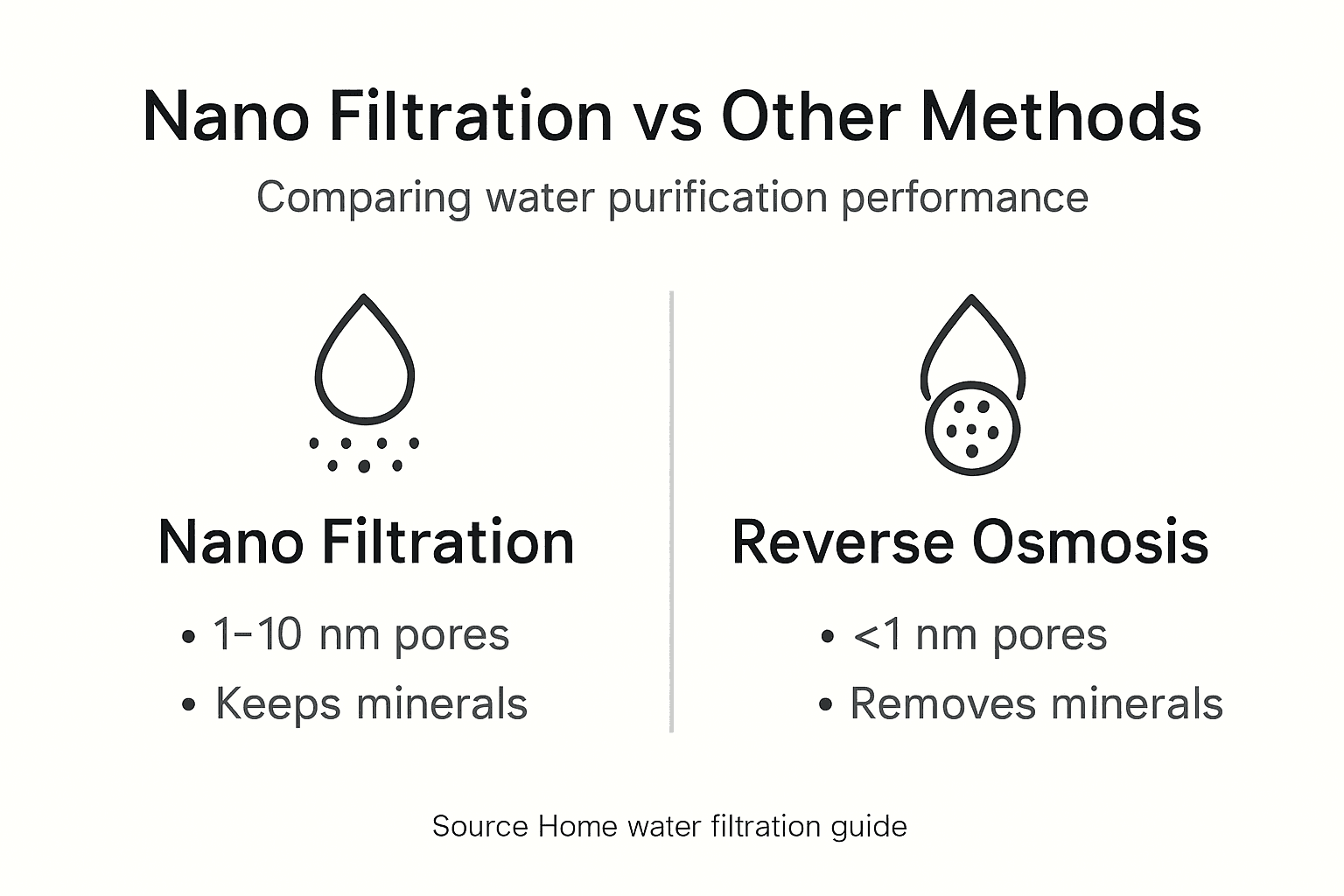
Energy consumption varies significantly between technologies. Nano filtration operates at lower pressure than reverse osmosis, reducing electricity costs and environmental impact. This efficiency makes nano filtration attractive for households prioritizing sustainability alongside water quality.
Maintenance requirements differ based on membrane design and water conditions. Nano filtration membranes typically require moderate upkeep, falling between the intensive maintenance of reverse osmosis and the simpler care ultrafiltration demands. Understanding these differences helps you evaluate different water filtration technologies for your situation.
| Technology | Pore Size | Contaminant Removal | Mineral Retention | Energy Use | Maintenance |
|---|---|---|---|---|---|
| Nano Filtration | 1-10 nm | Hardness, heavy metals, organics | High | Moderate | Moderate |
| Reverse Osmosis | 0.1-1 nm | Nearly all dissolved solids | Low | High | Intensive |
| Ultrafiltration | 5-20 nm | Pathogens, suspended solids | Complete | Low | Light |
Homeowners exploring best home water filtration methods should match technology capabilities to their specific water quality challenges and household priorities.
Health benefits and misconceptions of nano filtered water
Nano filtered water delivers verified health advantages by removing harmful contaminants while preserving minerals essential for wellness. The retained calcium and magnesium support bone density, muscle function, and cardiovascular health through daily water consumption. These minerals also contribute to the pleasant taste that encourages adequate hydration.
Effective removal of heavy metals and hardness ions protects against long-term health risks. Lead exposure causes developmental problems in children and neurological issues in adults. Removing these metals through nano filtration provides health benefits of pure water without the mineral depletion reverse osmosis causes.
Common misconceptions about nano filtration create confusion among homeowners. Many believe nano filtration removes all contaminants including viruses, but the technology does not effectively eliminate all microorganisms. Complete microbial safety requires combining nano filtration with UV sterilization or other disinfection methods.
Another widespread misunderstanding suggests nano filtration fully demineralizes water like reverse osmosis. In reality, nano filtration specifically preserves beneficial minerals while targeting harmful contaminants. This selective approach enhances both taste and wellness compared to over-purified alternatives.
Complementary technologies address nano filtration’s limitations. UV sterilization destroys viruses, bacteria, and other pathogens that pass through nano filtration membranes. Combining these technologies creates comprehensive home water safety that filtration and health benefits optimize.
Pro Tip: Select systems integrating nano filtration with UV sterilization for complete protection against both chemical contaminants and biological threats in your drinking water.
Health impact considerations:
- Retained minerals support bone health and cardiovascular function
- Heavy metal removal prevents neurological and developmental damage
- Mineral preservation enhances water taste encouraging proper hydration
- Virus removal requires complementary UV or chemical disinfection
- Balanced mineral content maintains electrolyte levels naturally
- Combined technologies deliver comprehensive contaminant protection
Real-world applications and maintenance considerations
Homeowners successfully implement nano filtration across diverse water scenarios, from municipal supplies to private wells. Combining nano filtration with UV systems addresses both chemical contaminants and microbial threats effectively. This pairing works particularly well for well water containing dissolved minerals and potential bacterial contamination.
Membrane lifespan typically ranges from 1 to 3 years depending on source water quality and maintenance practices. Hard water with high mineral content accelerates membrane fouling, requiring more frequent replacement. Regular monitoring helps you identify declining performance before water quality suffers.
Replacing membranes on schedule maintains filtration effectiveness and prevents clogging that reduces flow rates. Skipping replacement allows contaminants to bypass degraded membranes, compromising your water safety. Following manufacturer guidelines protects your investment while ensuring consistent performance.
Nano filtration systems consume less energy than reverse osmosis, translating to lower utility bills and reduced environmental impact. This efficiency makes the technology attractive for households prioritizing sustainability. The moderate pressure requirements also reduce wear on household plumbing compared to high-pressure systems.
Decision factors for selecting nano filtration include your water source characteristics, contaminant testing results, maintenance commitment, and health priorities. Testing your water identifies specific contaminants requiring removal, helping you choose advanced water filtration for homes matching your needs.
Steps to choose and maintain your nano filtration system:
- Test source water to identify specific contaminants and mineral levels present.
- Select system capacity matching household water consumption and peak usage.
- Verify membrane specifications target your identified contaminants effectively.
- Schedule regular membrane replacement based on manufacturer recommendations and water testing.
- Monitor flow rates and water quality indicators for early problem detection.
- Consider complementary treatments like UV sterilization for microfiltration role in home water complete protection.
- Maintain pre-filters preventing sediment from damaging nano filtration membranes.
Explore advanced nano filtration water purifiers for your home
Coway delivers advanced water purification systems integrating nano filtration technology with UV sterilization for comprehensive home water safety. Our countertop and under-sink models combine efficient contaminant removal with beneficial mineral retention, supporting your family’s health and wellness goals.
These systems emphasize energy efficiency and convenient maintenance, reducing both operating costs and environmental impact. Free delivery, professional installation, and ongoing maintenance support ensure your water purification system performs optimally from day one. Explore our detailed water purification process guide to understand how these technologies work together.
Our countertop ice water purifier offers compact convenience without sacrificing filtration performance. For households seeking comprehensive comparison information, review our UV water purifiers comparison highlighting key features and benefits across product lines.
Frequently asked questions about nano filtration
What maintenance does a nano filtration system require?
Nano filtration systems require regular membrane replacement every 1 to 3 years depending on water quality and usage volume. Pre-filter changes prevent sediment buildup, and periodic water testing verifies continued effectiveness.
Can nano filtration remove viruses completely?
Nano filtration does not effectively remove all viruses due to their small size relative to membrane pores. Combining nano filtration with UV sterilization or chemical disinfection provides complete viral protection for drinking water safety.
How does nano filtration affect water taste?
Nano filtration improves water taste by removing chlorine, organic compounds, and heavy metals while preserving beneficial minerals. The retained calcium and magnesium create pleasant flavor that encourages proper hydration compared to flat-tasting over-purified water.
Is nano filtration suitable for well water?
Nano filtration works effectively for well water when combined with complementary treatments addressing specific contaminants. Test your well water first to identify minerals, metals, and potential microbial contamination requiring targeted removal strategies.
What is the energy use of nano filtration compared to other systems?
Nano filtration consumes 30 to 50 percent less energy than reverse osmosis due to lower operating pressure requirements. This efficiency reduces electricity costs while maintaining effective contaminant removal and mineral retention for household water needs.
Recommended
- Role of Microfiltration in Safer Home Water – Coway Water Purifier
- 7 Key Examples of Filtration Methods for Safer Home Water – Coway Water Purifier
- 7 Top Water Filtration Methods You Need to Know – Coway Water Purifier
- Complete Water Filtration Process Guide for Homeowners – Coway Water Purifier
- Warum Luftreinigung im Hotel Gäste nachhaltig begeistert
