
Uncategorized
What Is a Pre-Filter and Why It Matters
Jan
Finding clean water in your American home often depends on more than just the main filter. Many health-focused families discover that sediment, rust, and sand can slip through untreated, risking both water pressure and the life of their purification system. Pre-filters physically remove solid contaminants, catching visible debris at the start and safeguarding expensive downstream components. Investing in the right pre-filter transforms your whole-house water experience, setting the stage for better wellness and reliable performance.
Table of Contents
- Defining Pre-Filters In Purification Systems
- Types Of Pre-Filters For Air And Water
- How Pre-Filters Function And Their Benefits
- Common Misconceptions About Pre-Filters
- Mistakes To Avoid When Using Pre-Filters
Key Takeaways
| Point | Details |
|---|---|
| Importance of Pre-Filters | Pre-filters serve as the first defense in purification systems, effectively trapping larger particles to protect downstream components. |
| Maintenance Frequency | Regular inspection and replacement of pre-filters every 3-6 months is crucial to maintain system efficiency and prevent costly repairs. |
| Type Selection | Choosing the right type of pre-filter based on specific contaminant concerns is essential to ensure optimal protection for your filtration system. |
| Cost Savings | Investing in pre-filters reduces overall maintenance costs and extends the lifespan of more expensive components like RO membranes. |
Defining Pre-Filters in Purification Systems
A pre-filter is the first line of defense in any water purification system, and understanding what it does helps explain why it matters so much for your home’s water quality. Think of it as a bouncer at the entrance to your water treatment system. Its job is straightforward: trap larger particles and sediment before they reach the more sophisticated filtration stages. Microporous filters physically remove solid contaminants by capturing them on the media surface, operating at low pressures to prevent buildup on downstream components. This means sand, sediment, rust particles, and other visible debris get stopped right at the start, protecting everything that comes after.
Why does this matter to you? Without a pre-filter catching these particles, your primary filters and membrane systems would get clogged much faster. This creates two problems. First, your system works harder, reducing water pressure throughout your home. Second, replacement costs skyrocket because you’ll need to change filters constantly. Pre-filters also play a critical role in protecting downstream treatment components and maintaining overall treatment effectiveness. When pre-filters remove sediment and particles from well water before additional treatment steps, they extend the life of everything else in your system. Many homeowners don’t realize that monthly pre-filter replacement or inspection is recommended to maintain system operation and water pressure, which is a small maintenance task that prevents bigger expenses later.
What sets pre-filters apart from other filtration stages is their simplicity and accessibility. They don’t remove dissolved solids like minerals or chemicals. That’s the job of activated carbon filters, reverse osmosis membranes, and UV systems that come afterward. Pre-filters work only with what you can see or what would clog your system. They’re the visible reminder that your water contains more than you might think. For American homeowners drawing from wells or living in areas with aging infrastructure, this first stage becomes especially important. Your water likely carries sediment and particles that a pre-filter handles before they damage expensive treatment equipment.
Pro tip: Check your pre-filter monthly for visible buildup or discoloration. Replacing it before it becomes fully clogged keeps water pressure consistent and prevents sediment from bypassing into your primary filtration stages.
Types of Pre-Filters for Air and Water
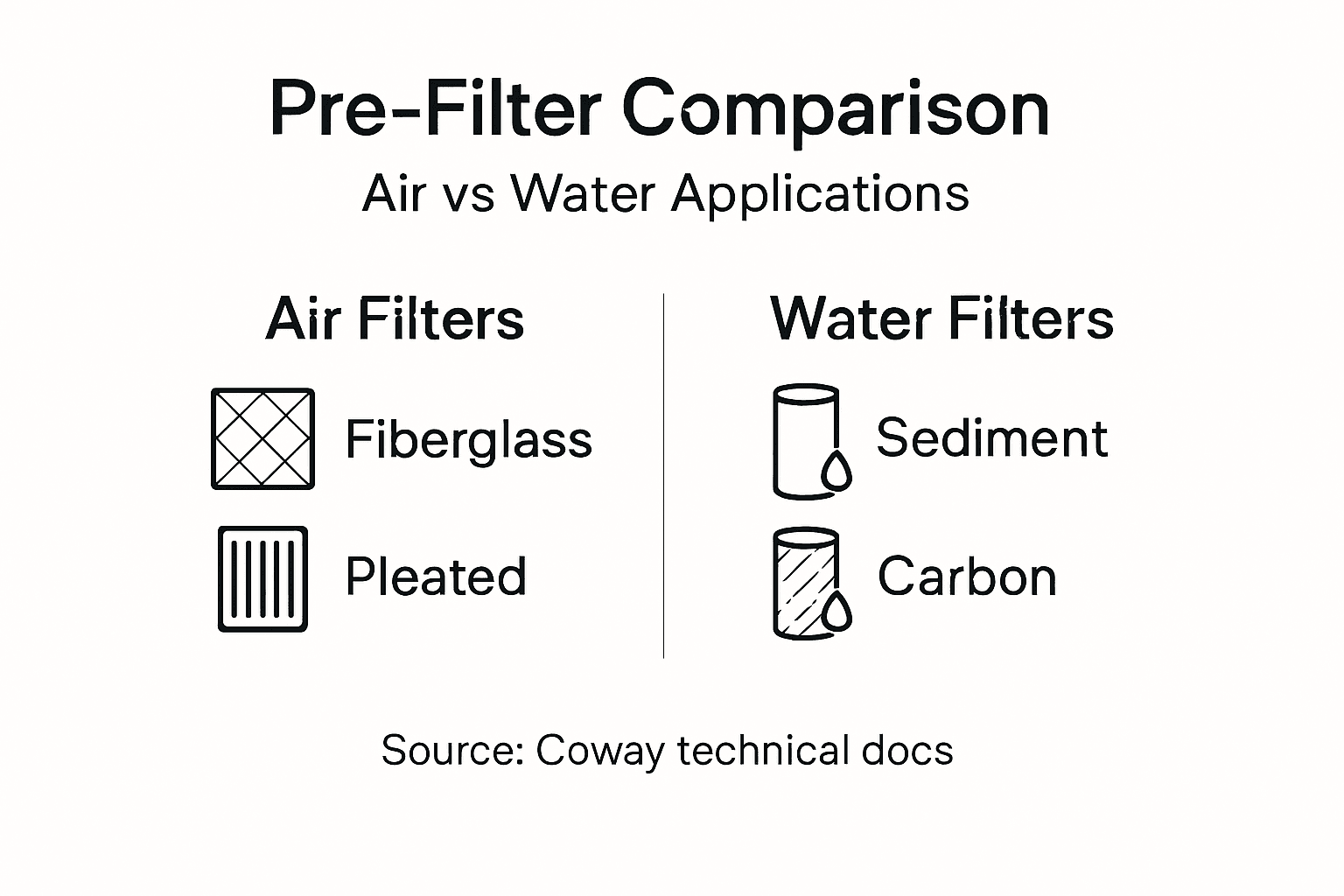
Pre-filters aren’t one-size-fits-all. The type you need depends entirely on whether you’re filtering air or water, and what contaminants you’re targeting. For water systems in your home, sediment filters remove silt and larger particles that create that cloudy appearance or gritty taste. These are your workhorses for catching visible debris like sand, rust flakes, and mineral deposits before they reach your main filtration stages. Carbon pre-filters serve a different purpose. They adsorb chlorine and certain organic contaminants that reverse osmosis membranes struggle with, making them especially valuable if your municipal water smells like chlorine or tastes off. Many homeowners use both types together for effective pre-treatment, layering sediment capture with chemical removal in one efficient system.
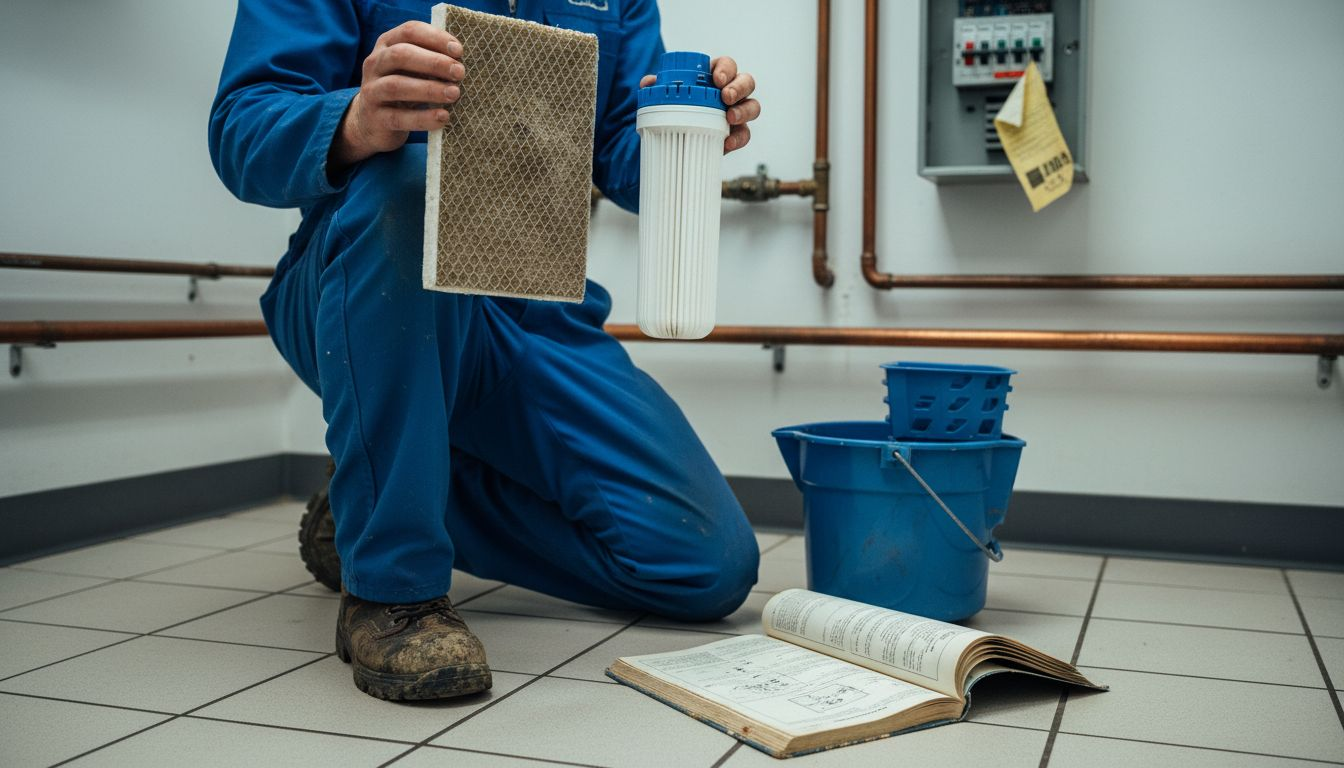
Air pre-filters operate on similar principles but target airborne particles instead. Common types include fiberglass panels, pleated filters, and carbon filters designed specifically for gas removal. Pre-filters typically have efficiencies around 30%, such as MERV 8 rated filters, and they excel at removing larger particles like dust, pet hair, and pollen before air reaches your system’s more expensive final filters. Fiberglass panels are the basic option, affordable but less efficient. Pleated filters offer better surface area and capture, which means better performance without drastically increasing cost. Carbon filters in air systems specifically target odors and volatile organic compounds, which matters if you live near traffic, have smokers in your household, or simply want fresher indoor air.
The key difference between water and air pre-filters comes down to what they’re protecting and how systems work. Water pre-filters protect expensive membrane technology and carbon beds from clogging. Air pre-filters protect HVAC efficiency and extend the life of MERV 13 or higher final filters that do the real heavy lifting. Your choice of pre-filter type directly impacts how often you replace downstream filters and how effectively your entire system performs. If you’re installing a water purification system, matching the pre-filter to your water source matters. Well water needs aggressive sediment pre-filtration. Municipal water might benefit more from carbon pre-filtration. The same logic applies to air. Dusty environments need better mechanical pre-filters, while urban areas with air pollution benefit from carbon pre-filtering.
Pro tip: Compare MERV ratings for air filters and micron ratings for water filters when shopping. These numbers tell you exactly what particle sizes each pre-filter catches, helping you choose the right one for your specific water or air quality concerns.
Here’s a quick comparison of common pre-filter types for air and water systems:
| Pre-Filter Type | Main Application | Target Contaminants | Typical Lifespan |
|---|---|---|---|
| Sediment Filter | Water | Sand, rust, silt | 3–6 months |
| Carbon Filter | Water or Air | Chlorine, odors | 3–6 months |
| Fiberglass Panel | Air | Dust, lint, hair | 1–3 months |
| Pleated Filter | Air | Pollen, dust mites | 3–6 months |
How Pre-Filters Function and Their Benefits
Understanding how pre-filters work reveals why they’re worth the investment in your home water or air system. The mechanics are simple but powerful. Water moves or air flows through the pre-filter media, and particles larger than the filter’s pore size get trapped on the surface while cleaner water or air passes through. Pre-filters remove larger particulate matter and certain chemicals from water to protect more sensitive downstream filtration media such as reverse osmosis membranes. Think of it like a strainer in your kitchen sink. You wouldn’t pour pasta water directly into your compost without catching the solids first. Your water system works the same way. Without that first stage catching debris, your expensive reverse osmosis membranes or activated carbon filters get clogged and fail prematurely. The efficiency of this process depends on three factors: the type of filter you choose, your water or air quality, and whether you maintain it properly. Skip maintenance, and even the best pre-filter loses its ability to protect downstream components.
The real benefits become obvious when you look at what pre-filters prevent. By removing particles before they reach sensitive membrane technology, nanofibrous pre-filters effectively remove particles above 4.6 microns with high efficiency, helping to protect downstream ultrafiltration or nanofiltration membranes from fouling and prolonging their lifespan. For your wallet, this means extending membrane life by reducing fouling and improving overall water quality without constant replacement costs. A typical reverse osmosis membrane costs between $150 and $400 to replace, plus labor. If your pre-filter extends that membrane’s life from one year to three years, you’ve saved significant money. Beyond cost savings, benefits include better water pressure throughout your home, fewer system shutdowns, and consistent water quality month after month. For air systems, clean pre-filters mean your HVAC system doesn’t work overtime fighting clogged filters, which reduces energy consumption and keeps utility bills reasonable.
The wellness angle matters too for health conscious homeowners. Cleaner water reaching your family means fewer contaminants in drinking and cooking water. Cleaner air means you’re breathing fewer dust particles and allergens, which directly impacts respiratory health. Pre-filters capture sediment, rust particles, and debris that would otherwise accumulate in your pipes or your lungs. This first stage of protection sets the tone for your entire filtration system’s effectiveness. You could install the most advanced membrane technology available, but if your pre-filter isn’t doing its job, downstream filters compensate and fail faster. The relationship works in your favor when everything aligns. A solid pre-filter working with quality carbon filters and advanced purification technology creates a comprehensive system that actually performs as advertised.
Pro tip: Track your pre-filter replacement dates in your phone calendar. Setting reminders every three months prompts you to check for buildup before it restricts flow or causes damage to downstream filters.
Understanding the cost and maintenance impact of pre-filters and main filters:
| Filter Stage | Average Replacement Cost | Typical Replacement Frequency | System Impact |
|---|---|---|---|
| Pre-Filter | $10–$50 | 3–6 months | Reduces clogging risk |
| Main Filter (RO Membrane) | $150–$400 | 1–3 years | Ensures water safety |
Common Misconceptions About Pre-Filters
Misconceptions about pre-filters are surprisingly common, and they often lead homeowners to make poor purchasing decisions or set unrealistic expectations. The biggest myth is that a pre-filter alone can fully purify your water or air. This is false. A pre-filter is a protective first stage, not a complete solution. Pre-filters serve specialized roles in protecting purification systems rather than fully purifying air or water themselves. Many people see the word “filter” and assume one filter handles everything. In reality, pre-filters are like the first line of defense at a security checkpoint. They stop the obvious threats but rely on downstream systems to handle the sophisticated work. You wouldn’t expect a security guard to stop every threat alone. Your pre-filter works the same way. It catches sediment and larger particles while activated carbon filters, reverse osmosis membranes, or UV systems handle dissolved minerals, chemicals, and microorganisms. Expecting your pre-filter to remove all contaminants sets you up for disappointment and wasted money on a system that never meets your goals.
Another widespread misconception is that all pre-filters are identical. Not true. A common misconception is that pre-filters remove all contaminants, whereas they primarily capture larger particles to protect sensitive downstream systems. Sediment filters work differently than carbon pre-filters. Fiberglass panels perform differently than pleated pre-filters. The micron rating matters significantly. A 20-micron pre-filter catches larger debris than a 5-micron pre-filter. Choosing the wrong type for your specific water or air quality wastes money because it either doesn’t protect your system effectively or removes things your primary filters could handle. People often buy the cheapest option without matching it to their actual needs. That’s like buying generic earplugs for a concert because they cost less than musician-grade earplugs. You end up with inadequate protection.
A third misconception involves replacement frequency. Some homeowners assume pre-filters last as long as primary filters. They don’t. Pre-filters catch the bulk of debris, so they clog faster. If you ignore this and run a clogged pre-filter, water pressure drops or your system bypasses filtration entirely, which defeats the purpose. Others mistakenly believe that pre-filters never need maintenance because they’re just temporary stages. Wrong again. Pre-filters require regular inspection and replacement to maintain system effectiveness and water quality. Ignoring maintenance turns your pre-filter from protection into a liability.
The final misconception worth addressing is cost related. Some people skip pre-filtration entirely, thinking it’s an unnecessary expense. This logic backfires spectacularly. Skipping the pre-filter to save $50 upfront costs you hundreds later when your reverse osmosis membrane needs replacement prematurely. Pre-filters are preventative medicine for your purification system. The investment pays for itself multiple times over through extended component life and consistent system performance.
Pro tip: Ask your water purifier dealer to explain what contaminants your specific pre-filter removes and what it leaves for downstream filters. This clarifies expectations and ensures you’re getting appropriate protection rather than believing your pre-filter handles everything.
Mistakes to Avoid When Using Pre-Filters
The most damaging mistake homeowners make is ignoring pre-filter maintenance. You install a system, feel satisfied that your water or air is now clean, and then forget about it. This is where problems start. Neglecting regular maintenance such as timely replacement of pre-filters leads to clogging, reduced water pressure, and compromised system performance. A clogged pre-filter doesn’t just reduce water pressure. It forces your downstream components to work harder, which accelerates their wear and failure. Eventually, your system either shuts down or bypasses filtration entirely, which means you’re drinking unfiltered water without realizing it. The fix is simple. Mark your calendar the day you install your pre-filter. Set phone reminders for replacement intervals. Most pre-filters need attention every three to six months, depending on your water or air quality. This isn’t optional maintenance. It’s the difference between a system that protects your family and one that fails silently.
Another critical mistake is choosing the wrong pre-filter type for your specific situation. Not all water is the same. Well water heavy with sediment needs different pre-filtration than municipal water with chlorine issues. Improper selection of pre-filter types not suited to the water quality or system design wastes money and offers inadequate protection. You might install a sediment pre-filter when you actually need carbon pre-filtration. Or you might select a 20-micron filter when your system needs 5-micron protection. Ask your water quality questions before buying. Get your water tested. Understand what you’re actually dealing with. Then match your pre-filter selection to those specific conditions. Taking shortcuts here means your downstream filters take abuse they weren’t designed to handle.
A third mistake specific to UV water treatment systems involves improper installation or handling. When using pre-filters in UV water treatment systems, one must avoid over-tightening lamp assemblies, damaging delicate components during installation, and failing to change filters according to manufacturer recommendations. Pre-filters should be properly sized, such as 30 to 10 micron for sediment, to ensure effective debris removal. If neglected, this can lower UV disinfection effectiveness significantly. Many homeowners overtighten connections thinking tighter means better protection. This damages seals and components, creating leaks that undermine your entire system. Use hand tightening plus a quarter turn for most connections. Let the design work. Don’t force it.
One final mistake involves running pre-filters beyond their capacity. You notice water flow slowing, know the filter is clogged, but delay replacement thinking you can squeeze another week out of it. This single decision can cause fouling of downstream membranes and cost you hundreds in repairs. Your pre-filter isn’t a suggestion. It’s a requirement. When it indicates it needs changing, change it immediately. Your future self will appreciate the discipline.
Pro tip: Create a pre-filter maintenance log documenting when you install, inspect, and replace each filter. This simple habit prevents you from losing track of dates and reveals patterns about how quickly your filters clog, helping you anticipate replacement needs.
Protect Your Home with Effective Pre-Filtration Solutions from Coway
The article highlights the crucial role of pre-filters in safeguarding your water purification system from sediment, rust, and other large particles that can reduce water pressure and increase maintenance costs. If you want to avoid costly filter replacements and keep your water clean and safe, investing in a reliable pre-filter is essential. Coway’s advanced water purifiers come equipped with well-designed pre-filtration stages that protect downstream filters and membranes, ensuring longer lifespan and consistent water quality for your family.
Explore our range of innovative water purification systems that combine sophisticated pre-filters with activated carbon and UV sanitization to give you peace of mind. Don’t wait until your filters clog and your water pressure drops. Visit Coway Water Purifier’s uncategorized collection to find the perfect purifier tailored to your water quality needs. For a full overview, start at our homepage and secure your home’s health today.
Frequently Asked Questions
What is a pre-filter in water purification systems?
A pre-filter is the first stage in a water purification system that captures larger particles and sediment, protecting downstream filters from clogging and maintaining overall system effectiveness.
Why is it important to use a pre-filter?
Pre-filters are crucial because they prevent larger contaminants like sand and rust from damaging more sensitive filtration components, ultimately extending their lifespan and reducing replacement costs.
How often should I replace my pre-filter?
It’s recommended to inspect or replace your pre-filter every 3 to 6 months to maintain optimal water pressure and prevent clogging that could lead to system failures.
What types of contaminants do different pre-filters target?
Sediment filters target large particles like sand and silt, while carbon pre-filters remove chlorine and certain organic contaminants. The choice depends on your water source and the specific quality concerns you have.
Recommended
- Role of Pre-Filters in Air Purifiers: Cleaner Home Air – Coway Water Purifier
- Role of Filtration in Health – Why It Matters – Coway Water Purifier
- Filter Replacement – Why Timely Changes Matter – Coway Water Purifier
- Difference Between Filter and Purifier: Complete Guide – Coway Water Purifier
- Understanding Light Filtering Window Treatments for Your Home
- Spray Booth Terminology: Impact on Paint Quality
- Indoor Air Quality Testing Explained
