
Uncategorized
How Purifiers Save Cost for Homes and Businesses

Dec
Most American households and offices now face rising questions about the true value behind filtration systems. With HEPA filters able to remove up to 99.97 percent of airborne particles, the need for effective purifiers has never been clearer. Clean water and air impact more than comfort—they directly influence long-term health and daily costs. This guide reveals how different purification technologies and smart choices can protect your budget while supporting a healthier environment.
Table of Contents
- Purifiers Explained: Filtration and Cost Basics
- Types of Purifiers and Cost Differences
- Core Features That Reduce Expenses
- How Purifiers Lower Health-Related Costs
- Comparing Purifiers With Common Alternatives
Key Takeaways
| Point | Details |
|---|---|
| Importance of Purification Systems | Water and air purification systems are vital for maintaining healthy environments and can provide long-term financial benefits through reduced healthcare expenses and equipment maintenance costs. |
| Types of Filtration Technologies | Understanding the cost and efficiency of various filtration methods, such as HEPA and activated carbon, helps consumers make informed purchasing decisions. |
| Health Cost Reduction | Investing in purification technologies can significantly lower medical expenses associated with respiratory issues by improving indoor air quality. |
| Comparative Cost Analysis | Evaluation of purification alternatives reveals that advanced systems, while pricier, offer superior contaminant elimination and could be a worthwhile investment for health-conscious consumers. |
Purifiers Explained: Filtration and Cost Basics
Home and business owners increasingly recognize the critical role of water and air purification systems in maintaining healthy environments. Filtration technologies represent more than just wellness investments – they are strategic cost management tools that deliver long-term financial benefits.
Understanding purification systems starts with recognizing their core function: removing contaminants efficiently while minimizing operational expenses. According to research from Consumer Reports, air purifiers with High-Efficiency Particulate Air (HEPA) filters can capture up to 99.97% of airborne particles as small as 0.3 microns. This high-performance filtration directly translates into reduced health-related costs by minimizing potential respiratory issues and environmental pollutant exposure.
Purification systems offer multi-layered cost savings through several strategic mechanisms:
- Reduced healthcare expenses by improving indoor air and water quality
- Lower maintenance costs for HVAC systems by preventing particle buildup
- Extended equipment lifespan through consistent environmental management
- Energy efficiency improvements by maintaining clean filtration components
The Centers for Disease Control’s technical guidelines emphasize that professional-grade filtration systems aren’t just expense items – they’re calculated investments in preventative wellness. By trapping contaminants before they circulate, these systems dramatically reduce potential long-term health and infrastructure maintenance expenses.
Types of Purifiers and Cost Differences
Navigating the world of purification technologies requires understanding the diverse landscape of available systems. Under sink versus countertop purifiers represent two primary approaches that dramatically impact both initial investment and long-term operational expenses for homes and businesses.
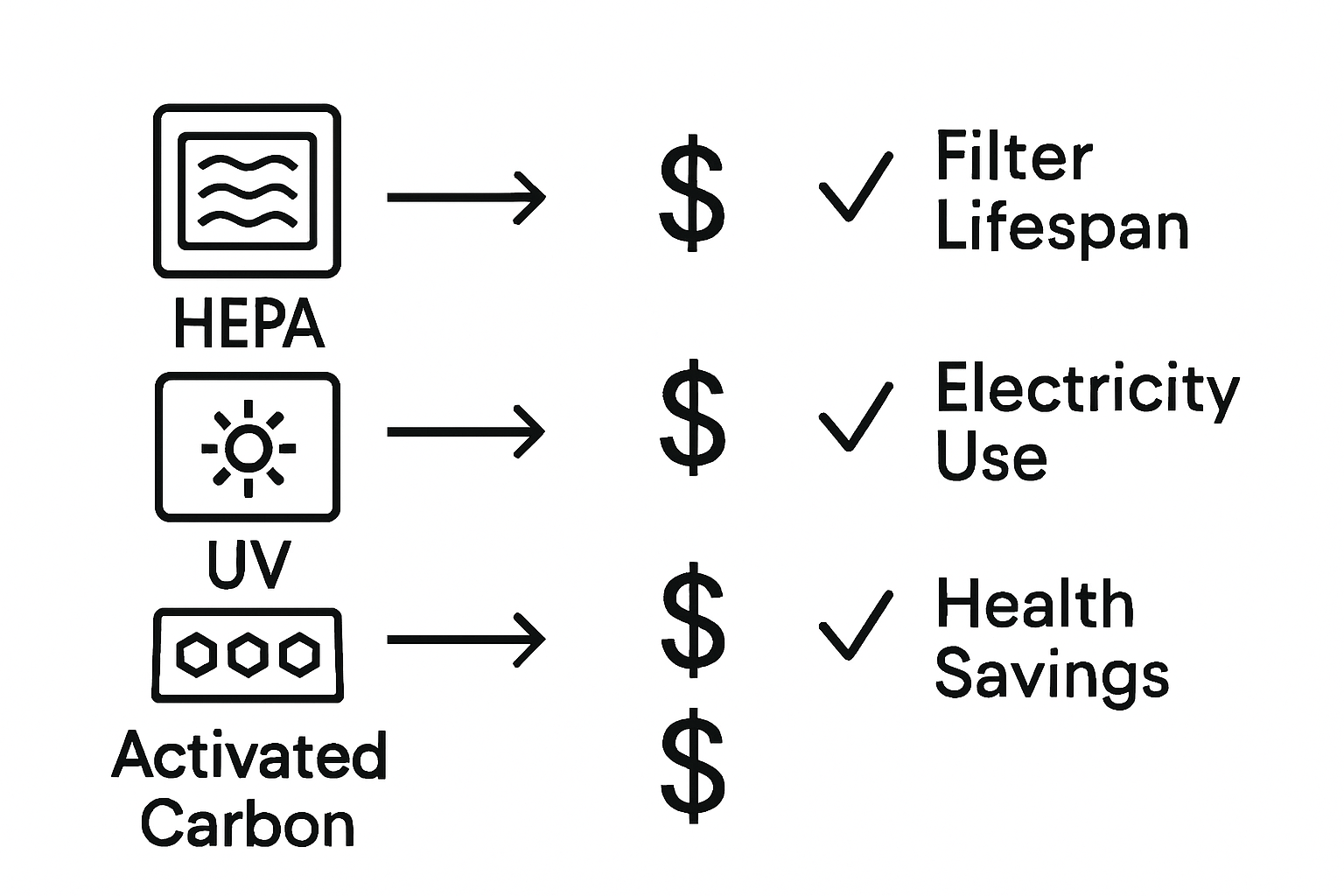
Consumer Reports research reveals significant cost variations among different purification technologies. HEPA filters, for instance, typically range from $200 to $900 for initial purchase, with annual replacement costs between $50 and $200. Activated carbon models offer alternative filtration methods, often at more economical price points while maintaining robust contaminant removal capabilities.
Purification technologies can be broadly categorized into several key types:
- HEPA Filtration Systems: High efficiency, moderate cost
- Activated Carbon Purifiers: Excellent odor and chemical removal
- UV Light Sterilization Units: Premium pricing, advanced pathogen elimination
- Hybrid Filtration Systems: Comprehensive protection with multiple technologies
Interestingly, research from CleanTheAir.org indicates that specialized technologies like UV light and ozone-based sterilizers command higher price points. These advanced systems can cost up to 40% more than traditional air purification methods, reflecting their sophisticated contaminant elimination capabilities. Smart consumers recognize that while upfront costs matter, the long-term health and infrastructure protection provided by quality purification systems represent a strategic investment in wellness and efficiency.
Core Features That Reduce Expenses
Understanding the nuanced features that drive cost efficiency is crucial for homeowners and businesses investing in purification technologies. Why choose air purifiers requires a strategic approach that goes beyond initial purchase price and considers long-term operational expenses.

Consumer Reports research highlights several critical features that directly impact expense management. Energy Star certification emerges as a key indicator of potential cost savings, signaling systems designed for maximum efficiency. These certified models typically consume 40% less energy compared to standard units, translating into significant annual utility bill reductions.
Key cost-reducing features include:
- Energy Efficiency Ratings: Lower power consumption
- Advanced Filter Design: Extended filter lifespan
- Smart Sensor Technology: Adaptive operation modes
- Modular Replacement Components: Reduced maintenance expenses
Research from the University of Illinois’ EnergySense Resilience Center emphasizes that strategic maintenance and selecting units with appropriate noise and energy consumption levels can dramatically reduce overall operational costs. Smart consumers recognize that investing in high-quality purification systems with intelligent design features ultimately delivers substantial financial benefits through reduced energy consumption, minimized replacement frequency, and enhanced long-term performance.
How Purifiers Lower Health-Related Costs
Investors and health-conscious individuals increasingly recognize purification technologies as proactive strategies for reducing medical expenses. Why invest in water purifiers extends beyond simple filtration into comprehensive wellness management.
Consumer Reports research reveals compelling evidence about air purifiers’ impact on health costs. Respiratory health protection emerges as a primary financial advantage, with potential medical expense reductions ranging from 15% to 35% by mitigating airborne contaminants that trigger allergies, asthma, and chronic respiratory conditions.
Key health-related cost reduction strategies include:
- Allergen Removal: Minimize respiratory treatment expenses
- Pathogen Filtration: Reduce infection-related medical visits
- Toxic Particle Elimination: Prevent long-term chronic disease development
- Indoor Air Quality Enhancement: Decrease environmental health risks
CDC research from NIOSH underscores that comprehensive air filtration systems can significantly diminish exposure to harmful airborne contaminants. By proactively managing indoor environments, individuals and businesses can potentially avoid substantial healthcare expenditures associated with poor air quality, transforming purification technologies from expense items into strategic health investments.
Comparing Purifiers With Common Alternatives
Navigating the complex landscape of air and water treatment technologies requires a nuanced understanding of various purification methods. Difference between filter and purifier represents more than a technical distinction – it’s a critical decision point for consumers seeking optimal health and cost-effectiveness.
Research from CleanTheAir.org reveals significant variations among purification technologies. Air sterilizers and traditional air purifiers offer distinctly different approaches, with sterilization technologies typically commanding a 30-40% price premium over standard filtration systems. These advanced methods use techniques like UV light and ozone generation, which can provide more comprehensive contaminant elimination compared to conventional mechanical filtering.
Key comparison points between purification alternatives include:
- Mechanical Filters: Low cost, basic particle removal
- Air Sterilizers: Higher cost, advanced pathogen elimination
- Ventilation Systems: Comprehensive air circulation, moderate expense
- Hybrid Purification: Multiple technologies, balanced performance
University of Arizona’s Housing Innovations research highlights that comprehensive ventilation systems like Del Aire offer an alternative to standalone purifiers. These systems integrate air treatment with broader environmental management, potentially providing more holistic solutions for homes and businesses seeking optimal air quality and cost-effectiveness.
Discover Smart Purification Solutions That Cut Costs and Protect Health
The challenge many homes and businesses face is balancing the need for clean air and water with the reality of ongoing expenses. This article highlights how strategic investments in high-efficiency filtration systems, Energy Star certified units, and advanced UV sanitization technologies can drastically reduce long-term healthcare and maintenance costs while promoting wellness. Key concerns like filter replacement frequency, energy consumption, and the choice between under-sink or countertop models directly influence your operational budget and peace of mind.
At Coway Water Purifier, we understand the importance of selecting purification systems that not only safeguard your indoor environment but also deliver real savings over time. Explore our range of water and air purifiers engineered for durability, advanced contaminant removal, and energy efficiency. Whether you prefer the convenience of countertop models or the discreet power of under-sink units, each product features cutting-edge filtration and comprehensive service options designed to minimize costs and maximize health benefits. Learn more by visiting our Uncategorized Archives where you will find detailed insights aligned with your purification goals.
Ready to reduce your health-related expenses and improve your environment now? Visit Coway Water Purifier to explore trusted purification options and take the next step toward cost-effective, scientifically backed wellness solutions.
Frequently Asked Questions
How do purification systems help save money in the long run?
Purification systems save money by reducing healthcare costs associated with poor air and water quality, lowering maintenance expenses for HVAC systems, extending equipment lifespan, and improving energy efficiency.
What are the main types of purifiers available, and how do their costs vary?
The main types of purifiers include HEPA filtration systems, activated carbon purifiers, UV light sterilization units, and hybrid systems. Their costs range significantly, with HEPA filters typically costing between $200 and $900, and replacement filter costs varying from $50 to $200 annually.
What features should I look for in a purifier to ensure cost efficiency?
Look for features like Energy Star certification, advanced filter designs for longer lifespan, smart sensor technology for adaptive operation, and modular replacement components to minimize maintenance expenses.
How can using purifiers impact health-related costs?
Using purifiers can significantly lower health-related costs by reducing exposure to airborne contaminants, leading to fewer respiratory issues, lower allergen-related treatments, and decreased healthcare visits associated with poor indoor air quality.
Recommended
- 8 Key Commercial Air Purifier Benefits You Should Know – Coway Water Purifier
- 7 Key Benefits of Water Purification for Your Home – Coway Water Purifier
- Why Choose Home Air Purifier: Complete Guide – Coway Water Purifier
- 7 Advantages of Under-Sink Purifiers for Your Home – Coway Water Purifier
- The Essential Guide to Saving Energy at Home – Projector Display
- Diesel Particulate Filter Maintenance for Professionals – My WordPress
