
Uncategorized
How to select large capacity purifiers for home water

Mar
Choosing a water purifier that can reliably handle your family’s daily demand is tougher than it sounds. Many homeowners end up with systems that cause pressure drops, fail to remove key contaminants, or simply can’t keep up with peak usage. The right large capacity purifier balances flow rate, filtration technology, and certifications to deliver safe, clean water throughout your home. This guide walks you through assessing your needs, understanding filtration options, verifying safety standards, and installing a system that works for years without surprises.
Table of Contents
- Key takeaways
- Assessing your household water needs and capacity requirements
- Understanding key filtration technologies for large capacity purifiers
- Importance of certifications and water source considerations
- Step by step guide to selecting and installing your large capacity water purifier system
- Explore Coway’s water purification solutions for your home
- FAQ
Key Takeaways
| Point | Details |
|---|---|
| High flow for peak demand | Choose a purifier with a high flow rate that matches your home’s peak usage and bath count to prevent pressure drops. |
| Check NSF certifications | Verify NSF/ANSI certifications to ensure filtration effectiveness and health safety. |
| Multi stage filtration | Multi stage filtration combining sediment, carbon, UV, and optionally RO provides the best results. |
| Sizing matters | Proper sizing avoids pressure loss and costly overspending. |
| Consider source and contaminants | Consider water source and contaminants when selecting technologies. |
Assessing your household water needs and capacity requirements
Before shopping for a purifier, you need to know exactly how much water your home uses at peak times. Undersizing your system leads to pressure drops and early filter failure, while oversizing drains your wallet without added benefit. Start by calculating your peak demand in gallons per minute.
Count every fixture that might run simultaneously during busy mornings or evenings. A typical shower uses 2.5 GPM, a washing machine about 2 GPM, and a kitchen faucet around 1.5 GPM. If three people shower while laundry runs, you’re looking at 7.5 plus 2 GPM, totaling 9.5 GPM minimum. For large families or homeowners, prioritize whole house systems with high flow rates: 10-12 GPM minimum, 15-20 GPM for 3+ baths, 20-25 GPM for 5+ baths to handle peak demand without pressure drop.
Daily capacity matters too, especially for point of use systems. A family of four typically needs 300 to 400 gallons per day for drinking and cooking, but whole house annual usage runs 80,000 to 100,000 gallons. If you’re considering reverse osmosis under sink units for large homes, look for 500 to 1000+ GPD capacity to keep up with demand.
Here’s how to calculate your minimum flow rate:
- List all fixtures likely to run at once during peak hours
- Add up their individual GPM ratings from manufacturer specs
- Add 20% buffer for unexpected simultaneous use
- Match this total to your purifier’s rated flow capacity
Minimum recommended flow rates by home size:
- 1 to 2 bathrooms: 10 to 12 GPM
- 3 to 4 bathrooms: 15 to 20 GPM
- 5+ bathrooms: 20 to 25 GPM
Pro Tip: If you’re unsure about exact demand, test your water usage during typical busy periods or consult a licensed plumber to measure actual flow rates before purchasing.
For detailed guidance on proper system setup, check out the water purifier installation guide and learn how to ensure healthy drinking water naturally with the right capacity planning. The advanced water filtration guide for healthier homes also covers capacity considerations in depth.
Understanding key filtration technologies for large capacity purifiers
Once you know your capacity needs, focus on filtration technology. Different methods target different contaminants, and the best large capacity systems combine multiple stages for comprehensive protection. Understanding what each technology does helps you match your purifier to your water’s specific issues.
Sediment filters remove physical particles like rust, silt, and sand. They’re essential pre-filters that protect downstream components and extend filter life. Carbon filters excel at removing chlorine, improving taste and odor, and partially capturing PFAS and volatile organic compounds. Reverse osmosis systems remove up to 99% of contaminants including total dissolved solids, heavy metals, and most chemicals, but whole house RO is rare due to high cost and water waste. UV filters kill bacteria and viruses but need pre-filtration for water clarity. KDF media targets heavy metals and chlorine through oxidation reduction.
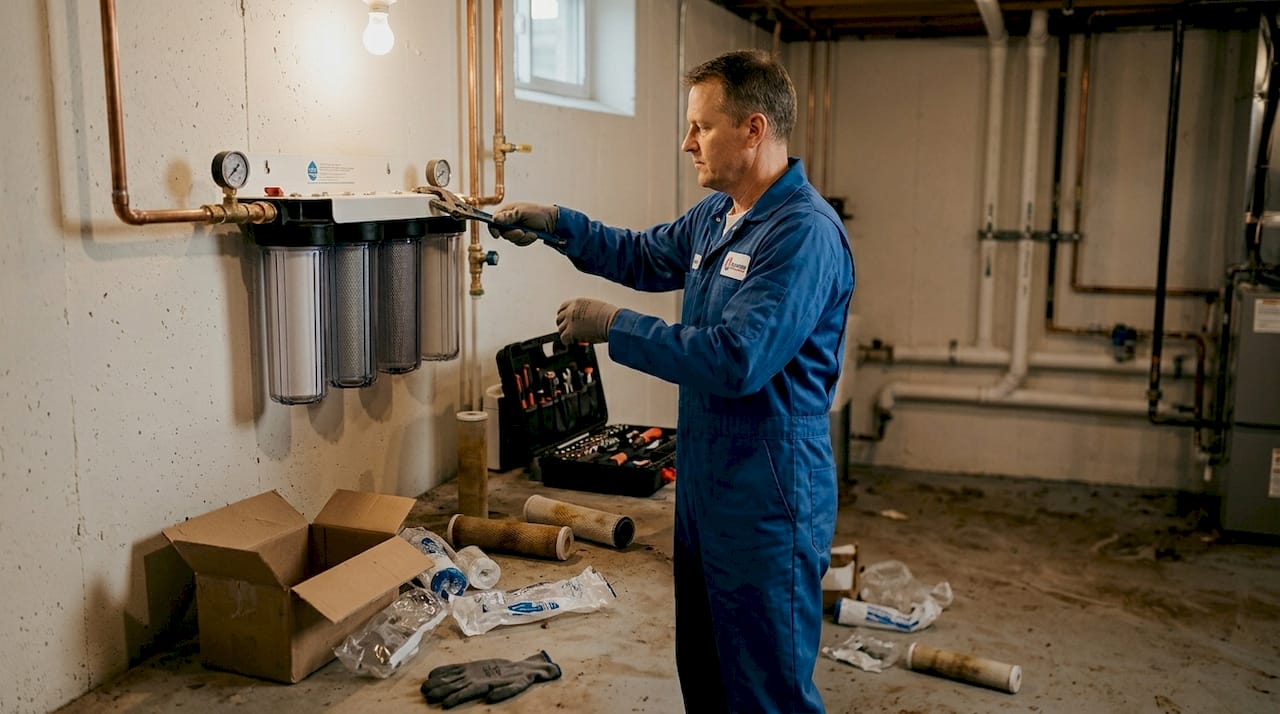
Multi-stage systems combine these technologies for broader contaminant removal. A typical whole house setup starts with sediment pre-filtration, adds carbon for chemical removal, and optionally includes UV for microbes. Lab benchmarks show RO removes 99% of contaminants in tested systems like iSpring RCC7AK and AquaTru, while carbon achieves 80 to 99% chlorine removal. High flow tankless models like Waterdrop G3P600 deliver 600 GPD for large households.
| Technology | Targets | Advantages | Limitations |
|---|---|---|---|
| Sediment | Rust, silt, sand, particles | Low cost, protects other filters | Doesn’t remove chemicals or microbes |
| Carbon | Chlorine, taste, odor, VOCs, partial PFAS | Affordable, improves taste | Needs regular replacement, limited heavy metal removal |
| Reverse Osmosis | TDS, heavy metals, 99% contaminants | Most comprehensive removal | Wastes water, slow flow, costly for whole house |
| UV | Bacteria, viruses, microbes | Chemical free, no taste change | Requires pre-filtration, doesn’t remove chemicals |
| KDF | Heavy metals, chlorine, bacteria | Long lasting, works in hot water | Expensive, needs carbon backup |
Pro Tip: Choose a system certified for contaminants prevalent in your water source. Municipal water often needs chlorine and lead removal, while well water requires sediment and microbial protection.
For deeper insight into how these methods work together, explore filtration technologies explained and review certified filtration standards for home to understand what certifications match each technology.
Importance of certifications and water source considerations
Technology alone doesn’t guarantee safety. Independent certifications prove your purifier actually removes what it claims. Without verified lab testing, you’re relying solely on manufacturer promises, which can be misleading or exaggerated.
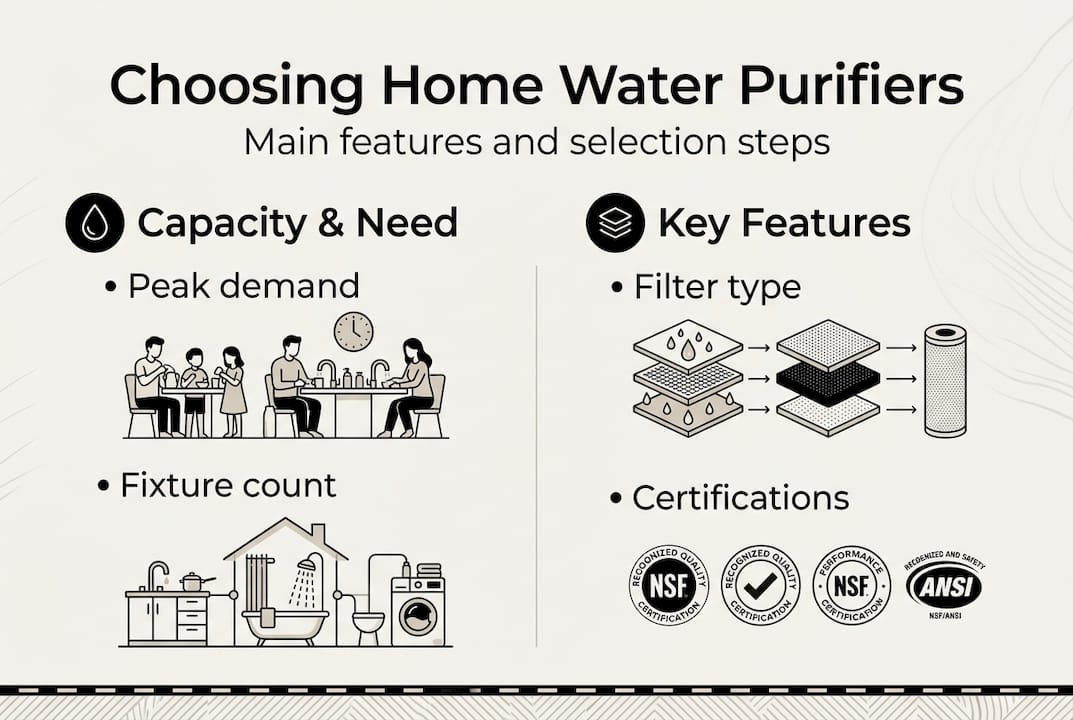
Require NSF/ANSI certifications: 42 for taste and chlorine, 53 for lead and health contaminants, 58 for RO and TDS, 401 for PFAS and emerging contaminants, 55 for UV systems. Verify independent lab data over manufacturer claims. These certifications mean third party labs tested the purifier under real conditions and confirmed it meets strict standards.
Your water source determines which technologies and certifications matter most. Municipal water is treated but often contains chlorine, disinfection byproducts, and aging pipe contaminants like lead. Well water faces different challenges including bacteria, sediment, hardness, and potential agricultural runoff. Well water needs UV and sediment filtration; high TDS or hardness benefits from RO plus softener; PFAS requires RO or carbon with KDF.
Avoid whole house RO due to cost and waste. Instead, use point of entry pre-treatment like sediment and carbon filters for the entire home, then add point of use RO systems at kitchen sinks for drinking and cooking water. This approach balances cost, performance, and water conservation.
Always verify NSF/ANSI certifications through independent databases before purchase. Manufacturer claims without third party testing offer no guarantee of actual contaminant removal or health safety.
Key certification requirements by contaminant:
- Chlorine and taste: NSF/ANSI 42
- Lead and heavy metals: NSF/ANSI 53
- Total dissolved solids via RO: NSF/ANSI 58
- PFAS and emerging contaminants: NSF/ANSI 401
- UV microbial protection: NSF/ANSI 55
Pro Tip: Regularly test water quality especially when using private well sources. Annual testing catches changes in contaminant levels before they become health risks.
Learn more about verification standards at certified filtration standards for home, and review the pure water system workflow to understand how certifications fit into overall water safety. The guide on healthy drinking water naturally also covers testing and certification essentials.
Step by step guide to selecting and installing your large capacity water purifier system
Now that you understand capacity, technology, and certifications, here’s your action plan. Following these steps systematically prevents costly mistakes and ensures you get a system that performs reliably for years.
- Test your water to identify specific contaminants using a certified lab or home test kit
- Calculate flow rate and capacity needs based on bathrooms, appliances, and peak usage patterns
- Select technologies and certifications that target your water’s contaminants
- Compare product specs including GPM rating, filter lifespan, and verified lab data
- Plan installation location considering plumbing access, drainage, and flow direction
- Hire a certified plumber or follow detailed installation guides for proper setup
- Schedule initial water quality test after installation to verify performance
- Set up regular filter replacement reminders based on manufacturer intervals
Undersizing causes pressure loss and early failure; oversizing wastes money. Test water first, then match GPM to fixtures. For example, three showers at 2.5 GPM each equal 7.5 GPM, plus laundry adds another 2 GPM for a 10 GPM minimum requirement.
Common mistakes to avoid:
- Choosing systems without NSF/ANSI certifications for your specific contaminants
- Ignoring flow rate requirements and causing household pressure drops
- Skipping pre-filtration before UV or RO stages
- Neglecting maintenance schedules and filter replacement intervals
- Installing whole house RO when point of use systems would be more cost effective
Pro Tip: Schedule regular filter replacements and performance checks every six months. Set calendar reminders or sign up for automatic filter delivery to avoid lapses in protection.
For installation details, review the water purifier installation guide and the pure water system workflow for step by step instructions tailored to different system types.
Explore Coway’s water purification solutions for your home
You’ve learned how to assess capacity, choose technologies, verify certifications, and install your system correctly. Coway specializes in advanced water purification designed for families who demand reliable, health-focused solutions. Their product line includes countertop, under sink, and large capacity systems with multi-stage filtration and UV sanitization.
Whether you need a countertop ice water purifier for instant access or want to compare top under sink water purifiers for comprehensive kitchen protection, Coway offers certified options backed by detailed guides. Explore the water purification process explained guide to see how their systems align with the principles covered here, making it easy to find the right fit for your home’s unique needs.
FAQ
How do I know if my water purifier has enough capacity for my family?
Calculate your peak flow rate by adding up the GPM of all fixtures that might run simultaneously during busy times. Check that the manufacturer’s GPM rating matches or exceeds your total. For a household with three bathrooms, aim for at least 15 to 20 GPM to avoid pressure drops.
Are NSF/ANSI certifications really necessary when selecting a water purifier?
Certifications prove the purifier meets rigorous contaminant removal standards verified by independent labs. They protect you against misleading manufacturer claims and ensure the system actually delivers health safety. Without certifications, you have no guarantee the purifier works as advertised.
Can I use whole house reverse osmosis systems effectively for large families?
Whole house RO is costly, wastes significant water, and is often impractical for large homes. A better choice is point of entry pre-treatment with sediment and carbon filters for the entire house, plus point of use RO systems at kitchen sinks for drinking water. This approach balances cost, performance, and conservation.
What maintenance steps are essential for large capacity purifiers to last?
Regularly replace filters and UV bulbs according to the manufacturer’s schedule, typically every six to twelve months depending on usage. Test water quality periodically to confirm contaminant removal remains effective. Inspect for pressure drops or leaks during filter changes to catch issues early.
Recommended
- Why Choose Large Capacity Water Purifiers: Understanding Benefits – Coway Water Purifier
- How to Choose Water Purifier: A Step-by-Step Guide – Coway Water Purifier
- 8 Best Home Filtration Systems for Homeowners in 2025 – Coway Water Purifier
- Top UV Water Purifiers – Expert Comparison 2025 – Coway Water Purifier
