
Uncategorized
Pure water system workflow: home purification guide
Mar
Uncertain water quality threatens your family’s health every day. Most American homes face contamination from lead, chlorine, bacteria, and other harmful substances lurking in tap water. A reliable pure water system workflow ensures your household consistently receives safe, clean drinking water through proper testing, certified filtration, and ongoing maintenance.
Table of Contents
- Introduction To Pure Water Systems
- Prerequisites And Preparation For Installation
- Pure Water System Workflow Detailed Steps
- Filter Technology And Certification
- Maintenance And Filter Replacement Best Practices
- Common Mistakes And Troubleshooting
- Expected Results And Outcomes
- Explore Coway’s Pure Water Solutions
- FAQ
Key takeaways
| Point | Details |
|---|---|
| Testing is essential | Water quality testing identifies specific contaminants before selecting filtration technology. |
| Certified filters matter | NSF/ANSI certified systems guarantee validated contaminant removal performance. |
| Maintenance ensures safety | Regular filter replacement and monitoring prevent efficiency loss and contamination risk. |
| Professional help reduces risks | Expert installation minimizes leaks and protects system warranties. |
| Monitoring sustains results | Quarterly or biannual testing catches system failures early and maintains water safety. |
Introduction to pure water systems
Pure water systems remove contaminants from household water through various technologies designed to protect your family’s health. These systems range from simple activated carbon filters that absorb chlorine and organic compounds to sophisticated reverse osmosis units that eliminate dissolved solids and heavy metals. UV purification systems kill bacteria and viruses without chemicals, providing another layer of protection.
Homeowners install these systems primarily to address health concerns. Lead contamination from aging pipes, agricultural runoff containing pesticides, industrial pollutants, and naturally occurring arsenic all pose serious risks. The water purification process explained guide details how different technologies target specific threats.
Typical contaminants affecting US households include:
- Lead from corroded pipes and plumbing fixtures
- Chlorine and chloramine added during municipal treatment
- Bacteria and viruses from groundwater sources
- Nitrates from agricultural fertilizer runoff
- Heavy metals like arsenic, mercury, and chromium
- Volatile organic compounds from industrial waste
Understanding these threats helps you select the right filtration approach. Your water source, local infrastructure age, and regional environmental factors all influence contamination patterns. Urban homes typically face different challenges than rural properties relying on well water.
Prerequisites and preparation for installation
Successful pure water system implementation starts with thorough preparation. You cannot choose appropriate filtration without knowing what contaminants require removal. Request your annual Consumer Confidence Report from your water utility or conduct independent laboratory testing for well water. Testing reveals specific contaminants and their concentrations, guiding technology selection.
Estimate your household water consumption to size the system correctly. Typical US household water use ranges from 80 to 100 gallons per person per day, with peak usage influencing filtration system capacity. A family of four needs a system handling 320 to 400 gallons daily. Home water use patterns peak mainly during morning hours, requiring filtration systems that support peak flow without pressure drops.
Key preparation steps include:
- Obtaining professional water testing results or your Consumer Confidence Report
- Calculating daily water consumption based on household size
- Identifying specific contaminants requiring treatment
- Measuring available installation space under sinks or in utility areas
- Checking water pressure levels to ensure adequate flow
- Reviewing local plumbing codes for compliance requirements
The complete water filtration process guide offers detailed sizing calculations. Verify that your existing plumbing can accommodate the new system. Some installations require dedicated water lines or electrical connections for UV sterilization. Proper planning prevents costly modifications after purchase.
Pure water system workflow detailed steps
Implementing a reliable home water purification system follows a systematic approach. Each step builds on the previous one to ensure effective, safe water treatment throughout your home.
Step 1: Conduct comprehensive water quality testing through an EPA-certified laboratory. Mail-in test kits analyze dozens of contaminants, providing baseline data for filtration needs. Results typically arrive within two weeks and include contaminant concentrations compared to EPA maximum contaminant levels.
Step 2: Select certified filtration technologies matching your specific contamination profile. If testing reveals lead, choose NSF/ANSI 53 certified filters. For bacterial concerns, UV purification provides effective sterilization. Multiple contaminants often require multi-stage systems combining technologies.
Step 3: Install the system following manufacturer specifications to prevent leaks and maintain warranty coverage. The step by step water filtration setup walks through installation phases. Secure all connections with food-grade materials and pressure test before finalizing.
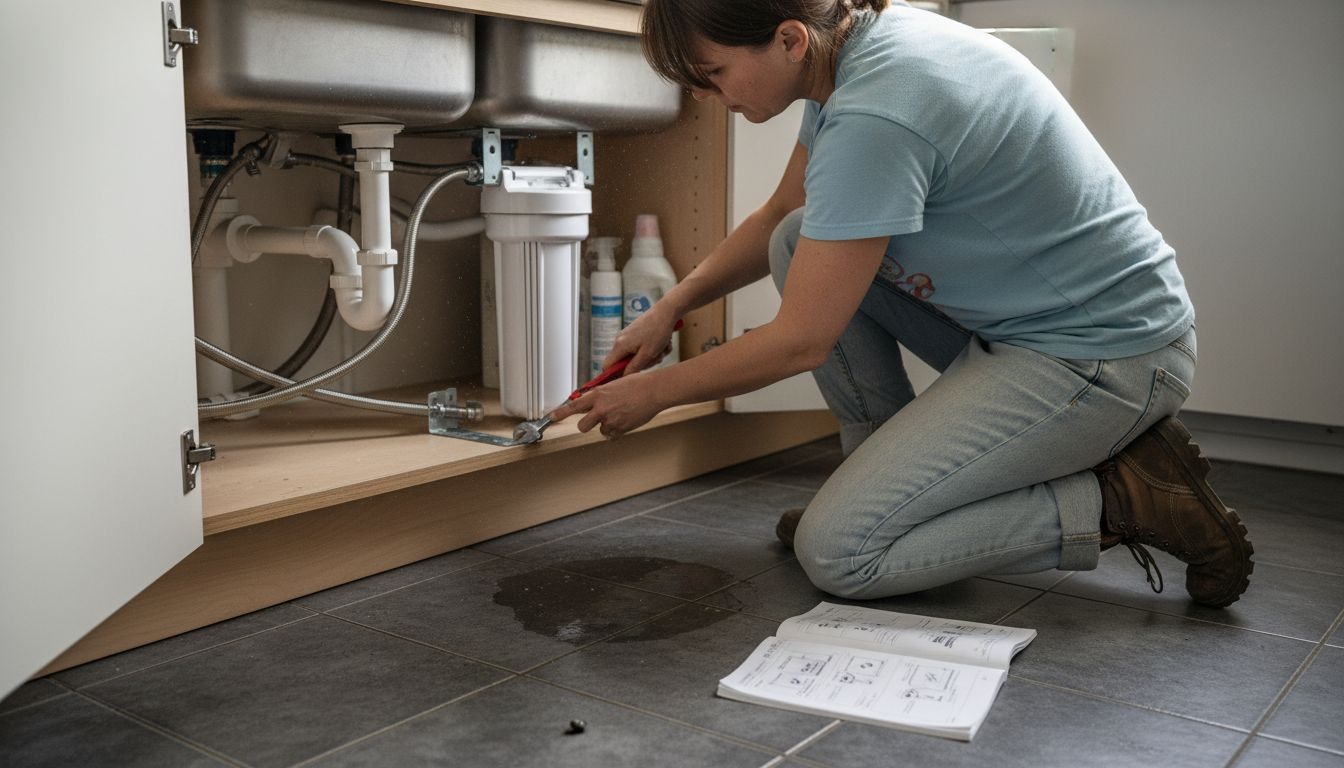
Step 4: Perform post-installation water testing to verify system effectiveness. Collect samples after running water for five minutes and compare results to pre-installation baselines. Successful systems reduce targeted contaminants by 95% or more.
Step 5: Commission the system and train household members on proper operation and maintenance. Document filter replacement schedules and establish monitoring routines. The water purifier installation guide includes user training checklists.
| Workflow Step | Timeline | Key Deliverable |
|---|---|---|
| Water testing | Week 1-2 | Laboratory report |
| Technology selection | Week 3 | System purchase |
| Installation | Week 4 | Operating system |
| Verification testing | Week 5-6 | Quality confirmation |
| User training | Week 6 | Trained operators |
Pro Tip: Schedule installation during off-peak seasons when plumbers offer better rates and faster availability. Spring and fall provide ideal timing before summer or winter demand spikes.
Filter technology and certification
Understanding filtration technologies empowers informed purchasing decisions. Activated carbon filters use porous carbon to absorb chlorine, volatile organic compounds, and taste-affecting substances. These filters excel at improving water aesthetics but offer limited heavy metal removal.
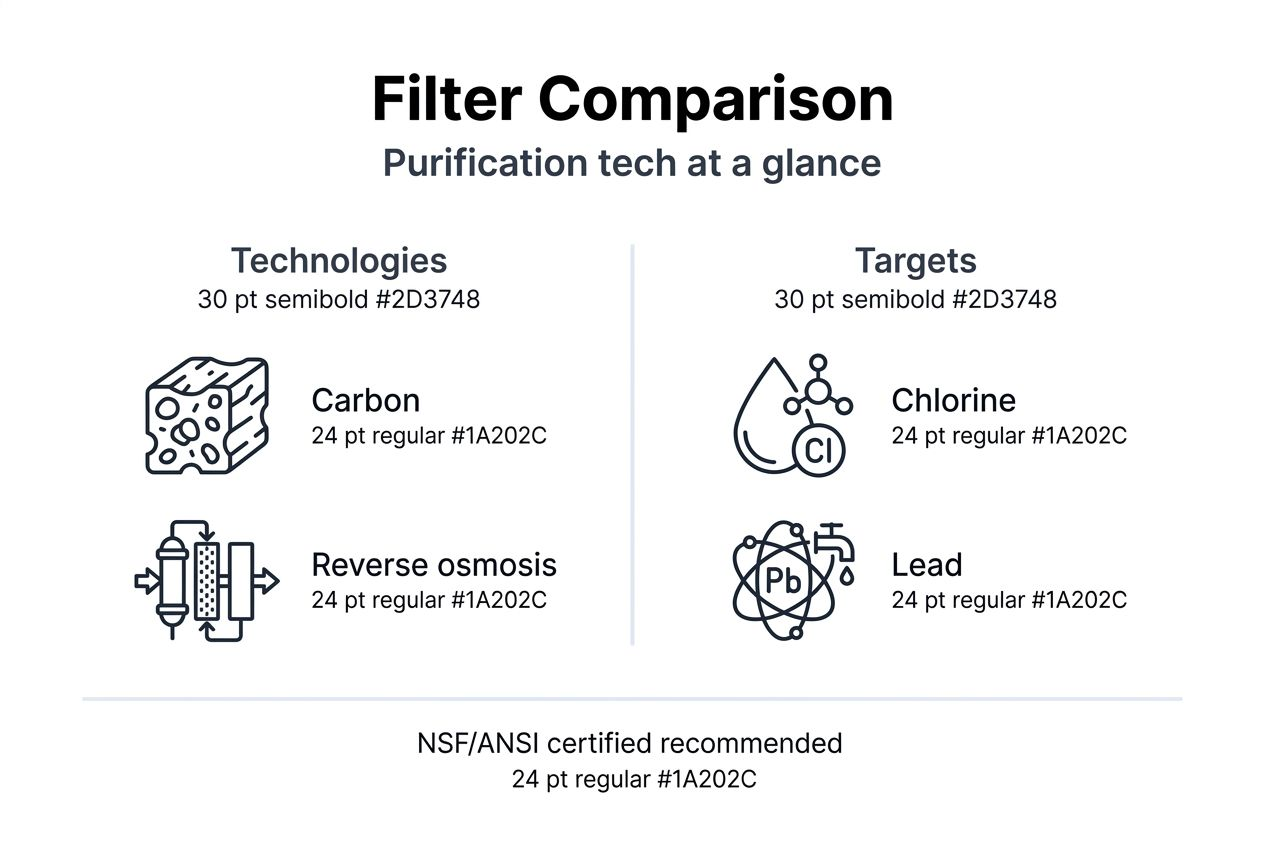
Reverse osmosis systems force water through semi-permeable membranes, blocking dissolved solids, heavy metals, and many chemical contaminants. These comprehensive systems remove up to 99% of dissolved substances but produce wastewater during operation. Combining reverse osmosis with carbon filtration addresses the broadest contaminant spectrum.
UV purification systems expose water to ultraviolet light, destroying bacterial DNA and preventing reproduction. These systems achieve 99.99% bacteria and virus inactivation without chemicals or taste changes. UV requires pre-filtration to remove particles that shield microorganisms from light exposure.
Certification validates manufacturer claims through independent testing. NSF/ANSI standards cover specific contaminant categories:
- NSF/ANSI 42: Aesthetic effects like chlorine taste and odor
- NSF/ANSI 53: Health effects including lead, mercury, and cysts
- NSF/ANSI 55: UV microbiological treatment
- NSF/ANSI 58: Reverse osmosis systems
The certified filtration standards home explains each certification’s testing protocols. Only purchase systems displaying certification marks matching your contamination concerns. Uncertified products may fail to deliver promised protection.
| Technology | Primary Targets | Typical Lifespan | Certification |
|---|---|---|---|
| Activated carbon | Chlorine, VOCs, taste | 6-12 months | NSF/ANSI 42, 53 |
| Reverse osmosis | Heavy metals, dissolved solids | 2-3 years membrane | NSF/ANSI 58 |
| UV sterilization | Bacteria, viruses | 12 months lamp | NSF/ANSI 55 |
| Ceramic filters | Sediment, bacteria | 12-24 months | NSF/ANSI 53 |
The role of filtration technology explores how materials interact with contaminants at molecular levels. Filter longevity depends on water quality and usage volume, not just time elapsed.
Maintenance and filter replacement best practices
Proper maintenance sustains system performance and protects your investment. Neglecting routine care reduces filtration efficiency by up to 40%, allowing contaminants to pass through degraded media. Establish calendar reminders for scheduled maintenance tasks.
Replace filters according to manufacturer specifications or sooner if water quality changes. Most carbon filters require replacement every 6 to 12 months. Reverse osmosis membranes last 2 to 3 years under normal conditions. UV lamps maintain effectiveness for approximately 12 months before intensity drops below sterilization thresholds.
Signs indicating immediate filter replacement include:
- Noticeable taste or odor changes in filtered water
- Reduced water flow or pressure at dispensing points
- Visible sediment or cloudiness in filtered water
- System alert indicators or timer notifications
Schedule professional servicing annually for comprehensive system inspection. Technicians check connection integrity, pressure levels, and system component wear. The maintain purifier efficiency guide covers DIY maintenance tasks between professional visits.
Ongoing water quality monitoring is recommended quarterly or biannually to maintain water safety. Home test strips provide quick contamination checks between laboratory analyses. The maintain home water filters resource includes testing schedules and record-keeping templates.
Pro Tip: Buy replacement filters in bulk when systems go on sale to lock in lower prices and ensure continuous availability. Store spare filters in cool, dry locations away from direct sunlight.
Common mistakes and troubleshooting
Avoiding installation and maintenance errors protects your family’s health and prevents costly system failures. Many homeowners skip initial water testing, purchasing filtration based on assumptions rather than data. This approach often results in inadequate contaminant removal or over-engineered systems that waste money.
Incorrect installation causes multiple problems. Leakage due to improper installation wastes over 18 gallons of water per household daily, increasing utility bills and potentially damaging cabinets or floors. Cross-threading fittings, forgetting gaskets, or using incompatible materials leads to connection failures. Always follow manufacturer torque specifications and material requirements.
Neglecting filter life monitoring represents another critical mistake. Exhausted filters become contamination sources themselves as trapped substances break down or bacterial colonies develop. Set phone reminders or use systems with automatic replacement indicators to prevent filter expiration.
Using uncertified filtration products exposes your family to unverified protection claims. Some manufacturers exaggerate removal capabilities or omit testing for harmful substances. The water filter replacement workflow emphasizes certification verification before purchase.
Frequent troubleshooting issues include:
- Low water pressure from clogged pre-filters or kinked supply lines
- Strange tastes indicating exhausted carbon filters or bacterial growth
- Leaking connections from improper tightening or damaged O-rings
- System bypassing from incorrect valve positions during maintenance
“The most expensive water filter is the one that doesn’t work. Always verify certifications and follow installation instructions precisely to protect your investment and your family’s health.”
Address problems immediately when detected. Small leaks escalate into major water damage. Taste changes signal potential health risks requiring urgent filter replacement.
Expected results and outcomes
A properly implemented pure water system delivers measurable health and quality benefits. A well-maintained home pure water system delivers contaminant levels below EPA maximum contaminant levels, improving health by reducing exposure to lead, arsenic, nitrates, and pathogenic microorganisms. Families report fewer gastrointestinal issues and improved taste perception after installing certified systems.
Health benefits extend beyond immediate contamination removal. Reduced lead exposure protects children’s neurological development. Lower nitrate levels decrease methemoglobinemia risks in infants. Bacterial removal prevents waterborne illness outbreaks affecting vulnerable household members.
Consumers report up to a 20% reduction in water use when combined with water-efficient fixtures. Better-tasting water encourages increased consumption, supporting proper hydration. Many families eliminate bottled water purchases, saving hundreds annually while reducing plastic waste.
Realistic performance expectations include:
- Contaminant removal rates of 95% to 99.99% for certified targets
- Improved taste and odor within 24 hours of installation
- Stable water pressure with properly sized systems
- Filter longevity matching manufacturer specifications under normal use
- Reduced maintenance costs compared to bottled water expenses
Key Outcome: Annual water testing confirms sustained contaminant reduction below health thresholds when systems receive proper maintenance and timely filter replacements.
System longevity depends on maintenance consistency. Well-maintained units operate effectively for 10 to 15 years before requiring major component replacement. Regular servicing prevents premature failures and extends return on investment. Document all maintenance activities to track system performance over time.
Explore Coway’s pure water solutions
After learning the workflow for reliable home water purification, explore certified solutions designed to protect your family’s health. Coway offers advanced filtration systems combining multiple technologies to address the broadest contaminant spectrum. The water purification process explained guide demonstrates how integrated systems deliver superior results.
The countertop ice water purifier provides convenient purification without permanent installation, perfect for renters or those seeking portable solutions. For comprehensive protection, the top uv water purifiers comparison helps you evaluate options matching your household needs. Each system carries relevant NSF/ANSI certifications and includes professional installation support to ensure proper setup and ongoing performance.
FAQ
What is the ideal frequency to replace filters in a pure water system?
Most filters should be replaced every 6 to 12 months depending on usage volume and manufacturer guidelines. Carbon filters handling high chlorine levels may require more frequent replacement. Regular replacement prevents performance loss and contamination breakthrough, maintaining consistent water safety.
Can I install a pure water system myself or should I hire a professional?
DIY installation is possible if you possess basic plumbing skills and carefully follow manufacturer instructions. However, professional installation reduces leak risks, ensures proper system commissioning, and typically preserves warranty coverage. Complex systems involving electrical connections or structural modifications always require professional expertise.
How can I test my water quality after installation?
Use third-party laboratory testing services or consumer water test kits to analyze specific contaminants. Collect samples after running water for five minutes to flush the system. Periodic testing every six months ensures the system consistently meets safety standards and catches performance degradation early.
What certifications should I look for when choosing a filtration system?
Look for NSF/ANSI certifications matching contaminants identified in your water testing results. NSF/ANSI 53 covers health contaminants like lead and cysts, while NSF/ANSI 55 certifies UV microbiological treatment. Certified products undergo independent testing validating manufacturer removal claims, ensuring reliable protection.
How often should I monitor my water quality after installing a pure water system?
Test quarterly or biannually using home test kits or laboratory analysis to detect changes in contaminant levels. More frequent testing makes sense if you notice taste changes or after major municipal infrastructure work. Regular monitoring helps catch filter exhaustion or system failures before they compromise water safety.
Recommended
- Complete Water Filtration Process Guide for Homeowners – Coway Water Purifier
- Complete Water Purifier Installation Guide for Homeowners – Coway Water Purifier
- Water Purification Process Explained: Achieve Pure Drinking Water – Coway Water Purifier
- How to Ensure Purified Water at Home or Business – Coway Water Purifier
