
Uncategorized
Indoor vs Outdoor Air Pollution – How It Impacts Home Health

Jan
Breathing easy at home can feel like a challenge when unseen threats are present both outdoors and inside. For health-conscious American homeowners, knowing the difference between indoor and outdoor air pollution is the key to protecting your family’s well-being. Outdoor pollution might come from traffic or industry, but indoor air problems often go unnoticed, accumulating in your living spaces. This guide shows you how to spot, compare, and respond to each type, laying the groundwork for cleaner, healthier air at home.
Table of Contents
- Defining Indoor and Outdoor Air Pollution
- Common Sources of Air Contaminants
- Typical Pollutants in Each Environment
- Health Risks of Poor Air Quality
- How Outdoor Pollution Penetrates Indoors
- Effective Solutions for Cleaner Indoor Air
Key Takeaways
| Point | Details |
|---|---|
| Understanding Air Pollution | There are two types of air pollution: indoor and outdoor, each requiring different management strategies. |
| Health Risks | Poor air quality significantly impacts health, causing diseases such as heart disease, stroke, and cancer. |
| Indoor Control | Homeowners can actively manage indoor air pollution through source control, improved ventilation, and filtration systems. |
| Outdoor Penetration | Outdoor pollutants can infiltrate homes, making effective sealing and air quality monitoring essential. |
Defining Indoor and Outdoor Air Pollution
Air pollution comes in two distinct forms, and understanding the difference matters more than you might think. Air pollution is a mix of hazardous substances from both human-made and natural sources, developing in two separate contexts: indoor air pollution and outdoor air pollution. The challenge for homeowners is that you’re dealing with two completely different pollution ecosystems, each requiring its own approach.
Outdoor air pollution is what you notice when you see haze over a city skyline or smell exhaust from traffic. This type comes from vehicle emissions, industrial processes, power plants, and natural sources like dust storms or volcanic ash. When you breathe outside, you’re inhaling particulate matter (those tiny particles you can sometimes see floating in sunlight), nitrogen dioxide from car engines, and sulfur dioxide from industrial operations. The EPA monitors outdoor air quality, and on bad air days, you probably notice your lungs feel different during your morning run or evening walk. Outdoor pollution varies by location and weather conditions. A city near a highway faces different pollution challenges than a suburb near farmland.
Indoor air pollution is the silent player that catches most homeowners off guard. This develops inside your home from household items, combustion appliances like gas stoves and fireplaces, biological pollutants such as mold and dust mites, and volatile organic compounds from paint, cleaning products, and furniture. Here’s what surprises people: indoor air pollution contributes to major health impacts including heart disease, stroke, lung infections, and cancer. You can’t see most of it, and you can’t escape it the way you can step away from a polluted street. Your bedroom, kitchen, and living room become pollution sources if the right conditions exist. Poor ventilation traps these pollutants inside, allowing them to accumulate to levels that often exceed outdoor pollution in the same area.
The practical difference comes down to control and visibility. Outdoor pollution is largely beyond your individual control, though you can check air quality forecasts and limit outdoor activities on bad air days. Indoor pollution, by contrast, is something you can actively manage through ventilation, product choices, and air filtration systems designed specifically for home use.
Pro tip Track your home’s indoor air quality regularly using a monitor, then seal air leaks around doors and windows while ensuring your HVAC system includes proper filtration to reduce both outdoor pollutants entering your home and indoor sources accumulating inside.
Common Sources of Air Contaminants
You likely don’t think about where air pollution comes from until you’re checking air quality alerts or noticing your home smells stale. The reality is that pollution sources surround you constantly, both outside and inside your home. Understanding where these contaminants originate is the first step toward controlling them effectively.
Outdoor sources are the ones you hear about most often. Burning fossil fuels for transportation, heating, and manufacturing creates the bulk of outdoor pollution. Vehicle exhaust from your morning commute, power plants generating electricity for your neighborhood, industrial boilers running 24/7, and even chemical production facilities all pump pollutants into the air. If you live near a major highway or industrial zone, you’re breathing significantly higher concentrations of nitrogen dioxide, sulfur dioxide, and particulate matter. But here’s what catches many people off guard: even in suburban or rural areas, outdoor pollution exists. Biomass burning (whether from agricultural practices or wildfires), dust storms, and natural sources like pollen all contribute to your outdoor air quality.
Indoor sources are where homeowners often miss the picture entirely. Your gas stove emits nitrogen dioxide and carbon monoxide as it cooks your dinner. A fireplace or wood stove releases particulate matter directly into your living space. But combustion appliances are just the beginning. Household products you use daily release volatile organic compounds from cleaning products, paint, and furniture, creating an invisible chemical soup in your home. Then there are the biological contaminants: mold spores in damp bathrooms, dust mites thriving in bedding and carpets, pet dander floating through the air, and bacteria or viruses from household occupants. Poor ventilation means these pollutants don’t escape. They accumulate and recirculate, getting trapped in your HVAC system and settling on surfaces where you breathe them repeatedly.
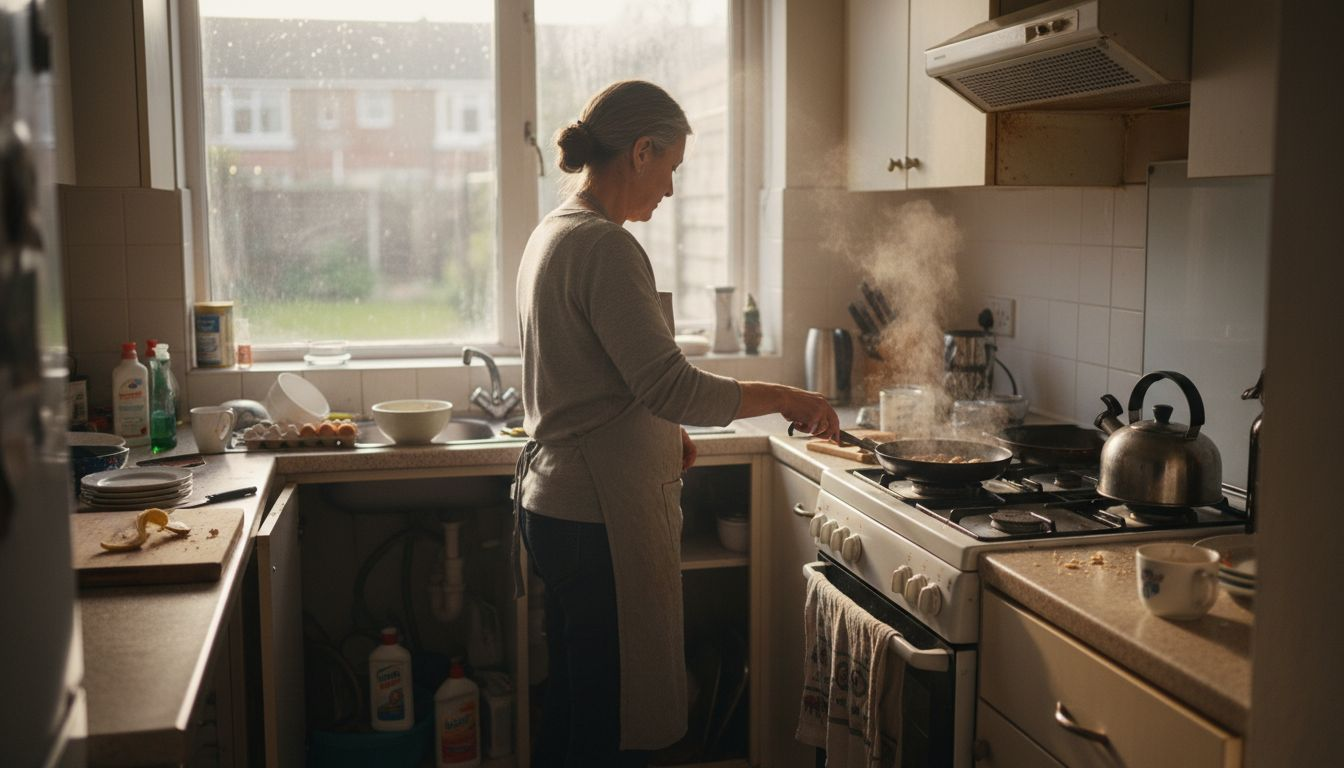
The scary part is that indoor sources often concentrate at higher levels than what you’d breathe outside. A poorly ventilated kitchen with a gas stove can reach pollution levels that exceed outdoor air quality on bad air days. The combination of multiple sources happening simultaneously (cooking, cleaning, heating, biological growth) creates a perfect storm for indoor air quality problems. Your bedroom, where you spend eight hours sleeping, could be your most polluted room if dust mites are thriving or outdoor pollution is seeping in through window cracks.
Pro tip Identify your home’s specific pollution sources by checking your kitchen for gas appliances, inspecting bathrooms and basements for visible moisture or mold growth, and noting any musty odors or stale air, then address the most significant sources first before investing in filtration solutions.
Typical Pollutants in Each Environment
Not all air pollutants are created equal. What floats through your city streets differs dramatically from what’s circulating in your bedroom, and knowing the difference helps you target your air quality efforts effectively. The specific pollutants you encounter depend entirely on whether you’re breathing outdoor or indoor air.
Outdoor pollutants follow a predictable pattern because they come from similar industrial and transportation sources across most communities. The US EPA identifies six common outdoor air pollutants called criteria pollutants: carbon monoxide, lead, nitrogen dioxide, ozone, sulfur dioxide, and particulate matter. Carbon monoxide seeps from vehicle exhausts and incomplete combustion at factories. Lead, though largely phased out of gasoline, still exists in soil near old industrial sites and some older homes. Nitrogen dioxide comes from burning fossil fuels, creating that brownish haze you see hanging over cities on hot days. Ozone forms when sunlight reacts with other pollutants, which is why ozone alerts spike in summer afternoons. Sulfur dioxide originates from coal-burning power plants and industrial operations. Particulate matter, the category that includes everything from dust to soot, varies by size and can penetrate deep into your lungs. These six pollutants are monitored by the EPA because they pose the greatest health risks at outdoor levels.
Indoor pollutants tell a completely different story because your home creates its own unique pollution profile. Common indoor air pollutants include secondhand smoke, combustion byproducts, radon, molds, allergens, volatile organic compounds, asbestos fibers, and particulates. Your gas stove contributes carbon monoxide and nitrogen dioxide directly into your kitchen air. Radon, a naturally occurring radioactive gas, seeps up through foundation cracks in many American homes, and you can’t smell or see it. Mold thrives in damp bathrooms and basements, releasing spores that trigger allergic reactions and respiratory problems. Dust mites live in your bedding and carpets, producing allergens that cause sneezing and asthma flare-ups. Paint on your walls, furniture finishes, cleaning products, and air fresheners off-gas volatile organic compounds that can linger for months after application. If your home was built before the 1980s, asbestos fibers may be lurking in insulation, floor tiles, or pipe wrap.
Here’s what makes indoor pollution uniquely dangerous: concentration. Outdoor pollutants disperse into the atmosphere, constantly diluted by air movement and wind. Indoor pollutants get trapped in your sealed home, accumulating to levels that often exceed outdoor air quality. A single source of pollution compounds with other sources, creating a mixture far more potent than any single pollutant alone. Your bedroom might have dust mites, pet dander, outdoor pollution seeping through window cracks, and off-gassing from furniture all simultaneously, while lacking adequate air exchange to clear these contaminants.
Here’s a comparison of typical indoor and outdoor air pollutants and their major health impacts:
| Environment | Main Pollutants | Typical Sources | Health Risks |
|---|---|---|---|
| Outdoor | PM2.5, ozone, nitrogen dioxide, sulfur dioxide, carbon monoxide, lead | Cars, factories, power plants, wildfires, dust storms | Respiratory illness, heart disease, stroke, cancer |
| Indoor | VOCs, radon, particulate matter, mold, allergens, asbestos, combustion byproducts | Gas stoves, paint, furniture, carpets, damp areas, older materials | Asthma, allergies, lung infections, neurological issues, cancer |
Pro tip Test your home for radon (a cheap kit from any hardware store takes five days) and identify which indoor pollutants affect your household most, then prioritize addressing those specific sources before selecting air purification solutions that target your actual problems.
Health Risks of Poor Air Quality
Bad air quality is not just uncomfortable. It’s dangerous. The health consequences of breathing polluted air start immediately and compound over years, affecting everything from your daily breathing to your long-term survival. Understanding these risks transforms air quality from an abstract concern into something that directly impacts the people you love.
Air pollution is responsible for more than 6.5 million deaths globally each year, contributing to heart disease, stroke, lung diseases, diabetes, and cancer. That staggering number means air pollution kills more people annually than car accidents, homicides, and suicides combined. Fine particulate matter, especially PM2.5 (particles smaller than 2.5 micrometers), penetrates deep into your lungs where your body cannot expel it. These particles bypass your body’s natural defenses and embed themselves in lung tissue, crossing into your bloodstream and affecting your heart directly. When you’re a homeowner breathing poor indoor air for 16 hours daily, you’re accumulating this damage steadily, even when you don’t feel sick.
Short-term exposure creates immediate discomfort that most people recognize. You cough. Your eyes sting. Your head throbs. These are your body’s alarm bells. Children complaining about their eyes burning during high pollution days are experiencing real physiological damage. But short-term exposure is the least of your concerns. Long-term exposure is what changes your life trajectory. Chronic exposure to poor air quality increases your risk of developing asthma, even if you’ve never had it before. Your cardiovascular system weakens as pollution damages blood vessel walls and increases inflammation throughout your body. Cancer risk rises significantly. Nervous system disorders emerge from long-term exposure to particulate matter and volatile organic compounds. Your cognitive function declines. Your risk of premature death climbs steadily with each year of breathing polluted air.
Certain people face amplified risks. Children have smaller lungs still developing, meaning pollutants damage growing tissue more severely. Elderly individuals have compromised cardiovascular and respiratory systems already working harder. People with pre-existing conditions like asthma, heart disease, or diabetes face exponentially greater danger when breathing poor air. Pregnant women expose their developing fetuses to pollutants that affect fetal lung development and birth weight. Urban residents living near highways or industrial zones breathe concentrations orders of magnitude higher than suburban or rural neighbors.
The damage is cumulative and often irreversible. You cannot undo 10 years of breathing PM2.5 particles embedded in your lungs by breathing clean air for one year. The inflammation, the vascular damage, the cellular mutations progress silently without obvious symptoms until a doctor delivers a diagnosis. Your body doesn’t send you a warning email when air quality turns dangerous. It simply accumulates damage day after day.
Pro tip If you or anyone in your household falls into vulnerable categories (children, elderly, asthma or heart conditions), prioritize improving indoor air quality immediately through source control and filtration, since you control your home environment but not outdoor pollution exposure during commutes and outdoor activities.
How Outdoor Pollution Penetrates Indoors
You might assume your home is a sanctuary from outdoor air pollution. Close the door, seal yourself inside, and you’re safe from highway traffic, industrial smokestacks, and wildfire smoke. That assumption is dangerously wrong. Your home is not airtight. It’s a porous structure constantly exchanging air with the outside world, and that exchange carries pollution directly into the spaces where you breathe for 16 hours daily.
Outdoor air infiltrates buildings through ventilation, open windows and doors, and cracks, significantly contributing to indoor particulate matter levels including PM2.5 and ultrafine particles. Every time you open a window for fresh air, you’re inviting outdoor pollution inside. Your HVAC system pulls outdoor air through intake vents, filters it (or doesn’t, depending on your filter quality), and circulates it throughout your home. Even when windows and doors are closed, air leaks around window frames, under door gaps, through electrical outlets, and along foundation cracks. These gaps aren’t minor. Studies show that typical American homes exchange their entire air volume multiple times per day simply through these uncontrolled leaks. During wildfire season, when outdoor air quality reaches hazardous levels, that same air exchange mechanism fills your living room with smoke and particulates.
The penetration rate depends on several factors. Outdoor pollution concentration matters most. If you live near a highway, your outdoor air already contains higher pollution levels than suburban neighborhoods five miles away. Your home’s age and condition affects infiltration. Older homes with gaps around windows and poor sealing leak more outdoor air. Weather and pressure differences drive air movement. Cold winter days create pressure differences that push outdoor air through cracks faster than calm summer days. Your HVAC system either amplifies or reduces outdoor pollution entry. Systems with high-efficiency filters (MERV 13 or higher) catch some particulates, while basic filters let most pass through. Intentional ventilation from opening windows, using exhaust fans, or running air conditioning on outside air mode dramatically increases pollution entry.
Here’s what makes this particularly insidious: you’re not getting filtered outdoor air in most cases. When outdoor pollution from traffic, wildfires, or industrial sources enters your home through cracks and gaps, it arrives unfiltered. The air exchanges happening through your HVAC system depend entirely on your filter grade. Standard one-inch filters in most homes capture large particles but let PM2.5 and ultrafine particles pass straight through to circulate in your bedroom and living room. Outdoor air pollutants including gases and particulate matter infiltrate indoor spaces where people spend most time, affecting brain health and overall well-being. You’re breathing the same traffic exhaust and wildfire smoke indoors as you would standing outside, just in a more concentrated environment since the pollutants accumulate rather than dispersing.
Your kitchen becomes a particularly vulnerable zone. When you’re cooking with a gas stove, you’re generating indoor pollution simultaneously while outdoor pollution seeps inside through cracks. Your bedroom, where air circulation naturally stagnates and outdoor pollution infiltrates through window gaps, becomes a pollution concentration chamber where you spend eight hours inhaling whatever is outside plus whatever is being generated inside.
Pro tip Seal air leaks around windows and doors with weatherstripping or caulk to reduce outdoor pollution infiltration, then upgrade your HVAC filter to MERV 13 or higher and check it monthly during high pollution seasons since a clogged filter allows pollutants to bypass the media entirely.
Effective Solutions for Cleaner Indoor Air
Cleaner indoor air is not an accident. It’s the result of deliberate action across three distinct strategies that work together to eliminate pollutants at their source, prevent new ones from entering, and remove what’s already in the air. The good news is that you don’t need to choose just one approach. The most effective homes use all three simultaneously.
Source control is your first line of defense and often the cheapest to implement. Stop pollution before it enters your air. Replace your gas stove with an induction cooktop to eliminate combustion byproducts during cooking. Seal your fireplace or convert it to electric if you use it regularly. Fix water leaks immediately to prevent mold growth in bathrooms, basements, and crawl spaces. Choose low-VOC paint when redecorating and low-formaldehyde furniture. Store cleaning products in sealed containers and use less toxic alternatives. Remove carpeting in bedrooms and replace with hard flooring to reduce dust mite habitats. These actions address pollution at the source before it ever becomes an air quality problem.
Ventilation and air exchange prevents pollutants from accumulating indoors. Improving indoor air quality involves source control, improved ventilation to increase outdoor air exchange, and use of air cleaners for filtration. Open windows on mild days when outdoor air quality is good, creating natural air exchange. Use exhaust fans in kitchens during cooking and bathrooms during showers to remove moisture and odors at the source. Your HVAC system should maintain proper ventilation, exchanging your home’s air multiple times per hour according to building codes. However, ventilation has limits. During wildfire season or high pollution days, opening windows invites outdoor pollution inside. That’s why ventilation works best combined with filtration.
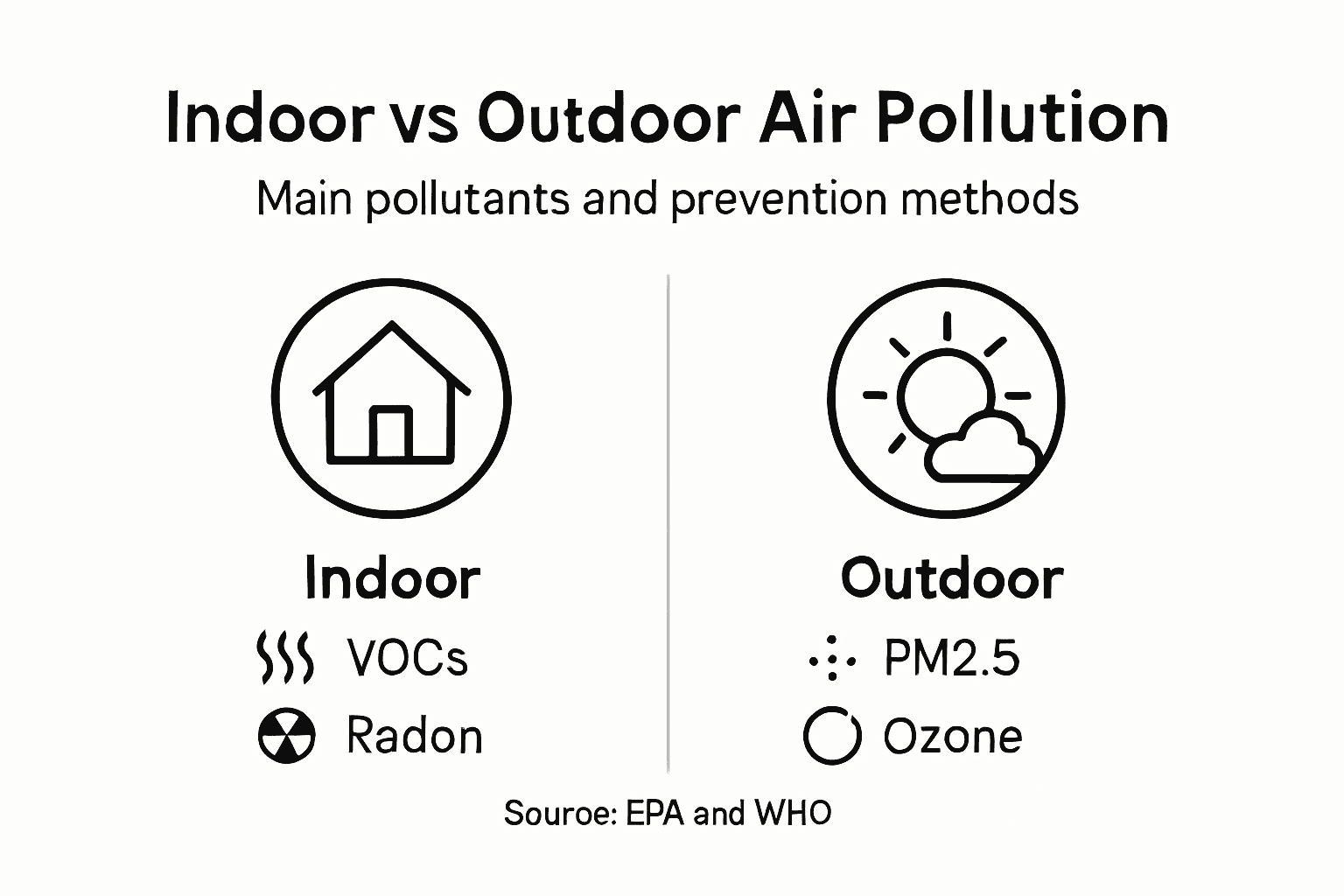
Air filtration and purification remove pollutants that are already circulating in your home. Upgrade your HVAC filter from a basic fiberglass filter to a MERV 13 filter, which captures PM2.5 and ultrafine particles that standard filters miss. Replace these filters monthly during high pollution seasons since a clogged filter becomes ineffective. Portable HEPA air purifiers provide targeted filtration in your bedroom or main living areas where you spend the most time. To lower respiratory virus risks and improve air quality, utilize HVAC systems with proper filters and employ portable HEPA air purifiers, especially when you cannot increase fresh air flow. Position purifiers in bedrooms near where you sleep or in living rooms where the family gathers.
The order matters. Start with source control because it’s permanent and low cost. Add ventilation to prevent accumulation. Use filtration as your safety net for pollutants that slip through the other two strategies. A home using all three approaches achieves dramatically cleaner air than one relying on any single solution.
This table summarizes practical solutions for achieving cleaner indoor air and their main advantages:
| Method | Description | Key Benefit |
|---|---|---|
| Source Control | Remove pollution sources in the home | Prevents new pollutants |
| Ventilation/Exchange | Increase airflow with fans and open windows | Reduces accumulation |
| Filtration/Purification | Use HEPA air purifiers, upgraded HVAC filters | Removes airborne contaminants |
Pro tip Begin with source control by identifying and sealing your home’s biggest pollution sources (gas appliances, moisture problems, off-gassing furniture), then upgrade HVAC filters to MERV 13 and add a portable HEPA purifier in your bedroom, since this combination addresses all three strategies without requiring expensive renovation.
Protect Your Home From Both Indoor and Outdoor Air Pollution Today
The article reveals how invisible indoor pollutants like VOCs and radon combine with outdoor contaminants seeping through every crack to threaten your family’s health every day. You deserve a home environment where clean air supports your loved ones’ well-being rather than harms it. With the right tools and smart choices, you can control indoor air pollution by targeting sources, improving ventilation, and removing harmful particles efficiently.
Explore advanced air purifiers and filtration systems at Coways Water Purifier designed specifically to help homeowners tackle indoor pollution cocktail head-on. Upgrade to models featuring HEPA filters that capture PM2.5 and ultrafine particles while reducing airborne allergens and VOCs. Act now to create a safer breathing space inside your home and reduce the risk posed by outdoor pollutants infiltrating your indoor air. Discover your perfect purifier today and take the first vital step toward healthier, fresher air with expert service and support from Coway.
Frequently Asked Questions
What are the main differences between indoor and outdoor air pollution?
Indoor air pollution comes from sources within your home, such as gas stoves, cleaning products, and biological contaminants like mold. Outdoor air pollution arises from vehicle emissions, industrial processes, and natural elements like dust storms. Each requires different management approaches.
How can I improve my indoor air quality?
To improve indoor air quality, focus on source control by eliminating pollutants such as gas appliances and moisture sources. Ensure good ventilation by opening windows on clean air days and using exhaust fans. Lastly, use HEPA air purifiers and upgrade your HVAC filters to MERV 13 or higher to remove airborne contaminants.
What are common sources of indoor air pollutants?
Common indoor air pollutants include volatile organic compounds (VOCs) from cleaning products and paints, combustion byproducts from gas stoves, mold in damp areas, pet dander, and dust mites. These can accumulate to levels higher than outdoor pollutants, especially in poorly ventilated spaces.
What health risks are associated with poor air quality?
Poor air quality can lead to numerous health issues, including respiratory illnesses, heart disease, stroke, and lung infections. Long-term exposure increases the risk of developing asthma, cognitive decline, and other serious health conditions.
Recommended
- Indoor Air Pollution – How It Affects Family Health – Coway Water Purifier
- Why Monitor Indoor Pollution for Family Health – Coway Water Purifier
- 7 Most Common Indoor Air Pollutants and How to Reduce Them – Coway Water Purifier
- Indoor Air Quality: Everything You Need to Know – Coway Water Purifier
- Asthma lindern mit natürlichen Heilmitteln
