
Uncategorized
How Air Purifiers Trap Particles: Cleaner Homes
Jan
Air inside the average American home can be up to 100 times more polluted than outdoor air, yet most families spend 90% of their lives indoors. With so many hidden contaminants circulating through everyday living spaces, understanding air purifier technology becomes essential for health-conscious American homeowners. This guide breaks down the science and benefits of modern air purification methods, equipping you with the knowledge needed to choose the right system and protect your family’s wellbeing.
Table of Contents
- Air Purifiers And Indoor Air Quality Basics
- Main Technologies For Trapping Airborne Particles
- How Mechanical And Electrostatic Filters Work
- Benefits And Limitations Of Different Filter Types
- Choosing The Right Air Purifier For Your Home
- Common Mistakes To Avoid When Using Air Purifiers
Key Takeaways
| Point | Details |
|---|---|
| Indoor Air Quality is Often Overlooked | Indoor air can be significantly more polluted than outdoor air, affecting health, especially for vulnerable individuals. |
| Choose the Right Air Purifier | Selecting a model with HEPA and activated carbon filters is essential for comprehensive air cleaning. |
| Proper Maintenance is Crucial | Regular filter replacements and optimal placement enhance air purifier performance and efficiency. |
| Avoid Common Mistakes | Ensure continuous operation and avoid obstructive placements to maximize air circulation and purification. |
Air purifiers and indoor air quality basics
Indoor air quality represents a critical health factor most Americans overlook. According to research, indoor air can be up to 100 times more polluted than outdoor environments, with people spending approximately 90% of their time inside buildings. These pollution levels pose significant risks, particularly for individuals with respiratory sensitivities or underlying health conditions.
Air pollutants originate from multiple sources within homes and workplaces, including combustion byproducts, chemical emissions, dust, pet dander, and microscopic particulate matter. Volatile organic compounds (VOCs), mold spores, tobacco smoke, and carbon monoxide represent some of the most common indoor air contaminants. These invisible threats can trigger respiratory issues, allergic reactions, and long-term health complications if not properly managed.
Air purifiers serve as an essential defense mechanism against these indoor pollutants. By utilizing advanced filtration technologies like HEPA filters, activated carbon, and electrostatic precipitators, these devices systematically capture and neutralize harmful airborne particles. The filtration process involves multiple stages: mechanical filtering, which traps larger particles; chemical absorption, which neutralizes odors and gases; and sometimes even UV light sanitization to eliminate microscopic biological contaminants.
Pro tip: Rotate your air purifier’s position every few months to ensure comprehensive room coverage and maximize its particle-trapping efficiency.
Main technologies for trapping airborne particles
Modern air purification technologies employ sophisticated methods to combat indoor air pollutants, with each approach targeting specific types of airborne contaminants. Advanced filtration systems utilize multiple technologies that work synergistically to capture and neutralize harmful particles, ensuring comprehensive air cleaning.
High Efficiency Particulate Air (HEPA) filters represent the gold standard in mechanical filtration. These advanced filters can trap microscopic particles as small as 0.3 microns with an impressive 99.97% efficiency rate. HEPA technology works by using densely woven fiberglass threads that create a maze-like barrier, capturing dust, pollen, pet dander, and other fine particulate matter that conventional filters might miss. Unlike some electronic air cleaning methods, HEPA filters remove particles mechanically without generating potentially harmful ozone.
Complementary technologies enhance HEPA filtration’s effectiveness. Activated carbon filters specialize in absorbing odors, gases, and volatile organic compounds (VOCs), using a highly porous carbon material that chemically traps these molecules. Ultraviolet (UV) light technology provides an additional layer of protection by damaging the DNA of microorganisms like bacteria and viruses, effectively neutralizing their ability to reproduce. Some advanced air purifiers also incorporate electrostatic precipitators, which use electrical charges to make particles stick to collector plates, providing another method of air purification.
Pro tip: When selecting an air purifier, choose models that combine multiple filtration technologies for the most comprehensive air cleaning strategy.
How mechanical and electrostatic filters work
Air purification technologies leverage two primary filtration mechanisms to remove harmful particles from indoor environments. Mechanical and electrostatic filters represent complementary approaches that target airborne contaminants through distinctly different scientific principles, each offering unique advantages in air cleaning strategies.
Mechanical filters, exemplified by High Efficiency Particulate Air (HEPA) technology, operate through a sophisticated physical trapping process. These filters utilize densely woven fiberglass or synthetic fiber networks that create an intricate maze-like barrier. Particles are captured through three primary mechanisms: interception (particles directly contacting filter fibers), impaction (larger particles unable to navigate around fibers), and diffusion (microscopic particles moving erratically and getting trapped). This multilayered approach allows mechanical filters to remove particles as small as 0.3 microns with extraordinary 99.97% efficiency.
Electrostatic filters function through an entirely different scientific principle involving electrical charge manipulation. These systems generate a corona discharge that imparts a negative electrical charge to airborne dust, pollen, and other particulate matter. Once charged, these particles become attracted to positively charged collecting plates, effectively removing them from the air stream. While highly efficient at dust collection, electrostatic precipitators come with potential drawbacks, including the risk of generating small amounts of ozone, a respiratory irritant that can cause health complications.
Pro tip: When choosing between mechanical and electrostatic filters, prioritize HEPA mechanical filters for the safest and most consistent air purification performance.
Benefits and limitations of different filter types
Each air purification technology comes with unique strengths and potential drawbacks that homeowners must carefully consider. Filter performance varies significantly across different technologies, making it crucial to understand the specific capabilities and limitations of each filtration method.
HEPA filters represent the gold standard for particle removal, capturing an impressive 99.97% of particles as small as 0.3 microns. These mechanical filters excel at trapping allergens, dust, mold spores, and some bacteria with remarkable efficiency. However, they have notable limitations: HEPA filters cannot remove gaseous pollutants, volatile organic compounds (VOCs), or odors. Additionally, they create increased air resistance, which can impact overall system energy efficiency and require regular replacement to maintain optimal performance.
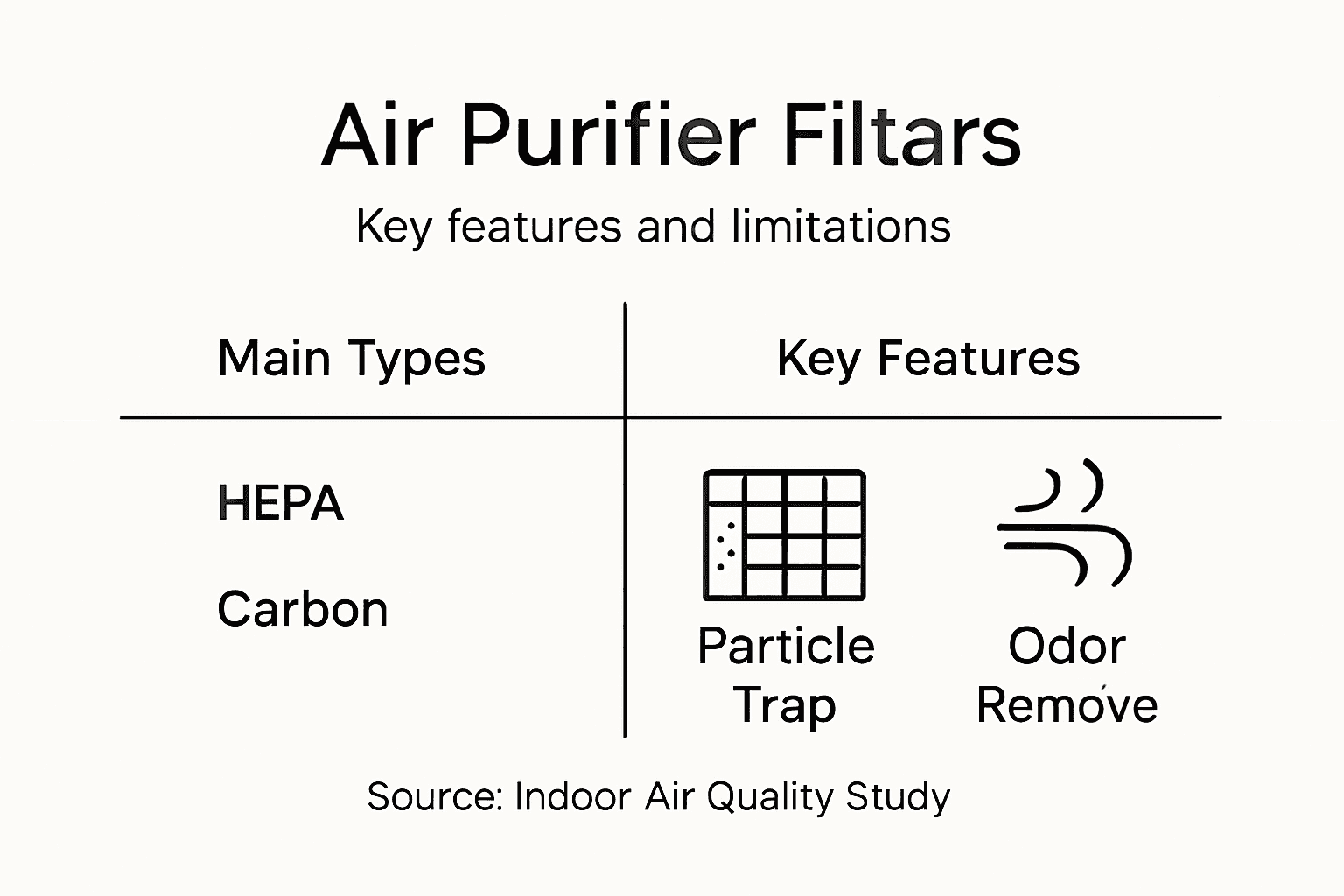
Activated carbon filters offer a complementary approach, specializing in absorbing odors, gases, and chemical pollutants that HEPA filters cannot capture. These filters use a highly porous carbon material that chemically traps molecular contaminants, making them excellent for neutralizing cooking smells, chemical emissions, and tobacco smoke. The primary limitation is their finite absorption capacity – once saturated, carbon filters become ineffective and must be replaced. Electrostatic precipitators, while innovative in their particle removal technique, come with significant caveats. They efficiently collect particles using electrical charges but potentially generate harmful ozone as a byproduct, which can cause respiratory irritation and potentially exacerbate existing health conditions.
Here’s a concise comparison of major air purifier filter technologies and their characteristics:
| Filter Type | Main Target | Key Strength | Primary Limitation |
|---|---|---|---|
| HEPA | Particulates | Traps 99.97% of tiny allergens | Cannot neutralize gases/odors |
| Activated Carbon | Gases & VOCs | Absorbs odors and chemicals | Saturates quickly, needs replacing |
| Electrostatic Precipitator | Dust, Pollen | Effective for fine powders | Produces ozone, health concerns |
| UV Light | Microorganisms | Neutralizes bacteria and viruses | Does not remove particles |
Pro tip: For comprehensive air purification, choose multi-stage filtration systems that combine HEPA, activated carbon, and other complementary technologies to address a wide range of indoor air contaminants.
Choosing the right air purifier for your home
Selecting an effective air purifier requires careful consideration of multiple factors to ensure optimal indoor air quality. Air purifier selection involves several critical elements that can significantly impact the device’s performance and your home’s overall air cleanliness.
Room size stands as the fundamental starting point for air purifier selection. Homeowners must match the device’s Clean Air Delivery Rate (CADR) to their specific room dimensions, ensuring complete air circulation and filtration. A small unit in a large room will prove ineffective, while an oversized purifier can waste energy. Look for HEPA-rated filters, which capture 99.97% of particles as small as 0.3 microns, providing the most comprehensive filtration. Pay close attention to specific performance metrics like dust, smoke, and pollen removal rates, which indicate the purifier’s overall effectiveness.
Beyond technical specifications, practical considerations play a crucial role in air purifier selection. Noise levels can significantly impact daily comfort, especially in bedrooms or home office spaces. Consider portable units for individual rooms, particularly for spaces where vulnerable individuals like children or elderly family members spend most time. Maintenance requirements, including filter replacement costs and frequency, should factor into your decision. Some advanced models offer multiple filtration stages, combining HEPA mechanical filters with activated carbon layers to address both particulate and gaseous pollutants. Placement matters tremendously – positioning the purifier away from walls and furniture ensures maximum air circulation and optimal performance.
To help you select the best air purifier, here is a summary of selection criteria and their practical impact:
| Selection Factor | Why It Matters | Impact On Performance |
|---|---|---|
| Room Size | Ensures proper coverage | Underpowered units miss pollutants |
| Filter Type | Affects pollutant range | Multi-stage filters clean comprehensively |
| CADR Rating | Measures cleaning speed | High ratings boost air turnover |
| Noise Level | Influences comfort | Quiet units suit bedrooms, offices |
| Maintenance Needs | Dictates upkeep burden | Easy maintenance saves time/money |
Pro tip: Measure your room’s square footage before shopping and choose an air purifier with a CADR rating that matches or slightly exceeds your space’s dimensions to ensure maximum air cleaning efficiency.
Common mistakes to avoid when using air purifiers
Air purifier effectiveness depends not just on the device’s quality, but also on how homeowners use and maintain these systems. Common air purifier mistakes can significantly reduce their performance and potentially compromise indoor air quality.
Placement represents a critical factor often overlooked by users. Many individuals position air purifiers in corners, behind furniture, or close to walls, which dramatically restricts airflow and reduces filtration efficiency. The optimal placement involves positioning the unit in an open area with at least 12-18 inches of clearance on all sides, allowing unrestricted air circulation. Additionally, homeowners frequently make the mistake of running purifiers intermittently, believing short-term operation provides comprehensive air cleaning. In reality, continuous operation ensures consistent air quality improvement.
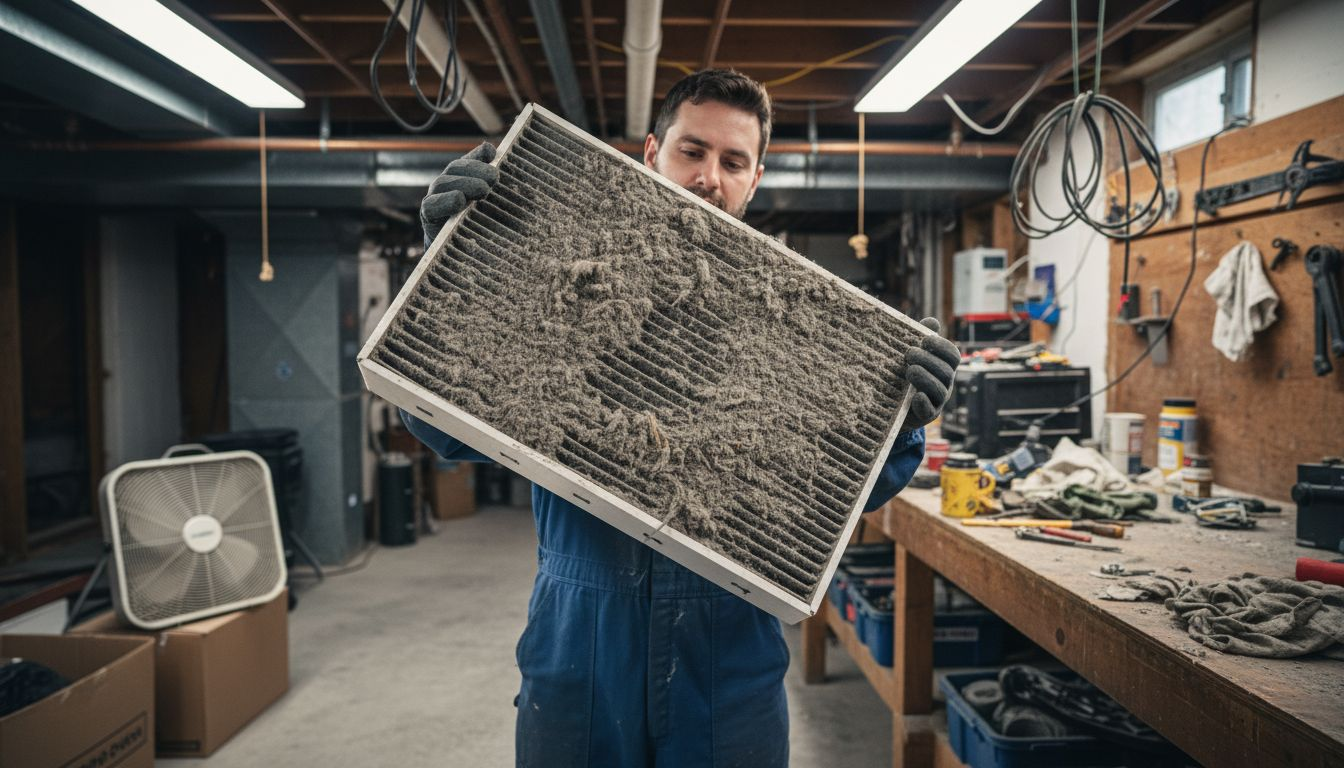
Maintenance negligence constitutes another significant error in air purifier usage. Filter replacement is not a suggestion but a necessity for maintaining optimal performance. Many users forget or deliberately delay changing filters, which can lead to decreased efficiency and potentially reintroducing trapped pollutants back into the air. Some individuals also mistakenly purchase devices that generate ozone, a harmful byproduct that can cause respiratory irritation. Equally problematic is expecting air purifiers to be a standalone solution for allergies or air quality issues without addressing underlying sources of indoor pollution, such as pet dander, smoking, or inadequate ventilation.
Pro tip: Create a filter replacement calendar and set automatic reminders to ensure timely maintenance and consistent air purifier performance.
Experience Cleaner Air with Trusted Coway Air Purifiers
The article reveals how crucial it is to trap airborne particles effectively to maintain a healthy indoor environment. People face challenges like managing allergens, VOCs, and microscopic pollutants that ordinary filters might miss. Understanding terms like HEPA filters, activated carbon, and electrostatic technology shows the importance of choosing a purifier that offers multi-stage filtration to cover a broad spectrum of contaminants and protect your loved ones.
If improving your home’s air quality is a priority, explore the reliable solutions at Uncategorized Archives – Coway Water Purifier.
Act now to safeguard your health with Coway’s advanced air purifiers engineered to trap fine particles and neutralize odors effectively. Visit https://cowayswaterpurifier.com to explore models featuring cutting-edge filtration systems and enjoy benefits like free delivery, professional installation, and maintenance services. Don’t wait until poor indoor air affects your family’s wellbeing. Take the first step toward breathing cleaner air today.
Frequently Asked Questions
What are the main technologies used in air purifiers to trap particles?
Air purifiers commonly use several advanced technologies, including High Efficiency Particulate Air (HEPA) filters, activated carbon filters, UV light, and electrostatic precipitators to capture and neutralize harmful airborne particles.
How do HEPA filters work to improve indoor air quality?
HEPA filters are designed to trap 99.97% of particles as small as 0.3 microns using densely woven fiberglass threads that physically capture allergens, dust, and other contaminants without generating harmful ozone.
What are the benefits and limitations of using activated carbon filters?
Activated carbon filters effectively absorb odors and chemical pollutants, making them great for neutralizing cooking smells and VOCs. However, they have a limited capacity for absorption and need to be replaced once saturated.
How should I position my air purifier for optimal performance?
To maximize air circulation, position your air purifier in an open area with at least 12-18 inches of clearance on all sides. Avoid placing it in corners or behind furniture to ensure the best filtration efficiency.
Recommended
- 7 Key Benefits of Air Purifiers for Urban Homeowners – Coway Water Purifier
- How Air Purifiers Remove Allergens at Home – Coway Water Purifier
- Why Filter Indoor Air: Complete Guide for Homeowners – Coway Water Purifier
- Why Filter Indoor Air: Complete Homeowner Guide – Coway Water Purifier
