
Uncategorized
What is multi-stage filtration? A complete home water guide 2026
Mar
Many homeowners assume a simple pitcher filter or basic faucet attachment cleans their tap water completely. This widespread misconception leaves families vulnerable to contaminants that single-stage filters simply cannot remove. Multi-stage filtration represents a comprehensive approach to water purification, combining several specialized processes to eliminate particles, chemicals, and microorganisms that threaten your family’s health. This guide explains how these advanced systems work, why they outperform basic filters, and how to select the right multi-stage solution for your home’s specific water quality needs.
Table of Contents
- Understanding The Multi-Stage Filtration Process
- Why Multi-Stage Filtration Matters For Home Water Safety
- Common Multi-Stage Filtration Types And Their Features
- How To Choose The Right Multi-Stage Filtration System For Your Home
- Explore Coway’s Advanced Water Purification Solutions
Key takeaways
| Point | Details |
|---|---|
| Multiple processes work together | Multi-stage filtration combines different filtering processes to remove various contaminants effectively. |
| Enhanced safety protection | It targets particles, chemicals, and microbes through specialized stages for comprehensive water safety. |
| Informed system selection | Understanding filtration stages helps homeowners choose the right system for their specific water quality needs. |
| Extended filter life | Using multi-stage systems extends individual filter lifespan and dramatically improves taste and odor. |
| Long-term health investment | Advanced filtration supports ongoing health protection for your entire family. |
Understanding the multi-stage filtration process
Multi-stage filtration represents a sequential approach where water passes through multiple filter types, each designed to remove specific contaminant categories. Unlike single-stage systems that attempt to handle all impurities with one filter, multi-stage systems use sequential stages such as sediment filtration, activated carbon, and reverse osmosis to thoroughly treat water. This layered defense ensures comprehensive purification that addresses the full spectrum of water quality concerns.
The typical multi-stage system begins with a sediment filter that captures large particles like rust, sand, and silt. This initial stage protects subsequent filters from clogging and extends their operational life. Next, activated carbon filters remove chlorine, volatile organic compounds, pesticides, and chemicals that affect taste and smell. The carbon’s porous structure traps these molecules through adsorption, preventing them from reaching your glass.

Advanced stages often incorporate reverse osmosis membranes or UV sterilization technology. Reverse osmosis forces water through microscopic membrane pores that block dissolved solids, heavy metals, and fluoride. UV sterilization uses ultraviolet light to destroy bacteria, viruses, and other microorganisms without adding chemicals. Some premium systems add a final remineralization stage that reintroduces beneficial minerals for taste and health.
Pro Tip: Create a maintenance calendar tracking each filter’s replacement date, as different stages require replacement at varying intervals to maintain optimal performance and water safety.
The sequence matters significantly in multi-stage filtration. Each stage prepares water for the next, creating a cascading purification effect that achieves results impossible with single-stage systems. Sediment filters must come first to prevent particulate damage to delicate carbon and membrane filters. Carbon filtration typically precedes reverse osmosis because removing chlorine protects the RO membrane from degradation. This strategic ordering maximizes efficiency while minimizing maintenance costs.
- Sediment pre-filter removes particles larger than 5 microns
- Activated carbon block eliminates chlorine and organic chemicals
- Reverse osmosis membrane filters dissolved solids and heavy metals
- Post-carbon filter polishes taste and removes residual odors
- UV sterilization destroys remaining microorganisms
- Remineralization adds healthy minerals back into purified water
Why multi-stage filtration matters for home water safety
Single-stage filters face fundamental limitations in addressing diverse water contaminants. A basic carbon filter might improve taste by removing chlorine but leaves dissolved minerals, heavy metals, and microorganisms completely untouched. Sediment filters catch visible particles but allow chemicals and bacteria to pass freely. This partial protection creates a false sense of security that can endanger your family’s health.
Multi-stage filtration systems significantly improve water quality by removing a broader range of contaminants than single-stage filters. The comprehensive approach addresses both aesthetic concerns like taste and odor alongside serious health threats including lead, arsenic, and pathogenic microorganisms. Families with young children, elderly members, or immunocompromised individuals particularly benefit from this thorough protection.
Contaminant removal capabilities differ dramatically between filtration approaches:
- Single-stage carbon filters remove chlorine, some pesticides, and volatile organic compounds
- Single-stage sediment filters capture rust, sand, and visible particles only
- Multi-stage systems eliminate bacteria, viruses, heavy metals, dissolved solids, chemicals, and particulates
- Multi-stage filtration reduces total dissolved solids by up to 95 percent
- Advanced multi-stage systems neutralize pharmaceutical residues and microplastics
Studies consistently demonstrate that comprehensive multi-stage filtration reduces waterborne illness risk by removing 99.9 percent of harmful microorganisms while simultaneously eliminating chemical contaminants that single-stage filters miss entirely.
Water clarity, taste, and odor improve dramatically with multi-stage treatment. The sequential removal of different contaminant types produces crystal-clear water free from the metallic taste of minerals, the chemical smell of chlorine, or the musty odor from organic matter. This palatability encourages increased water consumption, supporting better hydration for your entire household.
The durability advantage of multi-stage systems extends beyond contaminant removal. By distributing the filtration workload across multiple specialized filters, each component lasts longer than a single filter attempting the same job. The sediment pre-filter protects downstream filters from premature clogging, while specialized stages handle specific contaminants they’re optimized to remove. This efficiency translates to lower long-term costs despite higher initial investment.
Families investing in multi-stage filtration protect their health while reducing plastic bottle waste and eliminating the recurring expense of bottled water purchases. The environmental and financial benefits compound over years of use, making advanced filtration systems a sound investment in both family wellness and household economics.
Common multi-stage filtration types and their features
Home water purification technology has evolved to offer various multi-stage configurations, each combining different filtration methods to address specific water quality challenges. Different multi-stage systems combine technologies like reverse osmosis, UV sterilization, activated carbon, and sediment filters for comprehensive treatment. Understanding these options helps you match system capabilities to your household’s particular needs and water source characteristics.
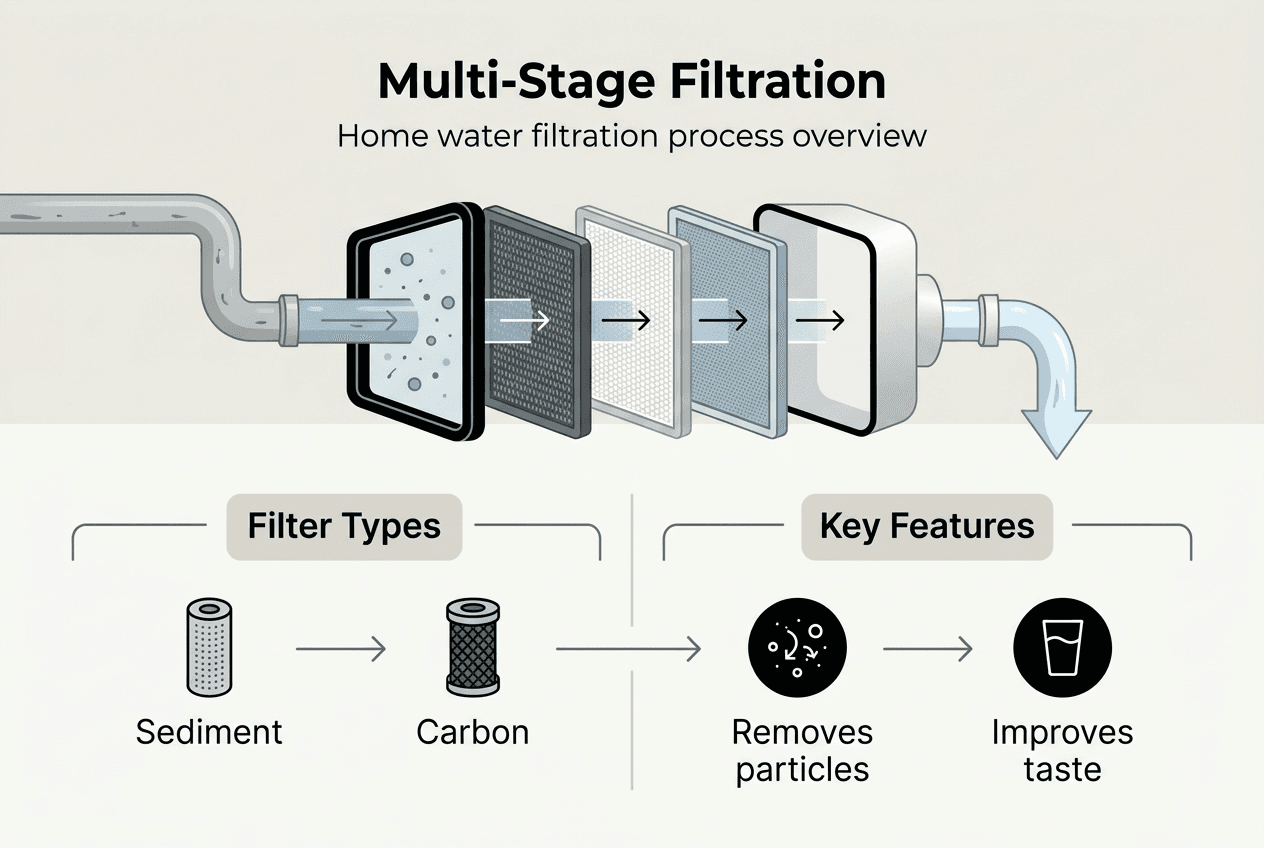
Sediment filters form the foundation of most multi-stage systems, using pleated material or spun polypropylene to trap particles down to 1-5 microns. Activated carbon filters employ either granular activated carbon or solid carbon blocks, with block versions providing superior contaminant contact time and removal efficiency. Reverse osmosis membranes represent the most thorough filtration stage, removing up to 99 percent of dissolved solids through semi-permeable membrane technology.
UV sterilization adds a chemical-free disinfection stage that destroys microorganism DNA, preventing reproduction and eliminating health risks from bacteria and viruses. Alkaline remineralization stages reintroduce calcium, magnesium, and other beneficial minerals that reverse osmosis removes, balancing pH and improving taste. Ion exchange resins specifically target water hardness by swapping calcium and magnesium ions for sodium, protecting plumbing and appliances.
| Technology | Primary Contaminants Removed | Advantages | Considerations |
|---|---|---|---|
| Sediment Filter | Rust, sand, silt, particles | Protects other filters, inexpensive | Requires frequent replacement |
| Activated Carbon | Chlorine, VOCs, pesticides, odors | Improves taste, removes chemicals | Limited heavy metal removal |
| Reverse Osmosis | Heavy metals, fluoride, dissolved solids | Most comprehensive filtration | Produces wastewater, slower flow |
| UV Sterilization | Bacteria, viruses, protozoa | Chemical-free disinfection | Requires electricity, no chemical removal |
| Alkaline Remineralization | None (adds minerals back) | Improves pH and taste | Optional stage, minimal cost |
Pro Tip: Request a detailed water quality report from your municipal supplier or conduct independent testing to identify specific contaminants present in your water, then select filtration stages that directly address those issues.
System selection depends heavily on your water source and quality concerns:
- Well water typically requires robust sediment filtration and UV sterilization for bacterial protection
- Municipal water benefits most from activated carbon and optional reverse osmosis for chemical removal
- Hard water areas need ion exchange or water softening stages to prevent mineral buildup
- Areas with agricultural runoff require activated carbon and reverse osmosis for pesticide removal
- Older homes with lead pipes demand reverse osmosis or specialized lead-removal filters
Technological advances continue improving multi-stage system efficiency and convenience. Modern filters last longer through improved materials and design. Smart monitoring systems alert you to filter replacement needs before performance degrades. Tankless designs eliminate the bulky storage reservoirs older reverse osmosis systems required. These innovations make advanced water purification more accessible and user-friendly for average homeowners.
How to choose the right multi-stage filtration system for your home
Selecting an appropriate multi-stage filtration system requires careful assessment of your specific situation, water quality, household size, and budget constraints. Selecting the right multi-stage system depends on your water source, contaminant profile, household size, and maintenance capacity. A systematic approach ensures you invest in a solution that truly meets your family’s needs rather than over-purchasing unnecessary features or under-protecting your health.
Follow these steps to evaluate your requirements and narrow your options:
- Obtain your water quality report from your municipal supplier or conduct independent laboratory testing
- Identify specific contaminants present and their concentration levels compared to safety standards
- Assess your household’s daily water consumption to determine required flow rate and capacity
- Establish your budget including initial purchase, installation, and ongoing filter replacement costs
- Evaluate available installation space under sinks, in basements, or for countertop units
- Research system certifications from NSF International or Water Quality Association for performance verification
Several critical factors influence which multi-stage system best fits your situation:
- Number and type of filtration stages needed to address your specific water contaminants
- Third-party certification proving the system removes contaminants it claims to eliminate
- Filter lifespan and replacement cost for each stage over the system’s operational life
- Installation complexity and whether professional plumbing services are required
- Flow rate capacity matching your household’s peak water usage demands
- Warranty coverage and customer service reputation of the manufacturer
- Physical footprint and aesthetic integration with your kitchen or utility area
Proper installation significantly impacts system performance and longevity. Under-sink systems require access to cold water lines and drain connections for reverse osmosis wastewater. Countertop models need adequate space near the sink with easy access to the faucet. Whole-house systems demand professional installation at the main water line entry point. Following manufacturer specifications ensures optimal water pressure, prevents leaks, and maintains warranty coverage.
Filter replacement schedules vary by stage and usage intensity. Sediment pre-filters typically need replacement every three to six months due to heavy particle loads. Activated carbon filters last six to twelve months depending on water quality and consumption. Reverse osmosis membranes can function for two to three years with proper pre-filtration protection. UV bulbs require annual replacement to maintain sterilization effectiveness. Mark these dates on your calendar to prevent performance degradation.
Certification from recognized testing organizations provides confidence in system performance claims. NSF/ANSI Standard 53 certifies health-related contaminant reduction including lead and cysts. NSF/ANSI Standard 42 covers aesthetic improvements like taste and odor. NSF/ANSI Standard 58 specifically addresses reverse osmosis system performance. Water Quality Association Gold Seal certification offers additional third-party verification. Always verify certifications match the specific contaminants you need to remove.
Water testing should not end after system installation. Annual testing confirms your multi-stage system continues performing effectively and catches any new contamination sources. Test after filter changes to verify proper installation and function. If you notice taste, odor, or appearance changes, conduct immediate testing to identify potential problems. This proactive monitoring protects your family’s health and maximizes your filtration investment value.
Explore Coway’s advanced water purification solutions
Coway offers cutting-edge multi-stage water purification systems engineered for comprehensive home water safety and exceptional taste. Our product line combines proven filtration technologies with innovative design, delivering reliable protection against contaminants while fitting seamlessly into modern kitchens. Whether you need a space-saving countertop ice water purifier or a powerful under-sink system, Coway provides solutions tailored to diverse household needs.
Our educational resources help you understand the water purification process explained in detail, empowering informed decisions about your family’s water quality. Compare features, capacities, and technologies through our comprehensive under-sink water purifiers comparison guide. Coway systems feature easy filter replacement, real-time monitoring, and industry-leading warranties that demonstrate our commitment to your long-term satisfaction and health.
FAQ
What is the lifespan of filters in a multi-stage system?
Filter lifespan varies significantly by stage and water quality conditions. Sediment pre-filters typically last three to six months, while activated carbon filters function effectively for six to twelve months. Reverse osmosis membranes can operate for two to three years with proper pre-filtration protection. UV sterilization bulbs require annual replacement to maintain disinfection effectiveness, and remineralization cartridges last approximately twelve months.
Can multi-stage filtration remove all contaminants from tap water?
Multi-stage systems remove the vast majority of common water contaminants including bacteria, viruses, heavy metals, chlorine, pesticides, and dissolved solids. However, some specialized chemicals or extremely small molecules may persist in trace amounts. Comprehensive testing identifies any remaining contaminants, allowing you to add supplemental filtration stages or treatment methods if necessary for complete protection.
Is professional installation necessary for multi-stage water filters?
Many countertop and simple under-sink systems include detailed instructions enabling confident DIY installation for homeowners with basic tool skills. However, complex under-sink reverse osmosis systems or whole-house filtration often benefit from professional installation to ensure proper water line connections, adequate drainage, and optimal performance. Professional installation also prevents warranty issues and potential water damage from incorrect setup.
How often should I test my home water quality after installing a multi-stage filter?
Test your water annually to verify continued system effectiveness and detect any new contamination sources entering your water supply. Additionally, conduct testing immediately after installing new filters to confirm proper function and after any significant plumbing changes or repairs. If you notice unexpected changes in water taste, odor, or appearance between scheduled tests, perform immediate testing to identify and address potential problems quickly.
Recommended
- Role of Filtration Stages: Improving Home Water Safety – Coway Water Purifier
- Complete Water Filtration Process Guide for Homeowners – Coway Water Purifier
- Advanced Water Filtration Guide for Healthier Homes – Coway Water Purifier
- Why Choose Multi-Filter Systems for Home Safety – Coway Water Purifier
- Vattenanalys Komplett+ – Svenskt Vattenprov
