
Uncategorized
Air Filtration Process Explained for Cleaner Indoor Air
Feb
Every parent faces the challenge of creating a safer home environment for their children, especially when dust, pet dander, and allergens seem to appear overnight. Clean indoor air is a top priority, but knowing where to begin is not always simple. This step-by-step guide helps you assess your home’s unique air quality needs, choose reliable filtration systems, and set up effective purification routines so your family can breathe with confidence.
Table of Contents
- Step 1: Assess Indoor Air Quality Needs
- Step 2: Select An Appropriate Air Filtration System
- Step 3: Prepare And Position The Air Purifier
- Step 4: Activate Filtration And Monitor Operation
- Step 5: Verify Air Quality Improvement
Quick Summary
| Key Point | Explanation |
|---|---|
| 1. Assess Indoor Air Quality Needs | Conduct a room-by-room inspection to identify pollutants like dust, mold, and chemical off-gassing. Use digital monitors for accurate data. |
| 2. Choose the Right Air Filtration System | Evaluate factors like room size and pollutant types when selecting an air filter. Consider systems with MERV ratings of 13 or higher for optimal filtration. |
| 3. Position Air Purifier Strategically | Place the purifier in high-occupancy rooms, maintaining clear space around it to maximize airflow and effectiveness. |
| 4. Activate and Monitor Operation | Follow manufacturer instructions for setup, ensure continuous operation, and regularly check performance indicators for optimal results. |
| 5. Verify Air Quality Improvement | Use digital monitors to compare air quality before and after filtration. Regular assessment helps track improvements and challenges in air quality. |
Step 1: Assess Indoor Air Quality Needs
Understanding your home’s indoor air quality is the critical first step toward creating a healthier living environment. Indoor air quality assessment involves a systematic approach to identifying potential pollutants and understanding their sources.
To effectively evaluate your indoor air quality, start by conducting a comprehensive room-by-room inspection. Look for common indicators of poor air quality such as dust accumulation, musty odors, visible mold, or areas with inadequate ventilation. Pay special attention to high-moisture zones like bathrooms, kitchens, and basements where contaminants often develop.
Key areas to evaluate include:
- Humidity levels
- Ventilation effectiveness
- Presence of visible mold or mildew
- Dust and particulate matter buildup
- Chemical off-gassing from furniture or building materials
- Pet dander and allergen sources
Indoor air quality directly impacts your family’s respiratory health and overall wellness.
Consider using digital air quality monitors that can provide precise measurements of particulate matter, volatile organic compounds (VOCs), and humidity levels. These tools offer real-time data to help you understand your specific indoor environmental conditions.
Pro tip: Conduct your indoor air quality assessment during different times of day and in various seasonal conditions to get a comprehensive understanding of your home’s air quality variations.
Step 2: Select an Appropriate Air Filtration System
Choosing the right air filtration system requires careful consideration of your specific indoor air quality needs and home environment. Air filtration guidelines recommend assessing multiple factors to ensure optimal performance and air quality improvement.
When selecting an air filtration system, evaluate key characteristics that match your unique requirements. Consider the following critical factors:
- Room size and square footage coverage
- Types of pollutants prevalent in your home
- Filtration efficiency ratings like MERV (Minimum Efficiency Reporting Value)
- Compatibility with existing HVAC systems
- Noise levels and energy consumption
- Frequency of filter replacement
Selecting the right air filtration system can dramatically improve your family’s respiratory health and overall wellness.
HEPA filters represent an excellent standard for comprehensive air purification, capable of trapping microscopic particles as small as 0.3 microns. Professional air filtration recommendations suggest choosing filters with MERV ratings of 13 or higher for maximum contaminant removal while maintaining proper airflow.
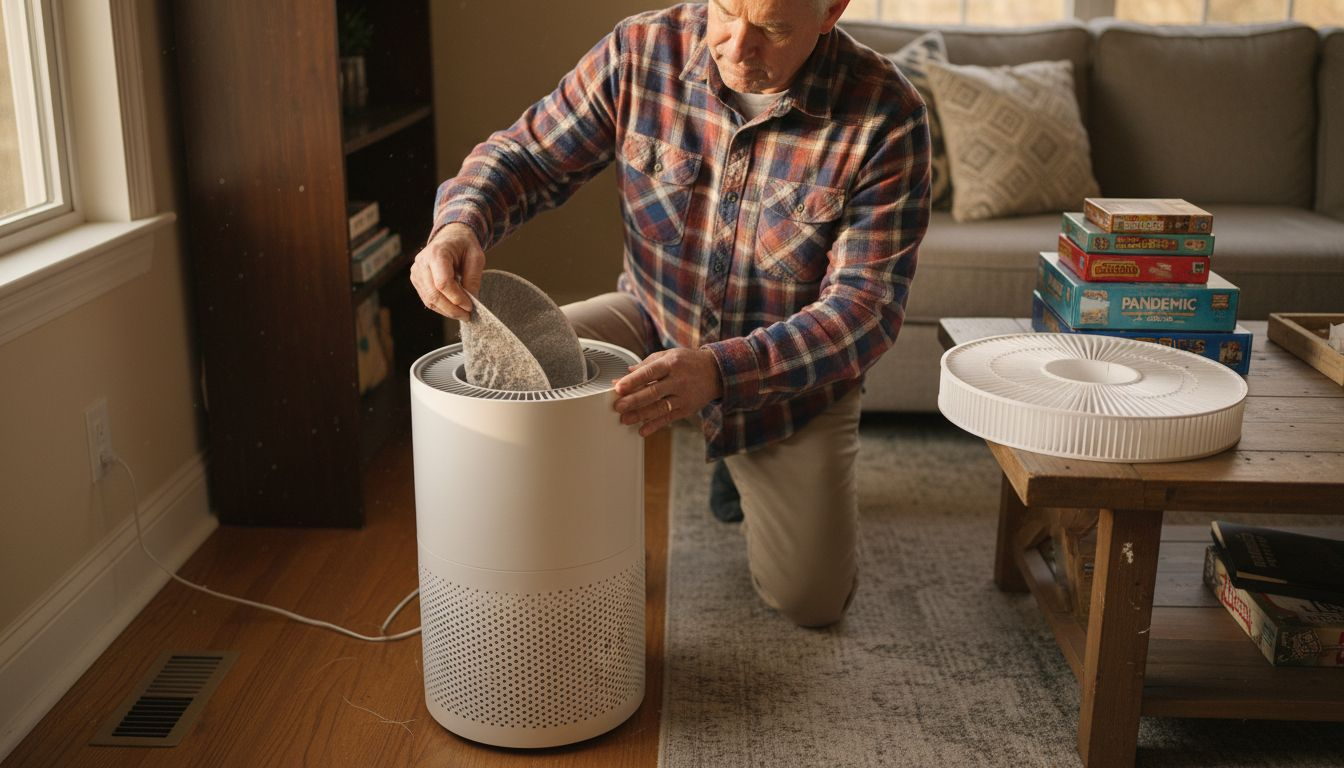
Additional considerations include understanding your specific indoor air challenges. Homes with pets, smokers, or located in high-pollution areas might require more advanced filtration systems with multi-stage filtering capabilities.
Pro tip: Invest in a professional indoor air quality assessment to precisely identify your home’s unique filtration needs before making a final air purification system selection.
Here’s a comparison of common home air filtration systems and their strengths:
| System Type | Best For | Filtration Efficiency | Maintenance Needs |
|---|---|---|---|
| HEPA Purifiers | Allergens, fine particles | Removes 99.97% at 0.3 microns | Replace filter every 6-12 months |
| Activated Carbon Filters | Odors, VOCs, gases | Captures chemical vapors, removes smells | Replace filter every 3-6 months |
| UV-C Light Systems | Bacteria, viruses | Neutralizes airborne germs | Clean bulb annually, check alignment |
| Whole-House Filters | Large homes, all pollutants | Varies (MERV ratings 7-14) | Professional maintenance yearly |
Step 3: Prepare and Position the Air Purifier
Successfully positioning your air purifier can dramatically improve indoor air quality and overall home wellness. Strategic air purifier placement requires careful consideration of room dynamics and airflow patterns.
When preparing your air purifier, follow these essential guidelines for optimal performance:
- Select rooms with highest occupancy
- Maintain at least 12-18 inches of clear space around the unit
- Avoid placing near curtains, furniture, or walls
- Position away from direct sunlight and heat sources
- Place at breathing level for maximum effectiveness
Proper air purifier positioning is key to maximizing pollutant removal and improving indoor air quality.
HEPA air purifiers work best when strategically placed to promote maximum air circulation. Recommended air purifier guidelines emphasize continuous operation, especially in rooms where family members spend significant time.
Consider your home’s unique layout and airflow. Bedrooms, living rooms, and home offices typically benefit most from dedicated air purification. Ensure the unit’s intake and exhaust areas remain unobstructed to maintain consistent air movement.
Pro tip: Use a small fan to help circulate air around the purifier if you notice stagnant zones in larger rooms, enhancing overall air filtration efficiency.
Step 4: Activate Filtration and Monitor Operation
Successfully activating your air purification system requires careful attention to operational details and consistent performance monitoring. Membrane filtration protocols emphasize systematic activation and continuous performance tracking.
To ensure optimal air purification, follow these critical activation and monitoring steps:
- Read manufacturer’s specific startup instructions
- Check power connections and settings
- Verify filter installation is correct
- Set initial speed and mode settings
- Enable continuous operation mode
- Observe initial airflow and noise levels
Consistent monitoring is the key to maintaining long-term air purification effectiveness.
Digital monitoring tools can help track your air purifier’s performance. Filtration system standards recommend regular inspections to verify contaminant reduction and system integrity.
Pay attention to subtle changes in air quality, filter performance, and unit functionality. Listen for unusual sounds, check for consistent airflow, and monitor the device’s indicator lights. Most modern air purifiers include built-in sensors that can alert you to filter replacement needs or operational issues.
Pro tip: Keep a maintenance log tracking filter replacement dates, performance observations, and any unusual system behaviors to help identify potential issues early.
Step 5: Verify Air Quality Improvement
Validating the effectiveness of your air filtration system requires systematic assessment and careful monitoring. Indoor air quality monitoring helps you track tangible improvements in your home’s air environment.
To comprehensively verify air quality improvement, utilize these strategic evaluation methods:
- Use digital air quality monitors
- Compare particle count before and after filtration
- Check humidity and temperature levels
- Monitor respiratory comfort and allergy symptoms
- Assess overall air freshness and odor reduction
- Track filter performance indicators
Consistent measurement is the foundation of understanding your indoor air quality transformation.
Professional air quality testing provides scientific insights into your filtration system’s performance. Air quality data analysis can help you understand subtle changes in your indoor environment that might not be immediately apparent.
Consider periodic professional assessments or invest in advanced home monitoring devices that track microscopic particulate matter, volatile organic compounds, and other potential pollutants. These tools offer objective measurements beyond subjective perceptions of air quality.
Pro tip: Create a seasonal log documenting air quality measurements to track long-term improvements and identify any recurring air quality challenges in your home.
For quick reference, here’s a summary of key air quality indicators and what each means:
| Indicator | What It Measures | Impact on Health |
|---|---|---|
| Particulate Matter | Fine dust, smoke | Triggers allergies and asthma |
| VOCs | Chemical vapors from products | May cause headaches, irritate lungs |
| Humidity Level | Moisture in air | Too high: mold; too low: dry skin |
| Carbon Dioxide | Air freshness | High levels cause fatigue, drowsiness |
Enhance Your Home Air Quality with Trusted Solutions from Coway
Many homeowners struggle with poor indoor air quality caused by invisible pollutants like fine particulate matter, VOCs, and allergens that traditional cleaning cannot eliminate. This article explains how understanding your home’s unique air filtration needs and choosing the right system can transform your living environment and protect your family’s health. If you are ready to move beyond theory and take action, Coway offers advanced air purifiers designed to target these exact contaminants with proven HEPA filtration and UV sanitization technologies.
Discover how our cutting-edge products can help you enjoy cleaner air and greater peace of mind today. Visit Uncategorized Archives – Coway Water Purifier to explore models tailored to your space and air quality challenges. Don’t wait to breathe easier — explore detailed product options and start your journey to fresher air now at https://cowayswaterpurifier.com. Elevate your home wellness with Coway’s trusted air filtration solutions.
Frequently Asked Questions
How do I assess my indoor air quality needs?
Start by conducting a room-by-room inspection of your home to identify poor air quality indicators like dust, musty odors, and visible mold. Pay special attention to high-moisture areas such as bathrooms and kitchens, and analyze the humidity levels and ventilation effectiveness.
What should I consider when selecting an air filtration system?
Evaluate factors like room size, types of pollutants, and filtration efficiency ratings, such as MERV ratings, when choosing an air filtration system. Aim for a system compatible with your HVAC setup, and ensure it meets your specific air quality needs, especially if you have pets or live in polluted areas.
How should I position my air purifier for maximum effectiveness?
Position your air purifier in high-occupancy rooms and keep a clear space of at least 12-18 inches around it for optimal airflow. Avoid placing it near walls or curtains, and consider using a fan to enhance air circulation in larger rooms.
What steps should I follow to activate and monitor my air purification system?
Carefully follow the manufacturer’s startup instructions and ensure everything is properly connected. Regularly monitor airflow, noise levels, and filter performance, keeping track of maintenance tasks like filter replacements on a log to ensure consistent purification.
How can I verify improvements in my indoor air quality?
Use digital air quality monitors to evaluate changes in particle count, humidity, and overall air freshness after installation. Create a seasonal log of measurements to track improvements and identify any persistent air quality issues in your home.
Recommended
- Why Filter Indoor Air: Complete Homeowner Guide – Coway Water Purifier
- Why Filter Indoor Air: Complete Guide for Homeowners – Coway Water Purifier
- How Air Purifiers Remove Allergens at Home – Coway Water Purifier
- How Air Purifiers Trap Particles: Cleaner Homes – Coway Water Purifier
- Vad Är Miljöpåverkan Av Att Elda Ved? – Onlydry Vedfabrik 🔥
- Hautpflege für Allergiker: Verständliche Lösungen und Konzepte – Kühlkern UG (Haftungsbeschränkt)
