
Uncategorized
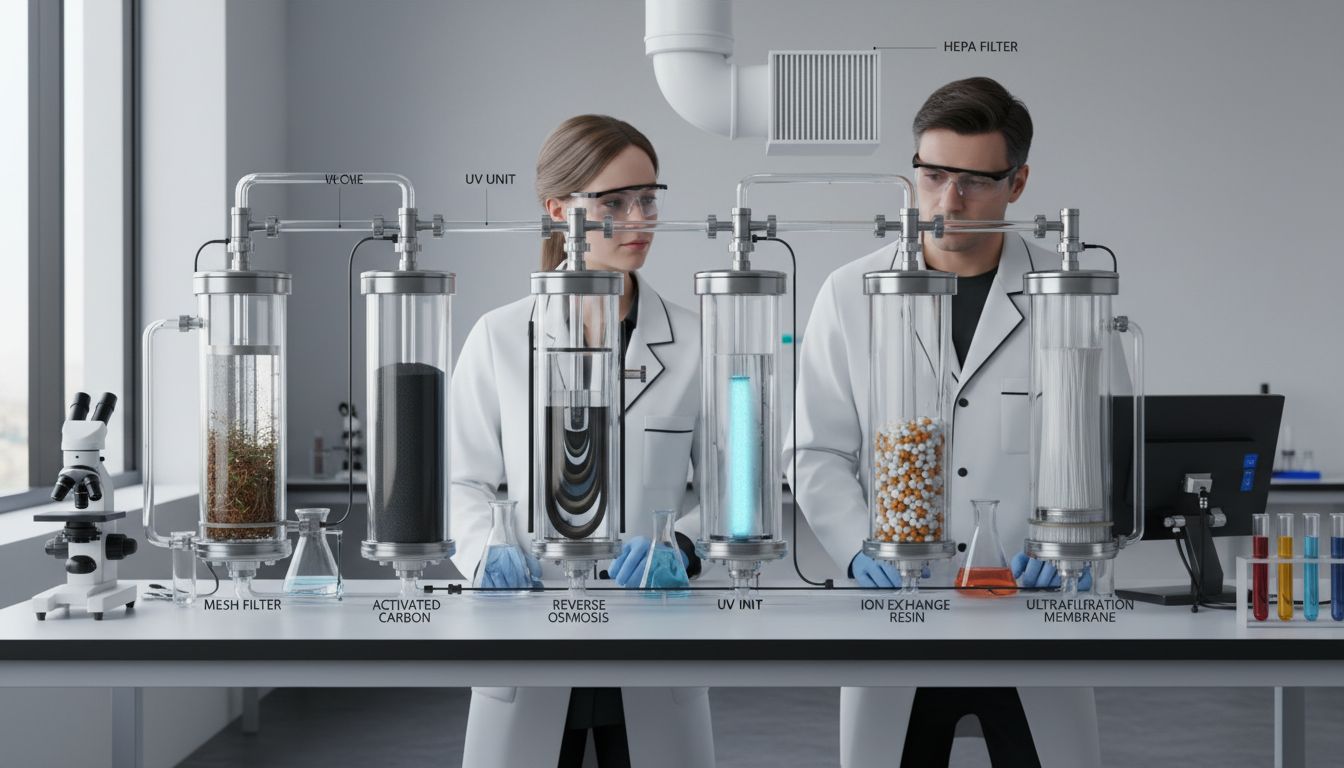
7 Effective Examples of Filtration Technologies Explained
Dec
Over 90 percent of american households rely on some form of filtration for clean water and air at home. With so many options and scientific terms tossed around, understanding what each filter does can seem confusing. Choosing the right technology is about more than fresh water or dust free air; it means healthier families and longer lasting appliances. In this guide, you will discover what makes each filtration method unique and how they work to protect your american home.
Table of Contents
- Understanding Basic Mesh Filtration for Everyday Use
- How Activated Carbon Filters Remove Impurities
- Benefits of Reverse Osmosis Technology
- Why UV Filtration Adds Extra Safety
- HEPA Filters for Cleaner Indoor Air
- Ion Exchange for Reducing Hard Water
- Ultrafiltration Systems for Advanced Purity
Quick Summary
| Takeaway | Explanation |
|---|---|
| 1. Understand mesh filtration basics | Mesh filters effectively remove contaminants through physical barriers while allowing clean substances to pass. |
| 2. Choose activated carbon filters wisely | Activated carbon traps impurities using adsorption, so select filters with a high surface area for effectiveness. |
| 3. Maximize benefits of reverse osmosis | This technology removes up to 99% of contaminants, providing cleaner water; regular maintenance is crucial. |
| 4. Implement UV filtration for safety | UV filters neutralize harmful microbes without chemicals, making them effective for enhancing water safety. |
| 5. Utilize HEPA filters for air quality | HEPA filters capture 99.97% of airborne particles, greatly improving indoor air quality and respiratory health. |
1. Understanding Basic Mesh Filtration for Everyday Use
Mesh filtration is a fundamental technique that removes particles and contaminants by using fine, interwoven wire or synthetic materials with carefully constructed openings. Mesh filters work through a simple yet effective physical barrier method, trapping unwanted elements while allowing clean substances to pass through.
At its core, mesh filtration operates on a straightforward principle. Imagine a tightly woven screen with precise openings designed to block specific sized particles. Smaller particles get trapped within the mesh structure, while particles smaller than the mesh openings can flow through. This mechanism makes mesh filters incredibly versatile across numerous applications from water purification to industrial processing.
In everyday scenarios, mesh filtration appears more frequently than most people realize. Kitchen strainers, pool filters, air conditioning systems, and automotive fuel filters all utilize mesh technology. These filters protect equipment, improve product quality, and ensure cleaner environments by preventing debris and contaminants from passing through.
The effectiveness of a mesh filter depends on three key factors: mesh size, material composition, and structural design. Smaller mesh openings capture tinier particles but also restrict flow rate. Materials like stainless steel, nylon, and polyester offer different durability and chemical resistance properties. Structural variations such as plain weave, twilled weave, or dutch weave further enhance filtration performance.
Practical applications of mesh filtration span multiple domains. Homeowners can use mesh filters in water pitchers to remove sediment. Industrial facilities employ them to protect sensitive machinery from particulate contamination. Understanding the role of filtration technology helps consumers make informed decisions about protecting their equipment and health.
When selecting a mesh filter, consider these practical tips:
- Match mesh size to your specific filtration needs
- Inspect filters regularly for wear and potential blockages
- Clean or replace filters according to manufacturer recommendations
- Choose materials compatible with your specific environment
By understanding mesh filtration basics, you can make smarter choices about protecting your water, air, and equipment from unwanted contaminants.
2. How Activated Carbon Filters Remove Impurities
Activated carbon filtration represents a powerful purification method that leverages unique molecular interactions to remove contaminants from water and air. This remarkable technology transforms ordinary carbon into an incredibly porous substance capable of trapping harmful substances through a process called adsorption.
At its fundamental level, activated carbon works through an extraordinary surface chemistry. Manufacturers create these filters by heating carbon materials like coconut shells or wood to extremely high temperatures, which dramatically increases their surface area. The resulting material contains millions of tiny pores that act like microscopic traps for impurities, chemicals, and unwanted molecules.
Understanding how water filters affect taste reveals the remarkable efficiency of activated carbon in improving water quality. The microscopic porous structure allows the filter to capture chlorine, sediment, volatile organic compounds, and even certain heavy metals that impact water taste and safety.
Research investigating activated carbon preparation highlights several critical parameters that influence filter performance. These key factors include:
- Activation temperature
- Type of activating agents used
- Carbonization process
- Surface area characteristics
- Pore structure complexity
Practical applications of activated carbon filtration span multiple domains. Water treatment facilities, home purification systems, industrial processes, and even air purification technologies rely on this versatile filtration method. The process works through adsorption, where contaminant molecules are attracted and held within the carbon’s microscopic pore structure rather than simply being blocked by physical barriers.
When selecting an activated carbon filter, consider these important recommendations:
- Choose filters with high surface area ratings
- Replace filters according to manufacturer guidelines
- Understand the specific contaminants you want to remove
- Look for third party certifications verifying filter performance
By understanding how activated carbon filters work, you can make informed decisions about improving water and air quality in your home or workplace.
3. Benefits of Reverse Osmosis Technology
Reverse osmosis technology represents a sophisticated water purification method that removes contaminants through an advanced molecular filtration process. This powerful filtration approach uses pressure to push water through an ultrafine semipermeable membrane, effectively eliminating impurities at the microscopic level.
The core mechanism of reverse osmosis involves forcing water molecules through a membrane with extremely small pores. These pores are so minute that they block dissolved solids, bacteria, minerals, and other potentially harmful substances while allowing pure water molecules to pass through. Understanding what is reverse osmosis for clean water reveals how this technology provides unprecedented water purification.
Key benefits of reverse osmosis technology include:
- Removal of up to 99% of dissolved contaminants
- Improved water taste and clarity
- Reduction of potentially harmful chemicals
- Elimination of microorganisms
- Protection against waterborne diseases
Research demonstrates that reverse osmosis offers significant advantages across residential and industrial applications. The technology operates with remarkable precision, filtering out particles as small as 0.0001 microns. This level of filtration means it can remove substances like lead, arsenic, fluoride, chlorine, and even some pharmaceutical residues that other filtration methods might miss.
Practical implementation of reverse osmosis technology requires understanding its limitations and maintenance needs. Homeowners should consider factors such as water pressure, membrane quality, and regular filter replacement. The system typically includes multiple filtration stages:
- Sediment pre filter
- Carbon pre filter
- Reverse osmosis membrane
- Post carbon filter
To maximize the effectiveness of a reverse osmosis system, follow these recommendations:
- Test your water quality regularly
- Replace filters according to manufacturer guidelines
- Monitor system performance
- Consider professional installation for optimal results
By understanding reverse osmosis technology, you can make informed decisions about protecting your water quality and ensuring safe, clean drinking water for your household.
4. Why UV Filtration Adds Extra Safety
Ultraviolet (UV) filtration technology provides an advanced method of water purification that destroys harmful microorganisms through powerful electromagnetic radiation. This cutting edge process neutralizes bacteria, viruses, and other microscopic contaminants without adding chemicals or altering water’s fundamental composition.
The science behind UV filtration is remarkably straightforward yet incredibly effective. When water passes through a UV filtration system, powerful ultraviolet light penetrates the cellular structures of microorganisms, disrupting their DNA and rendering them unable to reproduce or cause infection. Understanding the role of UV in water purification reveals how this technology provides an extra layer of protection beyond traditional filtering methods.
Primary advantages of UV filtration include:
- Instant microbial destruction
- Chemical free purification
- No changes to water taste or odor
- Environmentally friendly process
- Highly effective against numerous pathogens
Unlike chemical treatments, UV filtration works immediately and continuously. The ultraviolet light acts as a powerful disinfectant, targeting the genetic material of microorganisms and preventing them from multiplying. This process is particularly effective against challenging waterborne threats like giardia, cryptosporidium, e coli, and other potentially dangerous microbes.
Practical implementation of UV filtration requires understanding its specific strengths and limitations. While incredibly powerful against microbiological contaminants, UV systems do not remove chemical pollutants or heavy metals. Homeowners often combine UV filtration with additional purification methods like activated carbon or reverse osmosis for comprehensive water treatment.
When considering UV filtration, keep these recommendations in mind:
- Select systems with appropriate wattage for your water volume
- Replace UV lamps according to manufacturer specifications
- Conduct regular maintenance to ensure optimal performance
- Pair with additional filtration for complete water protection
By integrating UV filtration into your water treatment strategy, you can significantly enhance the safety and quality of your drinking water.
5. HEPA Filters for Cleaner Indoor Air
HEPA filters represent a gold standard in air purification technology, capable of trapping microscopic particles that traditional filters cannot capture. These sophisticated filtration systems remove up to 99.97% of airborne contaminants as small as 0.3 microns, providing unprecedented protection against dust, allergens, and microscopic pollutants.
The intricate design of HEPA filters involves multiple layers of densely packed fine mesh materials, typically constructed from synthetic or glass fibers. What is a HEPA filter reveals how these advanced filters work through three primary interception mechanisms: direct impaction, interception, and diffusion. This multilayered approach allows them to capture particles with remarkable precision.
Key advantages of HEPA filtration include:
- Removal of 99.97% of particles 0.3 microns and larger
- Effective against dust, pollen, pet dander
- Reduces airborne bacteria and viral particles
- Improves overall indoor air quality
- Helps manage respiratory health conditions
Understanding the science behind HEPA filters demonstrates their incredible efficiency. The 0.3 micron standard represents a critical measurement point where particles are most difficult to trap. By effectively capturing particles at this challenging size, HEPA filters provide superior protection against a wide range of airborne contaminants that can impact respiratory health.
Practical implementation of HEPA filtration requires strategic placement and regular maintenance. Homeowners should consider air purifiers for bedrooms, living areas, and spaces with high traffic or potential allergen exposure. When selecting a HEPA filter system, consider factors such as room size, air exchange rate, and specific filtration needs.
To maximize HEPA filter performance, follow these recommendations:
- Replace filters according to manufacturer guidelines
- Clean surrounding areas to reduce overall particle load
- Position air purifiers in central locations
- Combine HEPA filtration with regular home cleaning
- Monitor filter effectiveness through air quality indicators
By integrating HEPA filtration into your home environment, you can significantly improve indoor air quality and protect your respiratory health.
6. Ion Exchange for Reducing Hard Water
Ion exchange technology offers a powerful solution for transforming hard water into soft, more manageable water by strategically replacing problematic mineral ions. This sophisticated filtration process removes calcium and magnesium ions that cause scaling, mineral buildup, and reduced appliance efficiency through a remarkable molecular exchange mechanism.
The core principle of ion exchange involves using specialized resin beads designed to swap unwanted mineral ions with sodium or potassium ions. When hard water passes through the ion exchange system, calcium and magnesium ions are attracted to and trapped by the resin, while sodium or potassium ions are released into the water. Understanding why change purifier filters matters becomes crucial in maintaining the ongoing effectiveness of this filtration approach.
Primary benefits of ion exchange technology include:
- Elimination of mineral scaling
- Extended appliance lifespan
- Improved soap and detergent performance
- Reduced pipe and fixture corrosion
- Enhanced water quality for household use
Homeowners experiencing hard water challenges can significantly improve their water quality through ion exchange systems. These filters prevent the accumulation of mineral deposits that can damage water heaters, dishwashers, washing machines, and plumbing infrastructure. By removing hard water minerals, ion exchange technology protects expensive household equipment and reduces long term maintenance costs.
Practical implementation of ion exchange filtration requires understanding its specific maintenance needs. Resin beads become saturated with mineral ions over time and require periodic regeneration using a salt solution. This process allows the resin to continue effectively removing hard water minerals and maintaining water softening capabilities.
When considering an ion exchange water softening system, keep these recommendations in mind:
- Select a system appropriate for your household water volume
- Monitor salt levels in the regeneration tank
- Schedule regular maintenance and professional inspections
- Test water hardness periodically
- Consider professional installation for optimal performance
By integrating ion exchange technology, you can transform hard water into a more manageable resource that protects your home and improves overall water quality.
7. Ultrafiltration Systems for Advanced Purity
Ultrafiltration represents a cutting edge water purification technology that provides exceptional molecular separation through an advanced membrane filtration process. This sophisticated system removes microscopic contaminants with precision unmatched by traditional filtration methods, creating an extraordinary barrier against potentially harmful substances.
The core mechanism of ultrafiltration involves using membranes with extremely small pore sizes ranging between 0.001 to 0.1 microns. These membranes function like incredibly precise molecular sieves, blocking particles, proteins, bacteria, and viruses while allowing water molecules to pass through. Advanced water filtration guide for healthier homes reveals how this technology represents a significant leap forward in water treatment capabilities.
Key advantages of ultrafiltration include:
- Removal of microscopic contaminants
- No chemical additives required
- Retains beneficial mineral content
- Produces crystal clear water
- Highly efficient molecular separation
- Reduces bacterial and viral loads
Unlike traditional filtration methods, ultrafiltration operates without chemical treatments. The membrane acts as a physical barrier, mechanically separating unwanted particles from water through size exclusion. This process ensures that water remains pure while maintaining its natural mineral composition, making it an ideal solution for residential and commercial water treatment applications.
Practical implementation of ultrafiltration requires understanding its specific performance characteristics. The technology works best when combined with pre filtration stages that remove larger sediment particles. Homeowners should consider factors like water pressure, membrane quality, and specific contaminant removal requirements when selecting an ultrafiltration system.
When evaluating ultrafiltration systems, consider these recommendations:
- Select systems with certified membrane performance
- Monitor filter replacement schedules
- Conduct regular water quality testing
- Understand your specific water contamination challenges
- Consider professional installation for optimal results
By integrating ultrafiltration technology, you can achieve unprecedented water purity and protect your household from microscopic contaminants.
Below is a comprehensive table summarizing the main filtration technologies and their applications discussed throughout the article.
| Filtration Type | Description | Key Benefits |
|---|---|---|
| Mesh Filtration | Uses fine mesh to trap larger particles from liquids or gases. | Versatile, widely used in kitchens and industrial settings. |
| Activated Carbon | Uses porous carbon for adsorbing impurities like chlorine. | Improves taste, removes a wide range of contaminants. |
| Reverse Osmosis | Utilizes a semipermeable membrane to filter at a molecular level. | Removes 99% of dissolved contaminants, enhances safety. |
| UV Filtration | Uses ultraviolet light to destroy microorganisms in water. | Chemical-free, effective against a wide range of microbes. |
| HEPA Filters | Dense filters that capture very fine particles from the air. | Traps allergens, improves indoor air quality. |
| Ion Exchange | Exchanges mineral ions to soften hard water. | Prevents scale build-up, improves appliance efficiency. |
| Ultrafiltration | Utilizes membranes for molecular-level separation. | Removes microscopic contaminants, retains minerals. |
Discover Advanced Filtration Solutions for Your Home Today
If you are concerned about maintaining clean water and fresh air using proven filtration technologies like mesh filters, activated carbon, reverse osmosis, UV purification, and HEPA systems this article has likely sparked your interest in upgrading your home’s water and air quality. Many people struggle with contaminants that affect taste, safety, and breathing comfort, and understanding key filtration concepts is the first step toward healthier living. Protect your family from harmful particles, microorganisms, and chemicals with filtration solutions designed for real-world use.
Explore a wide selection of Coway’s innovative water purifiers and air purifiers that incorporate cutting edge technologies to meet your specific needs. Visit our Uncategorized Archives – Coway Water Purifier to find detailed product options backed by scientific research and crafted for superior performance. Take advantage of free delivery, expert installation, and comprehensive maintenance options that ensure long-lasting protection. Act now and safeguard your home environment by choosing reliable filtration from Coway Water Purifier. Your journey to cleaner water and air starts here.
Frequently Asked Questions
What is mesh filtration, and how does it work?
Mesh filtration is a technique that uses a fine, interwoven material to physically block and trap particles and contaminants while allowing clean substances to pass through. To utilize mesh filtration, select the appropriate mesh size for your specific needs, ensuring effective filtration of unwanted elements.
How does activated carbon filtration improve water quality?
Activated carbon filtration removes impurities from water through a process called adsorption, where harmful substances cling to the porous surface of the activated carbon. To improve your water quality at home, consider installing a high-surface-area activated carbon filter and replace it according to the manufacturer’s recommendations.
What are the key benefits of reverse osmosis technology?
Reverse osmosis technology effectively removes up to 99% of dissolved contaminants from water, enhancing its taste and safety. To benefit from this technology, install a reverse osmosis system that includes multiple filtration stages, and monitor your filter for regular maintenance and replacements.
How does UV filtration ensure water safety?
UV filtration eliminates harmful microorganisms by using ultraviolet light to disrupt their DNA, providing an effective chemical-free purification method. For maximum effectiveness, combine UV filtration with other methods like activated carbon to cover various contaminants in your water supply.
What advantages do HEPA filters offer for indoor air quality?
HEPA filters capture up to 99.97% of airborne particles as small as 0.3 microns, significantly improving indoor air quality by reducing allergens and pollutants. To enhance air quality in your home, use HEPA filters in air purifiers, and replace them as recommended to maintain effectiveness.
How does ion exchange technology transform hard water?
Ion exchange technology replaces hard water minerals like calcium and magnesium with sodium or potassium, reducing mineral buildup and improving appliance efficiency. To maintain softened water quality, regularly check the salt levels in your ion exchange system and schedule necessary maintenance for optimal performance.
Recommended
- Understanding the Role of Filtration Technology – Coway Water Purifier
- 7 Best Water Filtration Methods for Homes and Businesses – Coway Water Purifier
- 7 Benefits of Water Filtration for Your Home and Health – Coway Water Purifier
- 2025 Water Filtration Trends: Complete Guide – Coway Water Purifier
- What Is Diesel Particulate Filter? Clear Guide for Technicians – My WordPress
- 7 Types of Spa Filters Explained for UK Hot Tub Owners – ClearSpa™
