
Uncategorized
Difference Between Tap and Filtered Water Explained
Nov
Nearly every american family depends on what pours from the kitchen tap, yet over 90 contaminants are regulated by the EPA in drinking water. With so many variables shaping water safety and taste, understanding the difference between tap and filtered water becomes more important than ever. This guide clears up the standards, health factors, and costs so american households can confidently choose what’s best for every glass they fill.
Table of Contents
- Defining Tap and Filtered Water Standards
- How Tap Water Is Treated and Delivered
- Common Water Contaminants and Health Concerns
- Filtration Methods and Their Effectiveness
- Comparing Health, Safety, and Taste Factors
- Cost, Maintenance, and Environmental Impact
Key Takeaways
| Point | Details |
|---|---|
| Tap Water Standards | Tap water is regulated by the EPA but does not guarantee complete purity, while filtered water offers additional protection from contaminants. |
| Water Treatment Process | Municipal systems treat water through multiple stages, ensuring safety before it reaches consumers, but variations in quality can still occur. |
| Contaminant Categories | Over 90 regulated contaminants can affect health, including microorganisms and chemicals that may compromise water safety. |
| Filtration Effectiveness | Different filtration methods, such as activated carbon and reverse osmosis, target specific impurities, enhancing drinking water quality significantly. |
Defining Tap and Filtered Water Standards
When considering water quality, understanding the standards that govern tap and filtered water is crucial for making informed decisions about what flows from your faucet. Tap water refers to the water directly supplied by municipal water systems, while filtered water undergoes additional purification processes to remove contaminants beyond standard municipal treatment.
According to the EPA, the National Primary Drinking Water Regulations establish legally enforceable standards that public water systems must meet. These regulations set maximum contaminant levels to protect public health, ensuring that tap water meets specific safety criteria before reaching consumers. However, these standards do not guarantee completely pure water free from all potential impurities.
The CDC highlights that while municipal water systems are regulated, variations in water quality can still exist. Filtered water provides an additional layer of protection by removing contaminants that might pass through standard municipal treatments. Key differences between tap and filtered water include:
- Contaminant removal efficiency
- Potential mineral content
- Taste and odor characteristics
- Additional purification steps
For those seeking deeper insights into water quality, our guide on safe drinking water offers comprehensive information about understanding and improving your water’s safety and quality.
How Tap Water Is Treated and Delivered
The journey of tap water from source to your faucet involves a complex and carefully monitored treatment process designed to ensure public safety. Municipal water systems play a critical role in transforming raw water into safe drinking water through multiple sophisticated purification stages.
According to the CDC, public water utilities employ comprehensive treatment methods to remove harmful germs and chemicals, guaranteeing water meets stringent safety standards before delivery. These processes typically involve several key steps: initial screening, coagulation and flocculation, sedimentation, filtration, and disinfection.

The EPA emphasizes that water treatment begins with source quality assessment. Water sources like rivers, lakes, and groundwater undergo rigorous testing and treatment to eliminate potential contaminants. The key stages of water treatment include:
- Screening to remove large debris
- Chemical treatment to bind small particles
- Sedimentation to settle particulate matter
- Filtration through multiple media layers
- Chlorination or UV disinfection
- pH balance adjustment
To understand more about protecting your water quality, explore our guide on why purify tap water naturally, which provides deeper insights into water treatment processes and their importance for household health.
Common Water Contaminants and Health Concerns
Understanding the potential health risks associated with water contaminants is crucial for making informed decisions about water consumption and treatment. Water quality directly impacts human health, with various substances potentially compromising the safety of our drinking water.
According to the EPA, over 90 regulated contaminants can be present in drinking water, spanning multiple categories that pose different health risks. These contaminants include microorganisms, chemical compounds, radiological elements, and disinfection byproducts that can enter water systems through various environmental and industrial sources.
The CDC emphasizes that water contamination can lead to significant health concerns.
Common categories of water contaminants include:
- Biological contaminants (bacteria, viruses)
- Chemical pollutants
- Heavy metals
- Radiological substances
- Agricultural runoff
- Industrial waste products
To gain deeper insights into protecting your water quality and understanding potential health risks, explore our guide to why water filters are important, which provides comprehensive information about water safety and filtration strategies.
Filtration Methods and Their Effectiveness
Water filtration represents a sophisticated approach to improving drinking water quality, with multiple technologies designed to address different contamination challenges. Water filtration methods range from simple mechanical processes to advanced multi-stage purification systems that target specific types of impurities.
The primary water filtration techniques include activated carbon filtration, reverse osmosis, ultraviolet purification, and ion exchange. Each method offers unique advantages in removing contaminants: activated carbon filters excel at removing chlorine and organic compounds, while reverse osmosis can eliminate nearly all dissolved solids, including microscopic pollutants.
Key water filtration methods and their primary effectiveness include:
-
Activated Carbon Filters
- Removes chlorine, sediment, volatile organic compounds
- Improves water taste and odor
- Most affordable option
-
Reverse Osmosis
- Eliminates up to 99% of dissolved solids
- Removes heavy metals, salts, and microscopic contaminants
- Provides most comprehensive purification
-
Ultraviolet Purification
- Destroys bacteria and microorganisms
- Chemical-free disinfection method
- Preserves water’s mineral content
-
Ion Exchange
- Softens hard water
- Removes calcium and magnesium ions
- Prevents scale buildup in pipes
For a comprehensive exploration of water filtration technologies, explore our guide to the best water filtration methods for homes and businesses, which provides in-depth insights into selecting the right filtration approach for your specific needs.
Comparing Health, Safety, and Taste Factors
The distinction between tap and filtered water extends far beyond simple perception, encompassing critical differences in health protection, safety standards, and sensory experience. Consumers increasingly recognize that water quality impacts not just hydration, but overall wellness and daily quality of life.
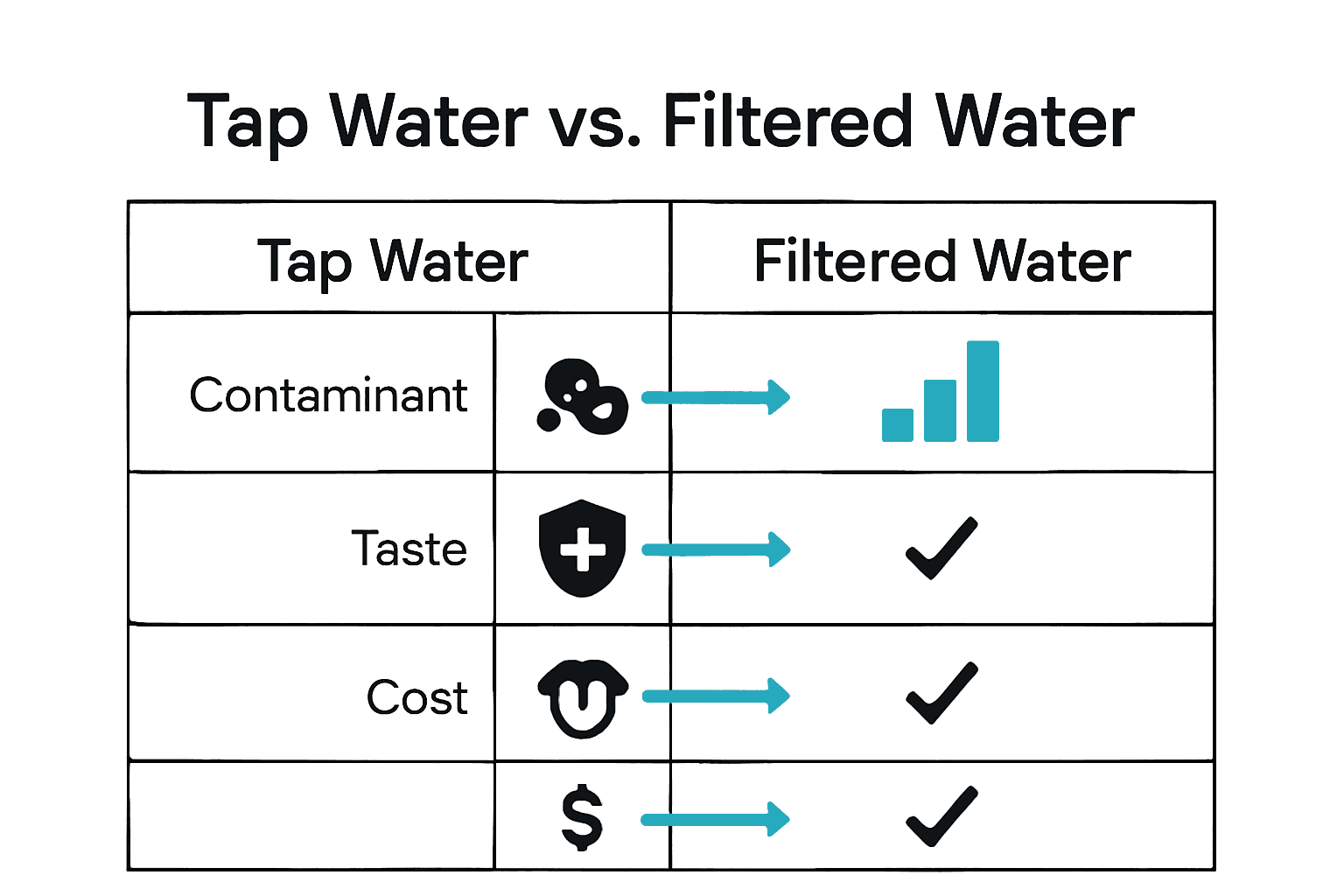
While tap water undergoes municipal treatment, filtered water provides an additional layer of protection against potential contaminants. The key differences emerge in three primary areas: health risks, safety measures, and taste profile. Tap water may contain trace elements and chemicals that pass through standard municipal treatment, whereas advanced filtration methods can effectively remove these potential hazards.
A comprehensive comparison reveals nuanced distinctions across multiple factors:
Health Factors
-
Tap Water
- Meets basic municipal safety standards
- May contain trace contaminants
- Regulated but not always perfectly pure
-
Filtered Water
- Additional purification layers
- Removes microscopic impurities
- Provides enhanced health protection
Taste Characteristics
-
Tap Water
- Potential chlorine or mineral aftertaste
- Varies by local water source
- Mineral content influences flavor
-
Filtered Water
- Cleaner, crisper taste
- Removes flavor-altering compounds
- Consistent taste profile
To gain deeper insights into water quality nuances, explore our guide on understanding why test drinking water for safety, which provides comprehensive information about protecting your health through informed water choices.
Cost, Maintenance, and Environmental Impact
Choosing between tap and filtered water involves more than just health considerations, extending into economic and ecological dimensions that significantly impact long-term decision-making. Water treatment choices represent a complex balance between immediate expenses, ongoing maintenance requirements, and broader environmental sustainability.
Initial investment and recurring costs vary dramatically between tap water consumption and home filtration systems. Tap water remains essentially free, delivered through municipal infrastructure, while filtered water solutions require upfront equipment purchases and periodic filter replacements. These expenses range from affordable pitcher filters to sophisticated multi-stage purification systems, each with distinct financial implications and maintenance demands.
A comprehensive breakdown of key considerations reveals nuanced trade-offs:
Cost Factors
-
Tap Water
- No direct equipment costs
- Minimal maintenance expenses
- Included in standard utility bills
-
Filtered Water
- Initial system investment
- Regular filter replacement costs
- Potential energy consumption
Environmental Impact
-
Tap Water
- Existing municipal infrastructure
- Lower individual carbon footprint
- Reduced plastic waste potential
-
Filtered Water
- Reduced single-use plastic consumption
- Potential electronic waste from systems
- Energy required for filtration processes
To explore more about making sustainable water choices, dive into our guide on water filtration methods for homes and businesses, which provides comprehensive insights into balancing cost, performance, and environmental considerations.
Protect Your Health with Trusted Water Purification Solutions
Choosing between tap and filtered water can be confusing when health risks, taste, and safety are all on the line. This article highlights common challenges like trace contaminants that municipal water might miss and the benefits of advanced filtration methods such as reverse osmosis and UV purification. If you want cleaner, better-tasting water that supports your family’s wellness, finding a reliable filtration system is essential.
Explore the range of cutting-edge water purifiers at Coway designed to remove unwanted impurities and enhance taste with proven technologies. Take control of your water quality today with options that include countertop and under-sink units backed by free delivery and professional installation. Visit our best water filtration methods guide to learn more about effective filtration choices and see why so many households trust Coway for safe hydration. Don’t wait to improve your water experience—Get Yours now and drink confidently.
Frequently Asked Questions
What is the main difference between tap water and filtered water?
Tap water is supplied by municipal water systems and meets certain safety standards, whereas filtered water undergoes additional purification processes to remove contaminants that may not be eliminated during municipal treatment.
What contaminants can be found in tap water?
Tap water may contain trace elements and contaminants such as chlorine, heavy metals, and disinfection byproducts, which are regulated but not completely removed.
How do water filtration methods improve drinking water quality?
Water filtration methods such as activated carbon filters, reverse osmosis, and ultraviolet purification effectively remove impurities, enhance taste, and provide additional health protection compared to regular tap water.
Is filtered water always safer than tap water?
Filtered water typically offers an extra layer of protection and can remove more contaminants than municipal treatment alone, but the safety depends on the filtration method and the specific contaminants present in local tap water.
Recommended
- Understanding Why Purify Tap Water for Health and Safety – Coway Water Purifier
- Understanding How Water Filters Affect Taste – Coway Water Purifier
- 7 Benefits of Water Filtration for Your Home and Health – Coway Water Purifier
- Understanding the Benefits of Filtered Water for Offices – Coway Water Purifier
