
Uncategorized
How Allergens Affect Air Quality and Health

Feb
Every family knows the frustration of battling stubborn allergy symptoms season after season. The air inside your American home can quietly fill with airborne substances like pollen, spores, and dust that trigger sneezing fits, scratchy throats, and sleepless nights. Understanding how these invisible allergens travel and settle helps you take control, offering real ways to safeguard your loved ones and create a healthier breathing environment.
Table of Contents
- What Are Airborne Allergens And How They Spread
- Major Types Of Allergens In U.S. Homes
- How Allergens Reduce Indoor Air Quality
- Health Risks Linked To Airborne Allergens
- Effective Strategies To Lower Allergen Exposure
Key Takeaways
| Point | Details |
|---|---|
| Understanding Airborne Allergens | Airborne allergens such as pollen, mold spores, and pet dander are prevalent in homes and can trigger respiratory symptoms. Awareness of these allergens is vital for family health. |
| Major Sources and Locations | Common allergens accumulate in specific areas of the home, including dust mites in bedding and mold in damp areas. Addressing these hotspots is crucial for effective allergen management. |
| Impact on Health | Exposure to allergens can worsen asthma, cause allergic reactions, and result in reduced air quality. Implementing preventive measures is essential to safeguard health, especially for vulnerable individuals. |
| Effective Reduction Strategies | A multi-faceted approach, including proper cleaning, humidity control, and air purification, is required to significantly lower allergen levels. Focusing on bedrooms first can lead to pronounced symptom relief. |
What Are Airborne Allergens and How They Spread
Airborne allergens are the invisible culprits floating through your home’s air that trigger sneezing, watery eyes, and congestion. These particles are airborne substances like pollen, spores, and dust that enter your respiratory system when you breathe. Understanding what they are and how they travel helps you protect your family.
Common Types of Airborne Allergens
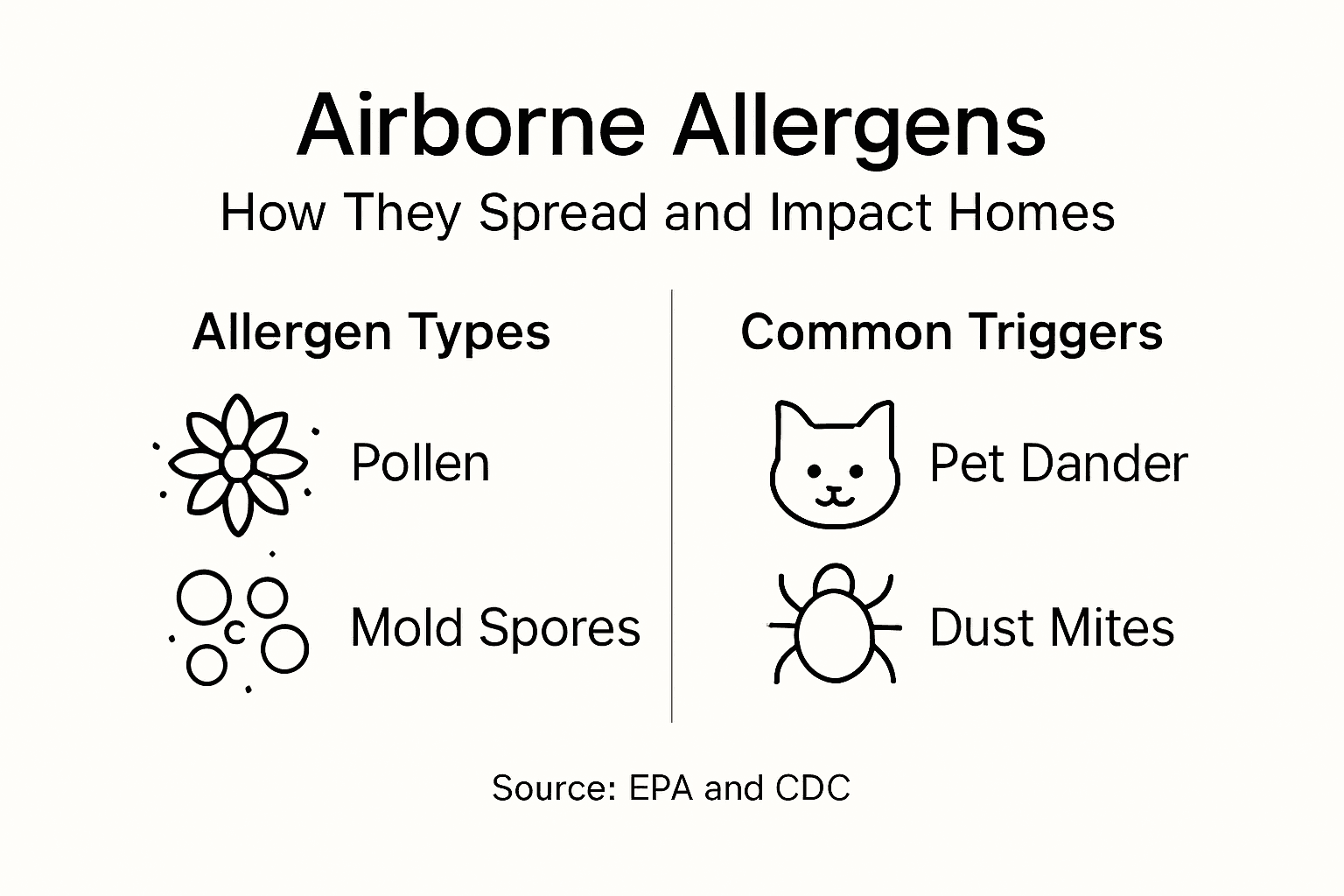
Your home likely contains several types of allergens that spread through the air. Here are the primary offenders:
- Pollen from trees, grasses, and weeds—especially high in spring and fall
- Mold spores that thrive in damp areas and increase during humid months
- Dust mites and their droppings, living in bedding and upholstered furniture
- Pet dander from dogs, cats, and other animals you keep at home
- Cockroach debris and particles in kitchens and basements
Aeroallergens spread through natural mechanisms like wind dispersal and can trigger reactions through inhalation. Understanding these common sources helps you identify where allergens hide in your living spaces.
How Allergens Spread Through Your Home
Allergens don’t stay in one place. They travel through air currents created by opening windows, turning on fans, and moving throughout your house. Wind carries pollen indoors and through open doors and windows. Your HVAC system can actually spread allergens from room to room if filters aren’t properly maintained.
Humidity levels and seasonal changes dramatically affect how much allergen material floats in the air. Higher humidity promotes mold growth, while specific seasons bring pollen surges from different plants. Climate and local vegetation directly impact your exposure levels.
The spread of airborne allergens depends on wind patterns, human activity, climate conditions, and how much moisture exists in your indoor environment.
Why This Matters for Your Family
When you breathe in these particles, your immune system reacts defensively. Even small concentrations can trigger symptoms in sensitive individuals. Children and people with asthma face higher risks from prolonged exposure to elevated allergen levels.
Your bedroom and living areas collect allergens constantly—in carpet fibers, on furniture, and suspended in the air you breathe while sleeping. This continuous exposure means symptoms often worsen at night.
Pro tip: Track pollen counts in your area and keep windows closed on high-count days. Use your car’s recirculated air setting during peak pollen season to prevent allergens from entering while driving.
Major Types of Allergens in U.S. Homes
Your home is likely harboring multiple allergens right now. Research shows that over 90% of American homes contain three or more allergens, making allergen exposure nearly unavoidable for most families. Knowing which allergens are most common helps you target your air quality efforts effectively.
The major indoor allergens affecting U.S. households include:
- Dust mites living in bedding, pillows, and upholstered furniture
- Pet dander from cats and dogs, even in homes without pets
- Cockroach debris and droppings in kitchens and bathrooms
- Mouse and rat allergens in walls and attics
- Mold spores thriving in damp bathrooms and basements
These allergens vary significantly in particle size and how easily they become airborne. Dust mites produce larger particles that settle on surfaces, while mold spores float suspended in the air you breathe. This variation affects where allergens lodge in your respiratory system and how aggressively they trigger symptoms.
Where These Allergens Hide
Allergens accumulate in specific areas of your home depending on their source. Pet dander concentrates most heavily in bedrooms and living rooms where pets spend time. Dust mites thrive in bedding where warm, humid conditions favor their growth.

Cockroach allergens concentrate near food sources in kitchens and where moisture exists. Mold grows in bathrooms, basements, and areas with poor ventilation or water damage. Understanding these hotspots helps you prioritize cleaning and air filtration efforts.
Here’s a quick summary of where common allergens accumulate and their main triggers:
| Allergen Type | Common Location in Home | Main Trigger Factor |
|---|---|---|
| Dust mites | Bedding, carpets, furniture | High humidity, warmth |
| Pet dander | Bedrooms, living rooms | Pet activity, shedding |
| Mold spores | Bathrooms, basements | Dampness, poor ventilation |
| Cockroach debris | Kitchens, bathrooms | Food, moisture |
| Rodent allergens | Attics, walls, storage areas | Entry points, clutter |
Controlling exposure to major indoor allergens like cockroach, dust mite, cat, and dog00957-1/fulltext) is crucial for managing asthma and allergic symptoms in sensitive family members.
Why These Specific Allergens Matter
These allergens cause problems because they trigger strong immune responses in allergic individuals. Even microscopic amounts can initiate symptoms ranging from mild sneezing to severe asthma attacks. Children are particularly vulnerable because their lungs are still developing and more sensitive to irritation.
Prevention requires addressing multiple allergen sources simultaneously. Tackling just dust mites while ignoring pet dander leaves you with persistent symptoms. This is why comprehensive air purification works better than single-solution approaches.
Pro tip: Focus your cleaning efforts on bedrooms first since that’s where you spend eight hours daily breathing concentrated allergens. Wash bedding weekly in hot water and use allergen-blocking pillow cases to reduce dust mite exposure where it matters most.
How Allergens Reduce Indoor Air Quality
Allergens don’t just cause sneezing—they fundamentally degrade the air you breathe inside your home. When dust mites, pet dander, mold, and cockroach debris accumulate, they create invisible pollution that affects everyone in your household. Understanding this connection helps you prioritize air quality improvements.
The Allergen-Air Quality Connection
Allergens settle on every surface in your home: furniture, carpets, walls, and bedding. When you walk across a room, sit on the couch, or make your bed, these particles become airborne again. This constant cycle of settling and becoming airborne creates a persistent contamination problem.
Indoor allergens reduce air quality because they remain suspended in the air you breathe. Unlike outdoor air that naturally disperses, your sealed home traps these particles. They accumulate over time, making air quality progressively worse without intervention.
How Allergens Degrade Your Indoor Environment
Several specific mechanisms worsen your home’s air quality:
- Surface accumulation creates visible dust layers that become airborne with movement
- HVAC circulation spreads allergens throughout rooms and between floors
- Humidity fluctuations cause particles to settle and re-suspend repeatedly
- Lack of filtration allows particles to recirculate indefinitely
- Poor ventilation traps allergens indoors without outdoor air exchange
Controlling indoor allergen sources through ventilation and air cleaners with certified filters dramatically improves air quality. Reducing humidity also limits how quickly allergens spread and multiply indoors.
Why This Matters Beyond Allergies
Reduced air quality affects everyone, not just people with allergies. Poor air quality triggers asthma attacks, worsens respiratory infections, and causes general discomfort. Children breathing contaminated air for extended periods experience developmental impacts on lung function.
Your family spends 90% of time indoors. That means your home’s air quality directly influences your health more than outdoor air does. Every breath matters when you’re breathing the same recycled air all day long.
Poor indoor air quality from allergens triggers asthma and allergy symptoms, making environmental control essential for family health.
Visible Signs Your Air Quality Is Declining
Watch for these indicators that allergens are degrading your air:
- Dust settling on surfaces within hours of cleaning
- Increased sneezing, coughing, or eye irritation indoors
- Musty odors indicating mold growth
- Visible dust particles floating in sunlight
- Worsening asthma symptoms at night or in bedrooms
Pro tip: Check your HVAC filter monthly and replace it every three months instead of waiting until it appears dirty. A clogged filter actually increases allergen circulation by forcing air around the filter instead of through it.
Health Risks Linked to Airborne Allergens
Airborne allergens trigger real health consequences for millions of American families. When you breathe in pollen, mold spores, dust mite debris, or pet dander, your immune system overreacts to these harmless particles. This exaggerated response creates inflammation and uncomfortable symptoms that range from mild to life-threatening.
Immediate Symptoms You Recognize
Allergic reactions to airborne substances cause respiratory symptoms including sneezing, coughing, nasal congestion, and wheezing. Your eyes may itch and water uncontrollably. These symptoms feel minor individually but accumulate into exhausting daily struggles.
Most people experience these reactions seasonally or in specific locations. Spring pollen triggers symptoms for some families. Summer mold growth causes problems for others. Winter heating systems recirculate concentrated allergens indoors. Your timing and triggers vary based on what allergens dominate your specific environment.
Serious Health Conditions Triggered by Allergen Exposure
Airborne allergen exposure triggers more serious conditions beyond sniffling:
- Asthma attacks where airways narrow and breathing becomes difficult
- Allergic rhinitis causing chronic nasal inflammation and congestion
- Anaphylaxis in severe cases requiring emergency medical attention
- Chronic airway inflammation from prolonged allergen exposure
- Contact dermatitis and skin reactions from direct allergen contact
Children with developing lungs face particular vulnerability. Repeated allergen exposure during critical growth years can permanently impact respiratory function. Early intervention prevents long-term damage.
The Healthcare Impact
Allergen-related illnesses increase emergency room visits and healthcare costs substantially. Families miss work and school due to severe symptoms. Asthma hospitalizations spike during high-pollen seasons. The financial and personal burden extends beyond just feeling uncomfortable.
Prolonged exposure to airborne allergens causes chronic inflammation and exacerbates existing respiratory diseases, making prevention crucial for family health.
Why Prevention Matters More Than Treatment
Managing existing symptoms costs money and time. Preventing symptoms through environmental control eliminates the problem entirely. Reducing allergen levels in your home prevents attacks before they start instead of treating them after they occur.
Your bedroom matters most since you spend eight hours there daily. What happens in that space directly affects your sleep quality and next-day energy. Poor sleep from allergen-triggered symptoms affects work performance, school grades, and overall quality of life.
Pro tip: Track your symptom patterns for two weeks to identify which rooms and times trigger reactions strongest, then focus allergen control efforts on those specific areas and timeframes.
Effective Strategies to Lower Allergen Exposure
Reducing allergen exposure requires a multi-pronged approach targeting different sources throughout your home. Single solutions rarely work because allergens come from multiple places. A comprehensive strategy addresses bedding, flooring, pets, humidity, and air quality simultaneously for maximum effectiveness.
Bedroom Strategies: Where You Spend Most Time
Your bedroom is ground zero for dust mite allergens. Start by encasing mattresses and pillows in dust-mite-proof covers designed to block tiny particles. Wash all bedding weekly in hot water to eliminate accumulated allergens.
Remove bedroom carpeting if possible and replace it with hardwood or linoleum flooring. If you must have carpet, use washable area rugs that you can clean frequently. Reduce bedroom clutter where dust accumulates, and keep pets completely out of sleeping areas.
Household Environmental Controls
Control humidity levels using air conditioning or dehumidifiers, as moisture encourages dust mites and mold growth. Target humidity between 30-50% for optimal results. Keep windows closed during high-pollen seasons and rely on air conditioning instead.
Key allergen-reduction strategies include:
- Regular dusting and vacuuming with HEPA filters
- Choosing easy-to-clean furniture materials like leather or vinyl
- Addressing cockroach problems through sanitation and pest control
- Managing mold by fixing water leaks and improving ventilation
- Bathing pets weekly and keeping them out of bedrooms
Air Purification Technology
Air purifiers with HEPA filters remove airborne allergens effectively throughout your home. HEPA technology captures particles as small as 0.3 microns, trapping dust mites, pollen, and mold spores before you breathe them. Place units in bedrooms and main living areas where you spend the most time.
Combining multiple strategies—dust-proof covers, frequent washing, humidity control, and HEPA filtration—creates the most effective allergen reduction for your family.
Pet Management Without Giving Them Up
You don’t have to eliminate pets entirely. Bathe your cat or dog weekly to reduce dander shedding. Brush them outdoors to prevent hair and dander from accumulating indoors. Use furniture covers you can wash frequently, and vacuum pet areas daily with HEPA filters.
Keeping pets out of bedrooms alone reduces bedroom allergen levels by 50% or more. This single change delivers dramatic symptom improvement, especially at night.
Pro tip: Prioritize bedroom allergen control first since you spend eight uninterrupted hours there daily—this single room improvement often reduces nighttime symptoms by 30-40% within two weeks.
Compare strategies for reducing allergen exposure and their effectiveness:
| Strategy | Target Area | Expected Impact | Maintenance Needed |
|---|---|---|---|
| HEPA air purifier | Living/bedrooms | 60-80% allergen removal | Filter change quarterly |
| Mattress/pillow encasements | Bedrooms | Lower dust mite levels | Wash covers monthly |
| Weekly pet bathing & brushing | Pet areas | Reduce pet dander | Bath and brush weekly |
| Dehumidifier use | Damp rooms | Less mold, dust mites | Empty tank regularly |
| Removing carpet for hard flooring | Bedrooms/living | Fewer settled allergens | Mop regularly |
Take Control of Your Home’s Air Quality Today
Airborne allergens like dust mites, mold spores, and pet dander do more than just cause minor discomfort—they can severely impact your family’s respiratory health and indoor air quality. This article highlights how invisible particles circulating in your home create persistent allergies and asthma triggers. If you want to breathe easier and reduce these health risks, combining advanced filtration with smart home care is essential.
Protect your loved ones with Coway air purifiers. Our technologically advanced purifiers use HEPA filters and UV sanitization to capture and neutralize airborne allergens effectively, helping you reclaim clean air in bedrooms and living spaces. Along with moisture control and proper cleaning, Coway’s solutions provide a powerful defense against invisible pollutants where your family spends the most time.

Don’t wait for symptoms to worsen. Explore the full range of Coway products designed to improve both air and water quality at cowayswaterpurifier.com. Take the first step toward a healthier home environment and feel the difference now with reliable, scientifically backed purification technology you can trust.
Frequently Asked Questions
What are airborne allergens and what common types are there?
Airborne allergens are tiny particles like pollen, mold spores, dust mites, pet dander, and cockroach debris that can cause allergic reactions when inhaled. Common types include pollen from plants, mold spores in damp areas, dust mites found in bedding, pet dander from household animals, and cockroach droppings.
How do airborne allergens affect indoor air quality?
Airborne allergens degrade indoor air quality by settling on surfaces and becoming airborne again through everyday movements, HVAC systems, and inadequate ventilation. Increased allergen levels can lead to respiratory issues, asthma attacks, and general discomfort for everyone in the household.
What health risks are associated with prolonged exposure to airborne allergens?
Prolonged exposure to airborne allergens can lead to serious health problems, including asthma attacks, allergic rhinitis, chronic airway inflammation, and even anaphylaxis in severe cases. Children are particularly vulnerable due to their developing respiratory systems.
What strategies can I use to reduce allergen exposure in my home?
To reduce allergen exposure, consider using HEPA air purifiers, encasing mattresses and pillows in dust-mite-proof covers, washing bedding weekly in hot water, controlling humidity levels, and keeping pets out of bedrooms. Regular cleaning, including dusting and vacuuming with HEPA filters, also helps manage allergens.
Recommended
- How Air Purifiers Remove Allergens at Home – Coway Water Purifier
- Understanding Indoor Pollutants and Air Purifiers – Coway Water Purifier
- 7 Most Common Indoor Air Pollutants and How to Reduce Them – Coway Water Purifier
- Indoor vs Outdoor Air Pollution – How It Impacts Home Health – Coway Water Purifier
- What is an Immune Booster? Understanding Its Importance – MyGymSupplements
