
Uncategorized
Why Choose Certified Purifiers for Home Safety
Feb
Finding trustworthy ways to keep your family’s water safe can be challenging for American homeowners living in cities. With so many options on the market, distinguishing genuine certified purifiers from ordinary products matters more than ever. Choosing a water purifier that has passed rigorous independent verification brings real peace of mind, making it easier to protect those you love. You’ll learn what certified really means, how these devices are tested, and why documented proof beats empty marketing promises.
Table of Contents
- What Certified Purifiers Really Mean
- Types of Certifications and Their Differences
- Key Features Certified Purifiers Must Meet
- Health and Safety Benefits for Families
- Pitfalls of Non-Certified Alternatives
Key Takeaways
| Point | Details |
|---|---|
| Certified Purifiers Ensure Safety | Certification guarantees rigorous testing that validates air cleaning capabilities, protecting household health. |
| Know the Certification Standards | Different certifications focus on specific performance metrics; understanding these helps consumers choose effectively. |
| Health Benefits for Families | Certified purifiers significantly reduce allergens, improve respiratory health, and support long-term cardiovascular benefits. |
| Risks of Non-Certified Devices | Non-certified air purifiers can introduce health hazards, such as ozone generation and ineffective filtration, potentially harming indoor air quality. |
What Certified Purifiers Really Mean
Certified purifiers represent more than just marketing jargon – they signify a rigorous process of independent testing and verification that ensures consumer safety and performance. These devices undergo comprehensive evaluations to guarantee their ability to effectively clean indoor air and protect household health.
According to independent testing standards, certified air purifiers must meet specific performance benchmarks that validate their cleaning capabilities. The certification process typically involves comprehensive assessments across multiple critical dimensions:
- Performance Verification: Measuring Clean Air Delivery Rate (CADR)
- Filtration Efficiency: Confirming particle capture rates
- Safety Standards: Checking ozone emission limits
- Room Size Compatibility: Validating effective coverage area
The core significance of certification lies in its ability to provide consumers with objective evidence of a purifier’s real-world effectiveness. Unlike uncertified products that might make unsubstantiated claims, certified purifiers have documented proof of their air cleaning capabilities. Commercially graded purifiers must capture at least 99.97% of airborne particles as small as 0.3 microns, ensuring comprehensive indoor air quality improvement.
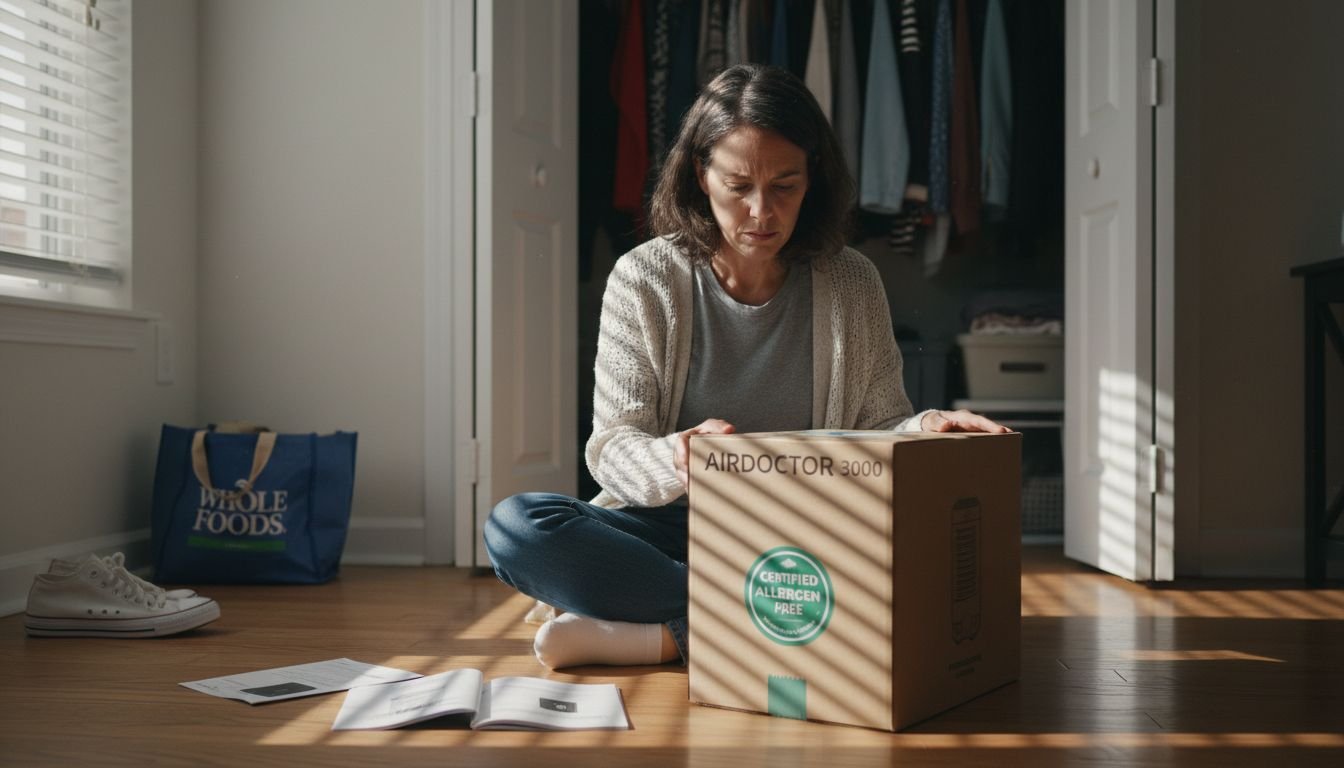
Pro tip: Always verify a purifier’s certification from recognized independent testing organizations before making a purchase to guarantee genuine air quality improvements.
Types of Certifications and Their Differences
The world of air purifier certifications is complex, with multiple standards designed to help consumers make informed choices about indoor air quality. Not all certifications are created equal, and understanding their nuanced differences can significantly impact your purchasing decision.
One of the most prominent certification programs is AHAM Verifide, which focuses on measuring the Clean Air Delivery Rate (CADR) for specific pollutants. This certification provides a standardized approach to evaluating air purifier performance across three key categories:
- Tobacco Smoke: Measures filtration of small particle pollutants
- Pollen: Assesses capture of medium-sized airborne particles
- Dust: Evaluates removal of larger particulate matter
Beyond AHAM, several other critical certification standards exist that consumers should understand. Air quality ratings like MERV (Minimum Efficiency Reporting Value) provide additional insights into filtration capabilities. MERV ratings range from 1 to 16, with higher numbers indicating more effective particle capture:
- MERV 1-4: Basic filtration
- MERV 5-8: Better residential performance
- MERV 9-12: Superior filtration
- MERV 13-16: Hospital and clean room level filtration
Specialty certifications like Asthma & Allergy Friendly® take a more targeted approach, focusing on specific health outcomes. These certifications go beyond simple performance metrics to verify that air purifiers can significantly reduce allergens and airborne irritants while maintaining low ozone emissions.
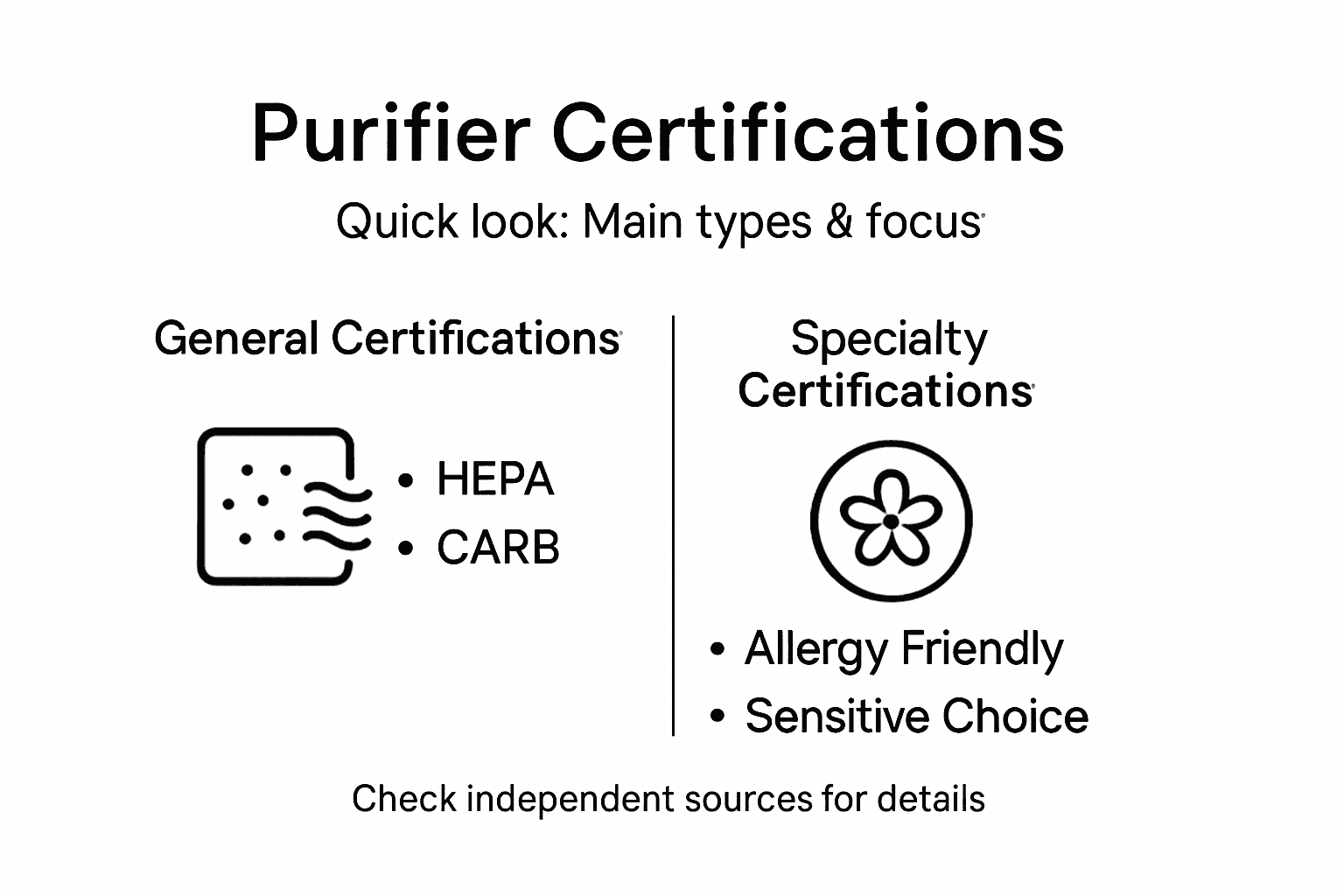
Here’s a concise comparison of major air purifier certification standards and what they emphasize:
| Certification Standard | Main Focus | Best For |
|---|---|---|
| AHAM Verifide | CADR for smoke, dust, pollen | General home and office use |
| Asthma & Allergy Friendly® | Allergen reduction, low ozone | Sensitive or allergic households |
| MERV Rating | Filtration efficiency levels | Filters for HVAC systems |
| HEPA (Commercial Grade) | Ultra-fine particle capture | Healthcare and laboratory spaces |
Pro tip: Always check multiple certification standards and compare their specific focus to ensure you select an air purifier that meets your precise indoor air quality needs.
Key Features Certified Purifiers Must Meet
Certified air purifiers are far more than simple filtration devices – they represent a comprehensive approach to indoor air quality that demands rigorous scientific testing and precise performance standards. These sophisticated systems must demonstrate exceptional capabilities across multiple critical dimensions to earn their certification.
The foundation of certification begins with air filtration performance, which requires meeting stringent Clean Air Delivery Rate (CADR) standards for various pollutants. Key performance requirements include:
- Particle Removal: Capture at least 99.97% of particles 0.3 microns or larger
- Pollutant Specificity: Verified effectiveness against tobacco smoke, pollen, and dust
- Filtration Consistency: Maintain performance throughout device lifespan
- Energy Efficiency: Meet established power consumption standards
Beyond basic filtration, certified purifiers must also demonstrate exceptional safety metrics. Allergen reduction standards require comprehensive testing that proves the device can:
- Reduce airborne allergens by at least 90%
- Capture and retain at least 50% of removed allergens in the filter
- Prevent re-release of captured particles
- Maintain ultra-low ozone emission levels (less than 0.05 parts per million)
The most comprehensive certifications go beyond technical specifications to validate real-world performance. This means testing purifiers under actual household conditions, including the presence of furniture and typical dust environments, to ensure consistent and reliable air quality improvement.
Pro tip: When shopping for a certified air purifier, request detailed certification documentation and verify the specific standards the device has met.
Health and Safety Benefits for Families
Certified air purifiers represent more than just technological devices – they are critical guardians of family health, providing comprehensive protection against numerous indoor air quality threats. By systematically removing harmful particles and contaminants, these sophisticated systems create a safer, healthier living environment for every household member.
Indoor air quality research reveals remarkable health benefits that extend far beyond simple dust removal. Certified purifiers offer significant advantages for families, particularly those with vulnerable members:
- Allergen Reduction: Eliminate pollen, dust mites, pet dander, and mold spores
- Respiratory Protection: Decrease airway irritants and potential asthma triggers
- Chemical Neutralization: Remove harmful volatile organic compounds (VOCs)
- Odor Elimination: Neutralize smoke and unpleasant household odors
Beyond immediate respiratory benefits, cardiovascular health research demonstrates profound long-term implications. High-efficiency particulate air (HEPA) purifiers can significantly reduce systemic health risks by:
- Lowering exposure to fine particulate pollution (PM2.5)
- Potentially reducing systolic blood pressure
- Minimizing cardiovascular stress
- Supporting overall respiratory function
Specifically for families with children, elderly members, or individuals with pre-existing health conditions, certified purifiers offer an additional layer of protection against environmental health risks. The targeted filtration technologies can capture microscopic particles that traditional ventilation systems might miss, creating a comprehensive shield against potential health hazards.
Pro tip: Position your air purifier centrally in high-traffic areas and replace filters according to manufacturer recommendations to maximize health benefits.
Pitfalls of Non-Certified Alternatives
Consumers who opt for non-certified air purifiers unknowingly expose themselves to potential health risks that far outweigh any initial cost savings. These unverified devices often create a false sense of security while potentially introducing additional environmental hazards into living spaces.
Non-certified air purifiers pose significant dangers through multiple problematic mechanisms:
- Ozone Generation: Produce harmful respiratory irritants
- Ineffective Filtration: Fail to remove critical pollutants
- Chemical Byproduct Creation: Potentially increase indoor air toxicity
- Unregulated Performance: Lack scientific validation
Specifically, ionizing devices and unverified purification technologies can create unexpected health complications. Marketplace research has uncovered alarming trends in non-certified products:
- Increased volatile organic compound (VOC) emissions
- Production of potentially carcinogenic chemical compounds
- Reduction of lung function
- False assurance of air quality improvements
The most concerning aspect of non-certified alternatives is their potential to actively harm rather than improve indoor air quality. Without rigorous third-party testing, these devices might introduce ultrafine particles, generate harmful chemical interactions, and create respiratory risks for vulnerable family members.
The next table helps you quickly see the impact of certified versus non-certified air purifiers for households:
| Aspect | Certified Purifiers | Non-Certified Alternatives |
|---|---|---|
| Verified Performance | Independently tested | Lacks documented efficacy |
| Safety | Controls ozone, minimizes harm | May emit ozone or toxins |
| Health Benefits | Proven respiratory protection | Uncertain, may cause risk |
| Regulatory Compliance | Meets industry standards | Frequently unregulated |
Pro tip: Always request and review detailed certification documentation before purchasing any air purification device to protect your family’s health.
Ensure True Home Safety with Certified Coway Purifiers
Choosing a certified air purifier means prioritizing your family’s health by relying on proven filtration performance, allergen reduction, and low ozone emissions. The challenge many face is distinguishing real protection from ineffective products that may harm rather than help. Coway’s advanced purifiers meet strict certification standards to deliver consistent, dependable indoor air quality, helping you breathe easier and live safer.
Explore the full range of Coway purification solutions designed with your safety in mind at Uncategorized Archives – Coway Water Purifier. These models combine scientific innovation with trusted certifications to provide benefits like ultra-fine particle capture and odor elimination. Don’t settle for uncertified alternatives that risk your health.
Take control of your home’s air quality today by visiting Coway Water Purifier. Learn how certified purifiers improve your environment, and select the perfect system to protect your loved ones now. For detailed features and expert guidance, see Uncategorized Archives – Coway Water Purifier and experience true peace of mind.
Frequently Asked Questions
What does it mean when an air purifier is certified?
Certified air purifiers have undergone independent testing to verify their effectiveness in cleaning air and ensuring safety. This includes evaluations of performance metrics such as Clean Air Delivery Rate (CADR), filtration efficiency, and safety standards regarding ozone emissions.
Why is certification important for air purifiers?
Certification is crucial as it provides objective evidence of a purifier’s ability to improve indoor air quality. Unlike uncertified products, certified purifiers have documented proof of their effectiveness, ensuring that they meet health and safety standards.
How do certified air purifiers differ from non-certified models?
Certified air purifiers are independently tested for performance and safety, demonstrating reliable filtration efficiency and lower ozone emissions. Non-certified models may lack scientific validation and can potentially release harmful chemicals, making them less safe for home use.
What health benefits can certified air purifiers provide for families?
Certified purifiers help reduce allergens, respiratory irritants, and harmful volatile organic compounds (VOCs), creating a healthier indoor environment. They can also improve overall respiratory function and minimize health risks, particularly for children, the elderly, and individuals with pre-existing health conditions.
Recommended
- Role of Purification in Ensuring Customer Safety – Coway Water Purifier
- Purification Industry Standards Explained: Impact on Health – Coway Water Purifier
- How to Ensure Safe Drinking Water for Home and Business – Coway Water Purifier
- 7 Key Benefits of Air Purifiers for Urban Homeowners – Coway Water Purifier
- CarehomesIT – Specialist IT Support for Care Homes
