
Uncategorized
How Filters Remove Heavy Metals for Safer Water

Feb
Finding safe drinking water can be a challenge for many American families, especially when heavy metals like lead and mercury, often from corroded plumbing or industrial runoff, threaten the health of your home. These contaminants are linked to nerve and brain damage, kidney issues, and chronic illnesses, putting children and vulnerable groups at greater risk. This guide helps you understand how water filtration tackles heavy metal contamination, empowering you to choose the best solution for long-term wellness.
Table of Contents
- Heavy Metals in Water: Definition and Risk
- Types of Water Filters for Heavy Metal Removal
- How Filtration Processes Capture Heavy Metals
- Health Impacts and Regulatory Standards in the US
- Comparing Filter Technologies and Alternatives
Key Takeaways
| Point | Details |
|---|---|
| Heavy Metal Contamination Risks | Heavy metals like lead and mercury pose serious health risks, particularly to vulnerable populations such as children and pregnant women. |
| Water Filtration Technologies | Advanced filtration systems, including Reverse Osmosis and Ion Exchange filters, are essential for effectively removing heavy metals from drinking water. |
| Regular Testing Recommended | Conduct annual water tests to identify potential heavy metal contamination and ensure your family’s safety. |
| Regulatory Standards Importance | The EPA establishes Maximum Contaminant Levels to protect public health, emphasizing the need for stringent monitoring of drinking water. |
Heavy Metals in Water: Definition and Risk
Heavy metals represent a serious health threat that can silently contaminate drinking water systems across American homes. These toxic metallic elements, such as lead, cadmium, mercury, and chromium, pose significant risks to human health when they infiltrate our water supply through various natural and industrial pathways.
Contamination typically occurs through multiple mechanisms. Metal corrosion in plumbing systems represents one of the most common sources of heavy metal introduction into residential water. Industrial activities, mining operations, and agricultural practices can also contribute to metal contamination in water sources.
The potential health impacts of heavy metal exposure are profound and far-reaching:
- Neurological damage, particularly in children and developing brains
- Potential long-term kidney and liver dysfunction
- Increased risk of chronic health conditions
- Developmental delays in young children
- Potential links to cognitive impairment
Scientific research has consistently demonstrated that toxic metals can cause acute or chronic poisoning through drinking water exposure. The Environmental Protection Agency (EPA) has established strict maximum contaminant levels to protect public health, recognizing that even minimal exposure to certain heavy metals can have devastating consequences.
Vulnerable populations face the most significant risks. Children, pregnant women, and individuals with compromised immune systems are particularly susceptible to the harmful effects of heavy metal contamination.
Here’s a quick reference of common heavy metals found in drinking water and their main sources:
| Heavy Metal | Typical Source | Primary Health Risk |
|---|---|---|
| Lead | Aging pipes, corroded plumbing | Neurological damage |
| Mercury | Industrial runoff, mining | Kidney and brain effects |
| Cadmium | Fertilizers, battery waste | Bone and kidney disease |
| Chromium | Industrial discharges | Increased cancer risk |
| Arsenic | Natural deposits, pesticides | Skin lesions, cancer |
Heavy metals do not just disappear – they accumulate in the body over time, making prevention and early detection critical for long-term health.
Pro tip: Consider conducting a comprehensive water test annually to identify potential heavy metal contamination and protect your family’s health.
Types of Water Filters for Heavy Metal Removal
Water filtration technologies have evolved significantly to address the critical challenge of removing heavy metals from residential drinking water. Modern filtration systems leverage multiple advanced techniques to effectively eliminate toxic metallic contaminants and protect household water supplies.
Advanced adsorbent technologies play a crucial role in heavy metal removal, utilizing various materials and innovative approaches to trap and neutralize dangerous metallic elements. These sophisticated filtration methods range from activated carbon filters to more complex membrane and ion-exchange systems.
Key types of water filters for heavy metal removal include:
-
Activated Carbon Filters
- Highly effective at removing organic compounds
- Excellent for reducing chlorine and improving taste
- Moderate performance against heavy metals
-
Reverse Osmosis (RO) Systems
- Removes up to 99% of dissolved metals
- Pushes water through ultra-fine membranes
- Eliminates multiple contaminant types simultaneously
-
Ion Exchange Filters
- Specifically targets dissolved metal ions
- Exchanges harmful metal ions with harmless sodium or potassium ions
- Particularly effective for addressing hard water issues
-
Ceramic Filters
- Microporous structure blocks metal particles
- Provides physical filtration barrier
- Often combined with additional purification technologies
-
Alumina-Based Filters
- Specialized media for selective heavy metal absorption
- High affinity for removing arsenic and fluoride
- Chemically engineered filtration performance
The effectiveness of these filtration technologies depends on multiple factors, including water pH, contact time, and specific filter design. Homeowners should understand that no single filter provides absolute protection, making comprehensive water testing and multi-stage filtration crucial.
The table below summarizes how key water filtration technologies compare on heavy metal removal and other factors:
| Filter Type | Metals Removed Efficiently | Best For | Key Limitation |
|---|---|---|---|
| Reverse Osmosis | Most dissolved metals | Comprehensive home use | High water waste |
| Activated Carbon | Only some metals | Improving taste/odor | Limited for metals |
| Ion Exchange | Selective dissolved metals | Hard water areas | Not full solution |
| Ceramic Filters | Metal particles, some ions | Backup/small systems | Not for all metals |
| Alumina-Based | Arsenic, fluoride | Specialized contamination | Not broad spectrum |
Comprehensive water filtration requires a strategic, multi-layered approach to effectively remove diverse heavy metal contaminants.
Pro tip: Invest in a multi-stage water filtration system that combines different technologies for maximum heavy metal removal and consistently safe drinking water.
How Filtration Processes Capture Heavy Metals
The process of removing heavy metals from water involves sophisticated scientific mechanisms that transform contaminated water into a safe drinking resource. These intricate filtration processes utilize multiple advanced techniques to trap, neutralize, and eliminate dangerous metallic elements that pose significant health risks.
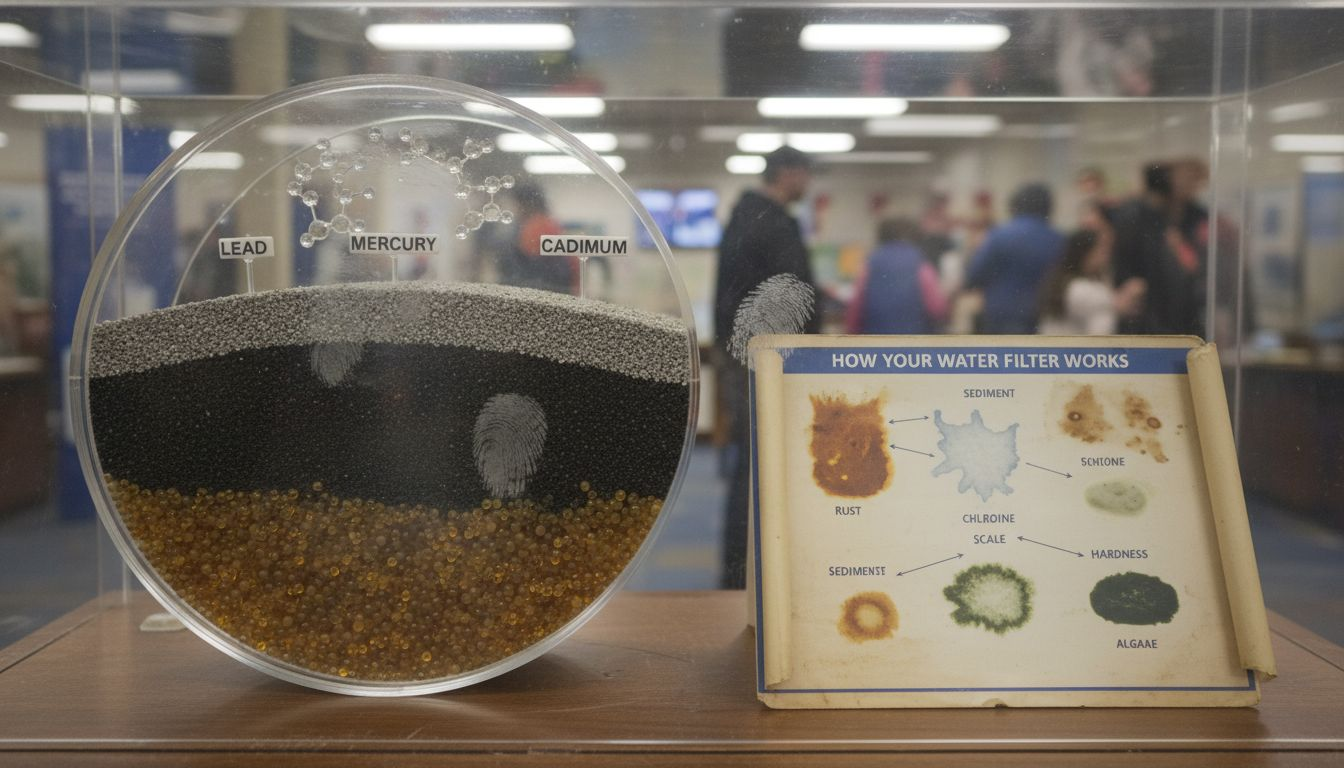
Innovative filtration materials have revolutionized our ability to capture heavy metals through complex physical and chemical interactions. These advanced technologies employ various mechanisms such as adsorption, straining, and molecular blocking to effectively remove contaminants from water sources.
The primary filtration mechanisms for heavy metal removal include:
-
Physical Straining
- Blocks particles larger than membrane pores
- Creates a physical barrier against contaminants
- Prevents metal particles from passing through filter
-
Adsorption Process
- Attracts and binds metal ions to filter surface
- Utilizes specialized media with high surface area
- Chemically traps metal molecules
-
Ion Exchange
- Replaces harmful metal ions with safer ions
- Neutralizes potential toxic metal contamination
- Transforms dangerous metal particles
-
Electrostatic Attraction
- Uses charged filter surfaces
- Attracts oppositely charged metal ions
- Provides additional removal mechanism
Membrane filtration technologies represent the most advanced approach to heavy metal removal. These sophisticated systems operate through size exclusion and precise molecular filtering, blocking contaminants based on their physical and chemical properties.
Effective water filtration is a complex dance of scientific principles, where advanced materials transform dangerous water into a safe, drinkable resource.
Pro tip: Regularly replace water filter cartridges and conduct periodic water quality tests to ensure maximum heavy metal removal efficiency.
Health Impacts and Regulatory Standards in the US
Heavy metal contamination represents a significant public health challenge, with potential long-term consequences for human health that extend far beyond immediate exposure. The complex landscape of potential health risks demands comprehensive regulatory oversight and strict monitoring to protect American communities from dangerous metallic contaminants.
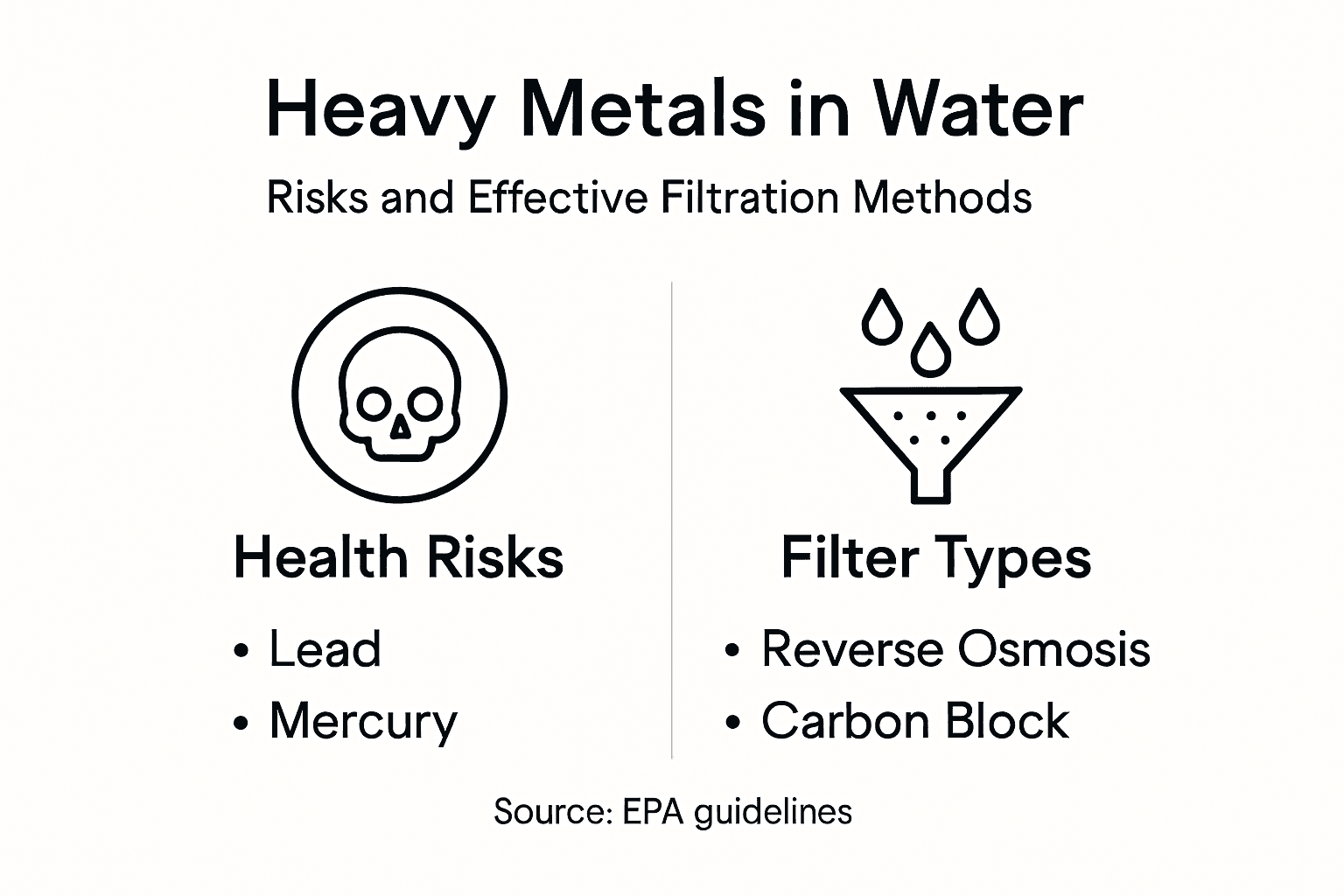
Drinking water regulations established by the Environmental Protection Agency provide a critical framework for managing and mitigating heavy metal exposure. These legally enforceable standards establish Maximum Contaminant Levels (MCLs) that define acceptable limits for various toxic metals in public water systems.
The primary health impacts of heavy metal exposure include:
-
Neurological Damage
- Potential brain function impairment
- Cognitive development disruption
- Long-term neurological complications
-
Organ Dysfunction
- Kidney damage and potential failure
- Liver metabolism disruption
- Compromised cardiovascular health
-
Cancer Risks
- Increased cellular mutation potential
- Long-term carcinogenic exposure
- Elevated risk for multiple cancer types
-
Developmental Challenges
- Impaired childhood growth
- Potential genetic mutations
- Compromised immune system function
Toxic metal monitoring encompasses multiple metals, including arsenic, barium, cadmium, chromium, lead, copper, mercury, and selenium. Each contaminant has specific health implications and requires targeted regulatory approaches to minimize human exposure.
Regulatory standards are not just bureaucratic measures, but critical safeguards protecting public health from invisible yet dangerous environmental threats.
Pro tip: Request a comprehensive water quality report from your local water utility and consider professional testing for private water sources to understand potential heavy metal risks.
Comparing Filter Technologies and Alternatives
Water filtration technologies have dramatically evolved, offering multiple strategies to combat heavy metal contamination in residential drinking water systems. Understanding the nuanced differences between various filter technologies is crucial for homeowners seeking comprehensive water purification solutions.
Home drinking water filters demonstrate significant variations in their ability to remove contaminants, making it essential to evaluate each technology’s specific strengths and limitations. Not all filtration methods are equally effective in eliminating heavy metals and other potentially harmful substances.
Key filtration technologies and their comparative characteristics include:
-
Reverse Osmosis (RO) Systems
- Near-complete contaminant removal
- Highest filtration efficiency
- Removes dissolved metals and compounds
- Requires significant water pressure
-
Activated Carbon Filters
- Inconsistent heavy metal removal
- Excellent for improving taste
- Reduces chlorine and organic compounds
- Cost-effective initial solution
-
Ion Exchange Filters
- Specifically targets dissolved metal ions
- Replaces harmful metals with safer ions
- Effective for hard water treatment
- Limited comprehensive filtration
-
Ceramic Filters
- Physical barrier against larger particles
- Moderate heavy metal removal
- Affordable and low-maintenance
- Works well in combination systems
Membrane filtration technologies represent the most advanced approach to water purification. Different mechanisms like straining, sedimentation, and adsorption play critical roles in removing various contaminants, with membrane technologies offering superior performance for dissolved heavy metal removal.
Effective water filtration requires a strategic, multi-layered approach that combines different technologies to maximize contaminant removal.
Pro tip: Consider a multi-stage filtration system that combines at least two different technologies to ensure comprehensive heavy metal removal and water safety.
Protect Your Family From Heavy Metals With Advanced Filtration
Heavy metals in drinking water pose hidden risks that demand proactive solutions. This article explained how filters remove contaminants like lead, mercury, and cadmium through processes such as adsorption and ion exchange. If you want to safeguard your loved ones from neurological, kidney, and developmental issues caused by these toxins, adopting reliable water purification technology is key. Coway Water Purifier offers state-of-the-art systems that combine multiple filtration methods including reverse osmosis and activated carbon to deliver safer water straight to your home.
Discover how to eliminate heavy metals effectively by exploring our range of innovative water purifiers designed to meet the highest safety standards. Visit our Uncategorized Archives – Coway Water Purifier for detailed product information, or browse our selection on the main site. Don’t wait until contamination becomes a health crisis. Act now to ensure your water is pure, safe, and healthy. Get yours today and enjoy free delivery, installation, and comprehensive maintenance from Coway.
Frequently Asked Questions
How do filters remove heavy metals from water?
Filters remove heavy metals through various mechanisms like physical straining, adsorption, ion exchange, and electrostatic attraction. These processes effectively trap and neutralize harmful metallic elements, converting contaminated water into a safe drinking resource.
What types of filters are best for removing heavy metals?
Key types of filters for removing heavy metals include Reverse Osmosis (RO) systems, Activated Carbon filters, Ion Exchange filters, Ceramic filters, and Alumina-Based filters. Each type has unique strengths and limitations in addressing different heavy metal contamination.
How often should I replace water filter cartridges to ensure effectiveness?
Regularly replacing water filter cartridges depends on the specific system and usage, but it’s generally recommended to do so every 6 to 12 months. Conducting periodic water quality tests can also help determine when to replace filters for maximum effectiveness.
Are there specific health risks associated with heavy metal exposure from drinking water?
Yes, exposure to heavy metals in drinking water can lead to serious health risks including neurological damage, organ dysfunction, cancer risks, and developmental challenges in children. It’s crucial to monitor and mitigate exposure to protect health.
Recommended
- 7 Key Examples of Filtration Methods for Safer Home Water – Coway Water Purifier
- 7 Must-Have Filtration Technologies for Home Wellness – Coway Water Purifier
- 7 Benefits of Water Filtration for Your Home and Health – Coway Water Purifier
- 7 Top Water Filtration Methods You Need to Know – Coway Water Purifier
- Understanding Recycling Old Electronics for a Greener Tomorrow – buy2fix
