
Uncategorized
Role of Microfiltration in Safer Home Water

Jan
Over 60 percent of American homes receive tap water that contains traces of microscopic contaminants, making many families question the safety of what comes out of their faucet. Protecting your loved ones from invisible threats in daily drinking water has become a top priority for health-conscious American homeowners. By exploring how microfiltration technology tackles bacteria and parasites, you will discover practical ways to make your home’s water safer and better for everyone.
Table of Contents
- What Microfiltration Means For Home Water
- Key Mechanisms And How It Works
- Applications In Household Water Purifiers
- Microfiltration Vs. Other Filtration Methods
- Benefits And Limitations For Families
Key Takeaways
| Point | Details |
|---|---|
| Microfiltration Enhances Water Safety | This technology effectively removes bacteria, protozoa, and suspended solids, improving overall water quality for households. |
| Not a Complete Solution | Microfiltration cannot eliminate dissolved contaminants or viruses, requiring additional treatment methods for comprehensive purification. |
| Pressure Is Critical | The efficiency of microfiltration heavily relies on the applied pressure, impacting the system’s ability to remove contaminants effectively. |
| Choose According to Needs | Families should select a microfiltration system based on specific water contamination profiles identified through testing. |
What Microfiltration Means for Home Water
Microfiltration represents a sophisticated water purification technique designed specifically to enhance home water safety by removing microscopic contaminants. This pressure-driven membrane filtration process works like a precision sieve, targeting suspended solids, bacteria, and protozoan parasites that could potentially compromise your household’s drinking water quality. Advanced membrane technologies enable filtration at the microscopic level, creating an essential barrier against unwanted particles.
At its core, microfiltration operates through specialized membranes with precisely engineered pore sizes, typically ranging between 0.1 to 10 microns. These membranes act as a physical filter, strategically blocking particles larger than their designated pore dimensions. While highly effective at removing suspended solids and certain microorganisms, microfiltration has specific limitations. Membrane filtration techniques cannot eliminate dissolved contaminants like nitrates or volatile organic compounds, which require additional treatment methods.
Homeowners seeking comprehensive water purification should understand that microfiltration serves as an important preliminary stage in multi-stage water treatment. By removing bacteria, protozoa, and larger particulate matter, these systems provide a critical first line of defense in protecting household water quality. The technology works by applying pressure to force water through microscopic membrane pores, effectively trapping unwanted particles while allowing clean water to pass through.
Pro tip: When considering a microfiltration system, always verify the specific micron rating and understand that lower micron values provide more comprehensive filtration for smaller particles.
Key Mechanisms and How It Works
Microfiltration operates through a precise and sophisticated filtering mechanism that separates contaminants from water using specialized membrane technologies. Surface and depth filtration techniques represent the two primary approaches used in this advanced water purification process. Surface filters function like ultra-fine screens, capturing larger particles directly on the membrane’s exterior, while depth filters employ a more complex strategy of trapping particles throughout a multilayered filtering medium.
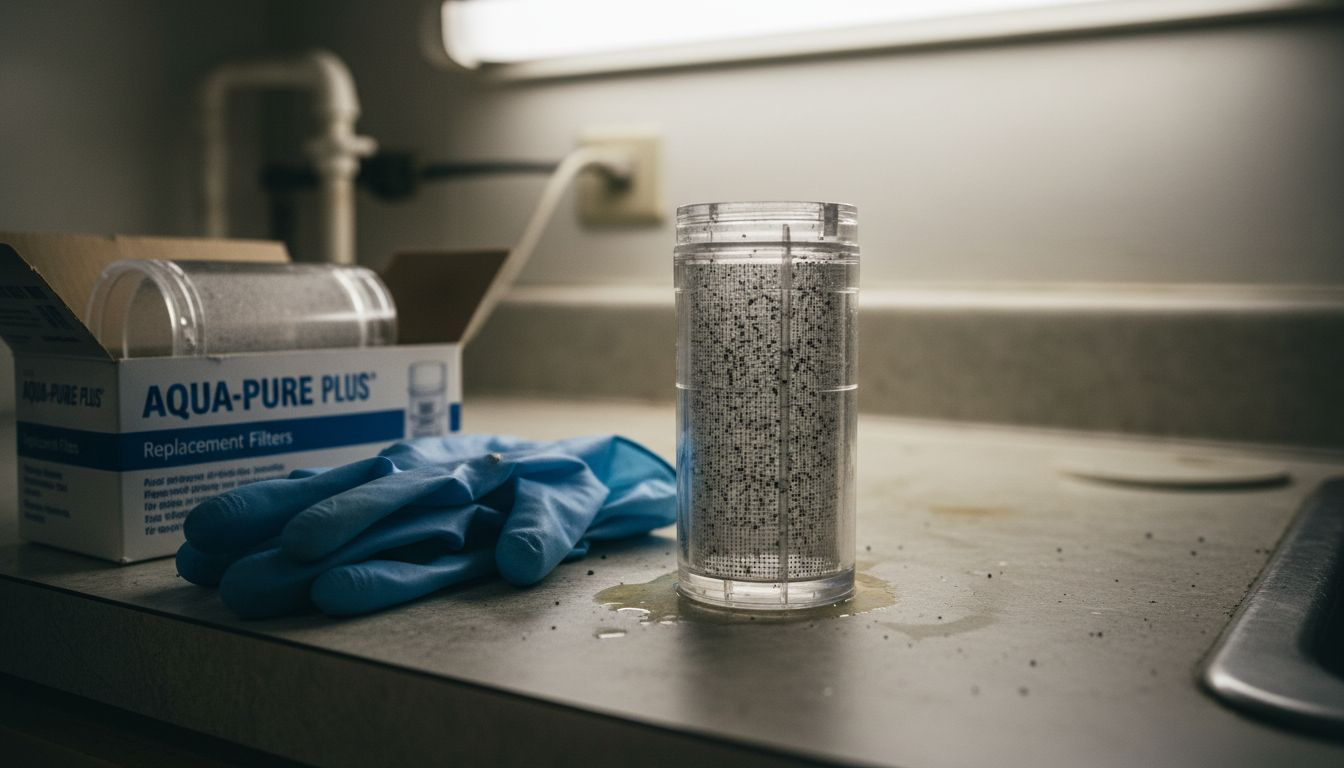
The core functionality of microfiltration relies on membrane pore sizes, which are meticulously engineered to target specific contaminant ranges. These membranes typically range from 0.1 to 10 microns, allowing water molecules to pass through while blocking suspended solids, bacteria, and larger microorganisms. Filter membrane technologies utilize a pressure-driven mechanism that forces water through these microscopic pores, creating a physical barrier against potential health risks.
Pressure plays a crucial role in the microfiltration process, acting as the primary driving force that pushes water through the membrane’s intricate network. The applied pressure determines the filtration efficiency, with higher pressures enabling more comprehensive particle removal. Different membrane configurations can be designed to handle varying water quality conditions, making microfiltration a versatile solution for home water treatment. By strategically controlling pressure and membrane design, these systems can effectively remove particulate matter, improving overall water safety and clarity.
Pro tip: Invest in a microfiltration system with multiple membrane layers and adjustable pressure settings to maximize contaminant removal and adapt to different water quality challenges.
Applications in Household Water Purifiers
Microfiltration technology has become increasingly prevalent in various household water treatment solutions, offering homeowners multiple options for improving water quality. Home water treatment systems range from whole-house installations to point-of-use devices, each designed to address specific water contamination challenges. These systems can effectively remove small particles like rust, clay, silt, sand, and certain microorganisms, providing a critical layer of protection for residential water supplies.
Homeowners can choose from several microfiltration applications tailored to their specific needs. Under-sink units, faucet-mounted filters, and whole-house systems represent the primary configurations available. Microfiltration devices can be strategically integrated into existing plumbing to target contaminants at different stages of water distribution. These systems are particularly effective in reducing particulates and microbial contaminants, offering an additional safety layer beyond traditional water treatment methods.
The versatility of microfiltration makes it an ideal solution for addressing various water quality concerns. Different membrane configurations can be customized to handle specific regional water challenges, from sediment-heavy water sources to areas with high bacterial contamination. By providing a physical barrier against unwanted particles, these systems enhance water clarity, taste, and safety. The technology serves multiple purposes, including pre-treatment to improve subsequent filtration stages and post-treatment to ensure final water quality.
Pro tip: Conduct a comprehensive water quality test before selecting a microfiltration system to ensure you choose a solution precisely matched to your specific water contamination profile.
Microfiltration vs. Other Filtration Methods
Different water filtration technologies offer varying levels of contaminant removal, with each method presenting unique advantages and limitations. Membrane filtration techniques distinguish themselves through pore size and specific contaminant removal capabilities, creating a nuanced landscape of water purification options. Microfiltration represents a mid-level filtration approach, effectively targeting suspended solids and bacteria while leaving smaller contaminants like viruses unaddressed.
Compared to more advanced filtration methods, microfiltration operates with larger membrane pore sizes, typically around 0.1 microns. This characteristic makes it distinctly different from ultrafiltration, nanofiltration, and reverse osmosis technologies. Water filtration comparison reveals that while microfiltration excels at removing larger particles and certain microorganisms, more sophisticated methods can eliminate a broader range of contaminants. Ultrafiltration, for instance, can remove viruses and some dissolved materials, whereas reverse osmosis provides the most comprehensive filtration by removing dissolved solids, minerals, and even molecular contaminants.
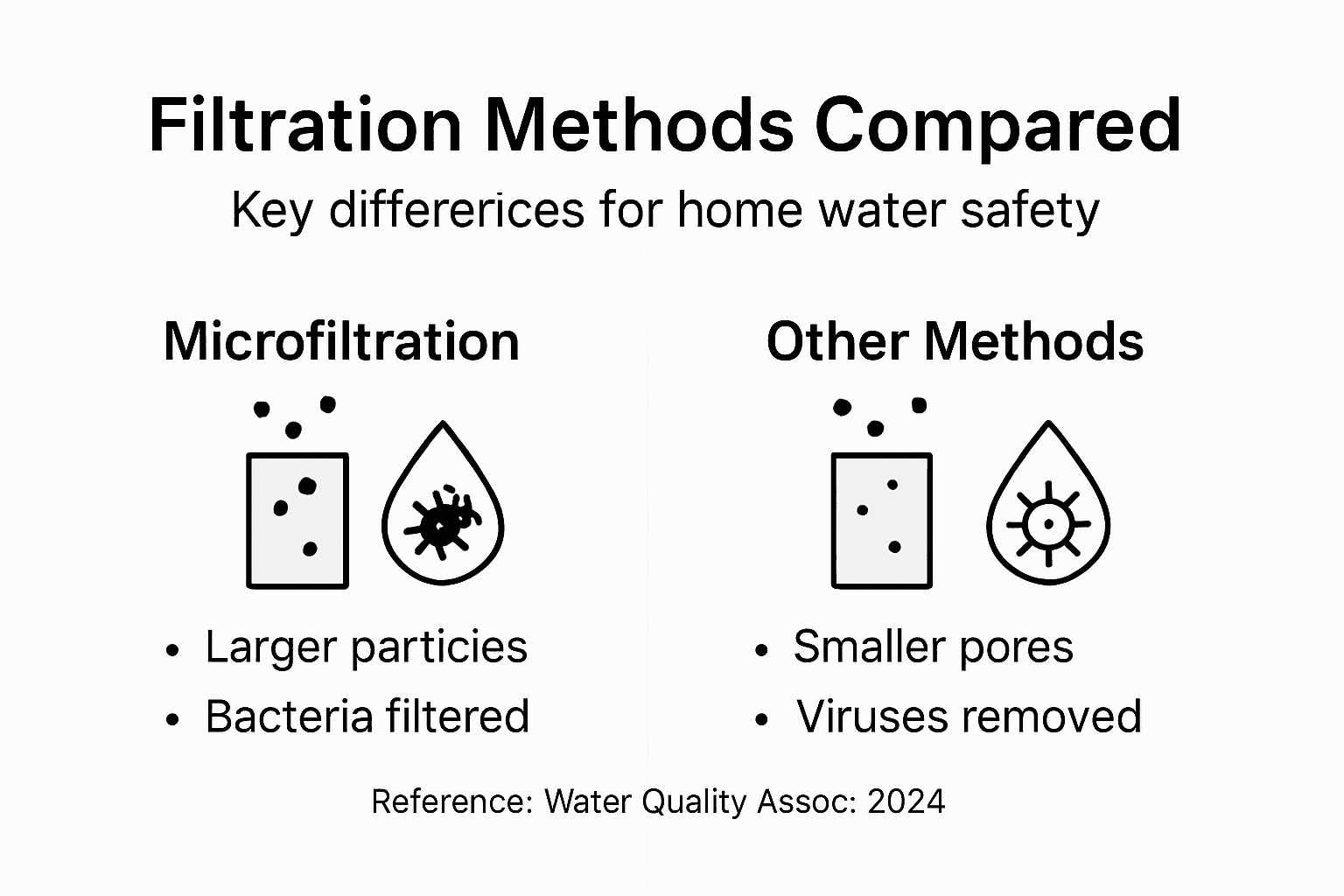
The selection of a filtration method depends on specific water quality challenges and desired purification outcomes. Microfiltration proves most effective for applications requiring removal of larger particulates, sediment, and some bacterial contaminants. Its relatively lower complexity and cost make it an attractive option for homeowners seeking targeted water treatment without the expense of more advanced membrane technologies. Each filtration method serves a unique purpose, with microfiltration providing an essential intermediate step in comprehensive water purification strategies.
Here is a quick comparison of common home water filtration technologies and their primary capabilities:
| Filtration Method | Main Contaminants Removed | Typical Pore Size | Key Limitation |
|---|---|---|---|
| Microfiltration | Bacteria, protozoa, sediment | 0.1 – 10 microns | Cannot remove dissolved chemicals |
| Ultrafiltration | Bacteria, viruses, fine particles | 0.01 – 0.1 microns | Limited at removing dissolved solids |
| Nanofiltration | Viruses, organic molecules | 0.001 – 0.01 microns | Partial removal of minerals |
| Reverse Osmosis | Dissolved salts, minerals, most contaminants | 0.0001 – 0.001 microns | High cost, slower filtration |
Pro tip: Consider conducting a detailed water quality test to determine the most appropriate filtration technology for your specific contamination profile and budget constraints.
Benefits and Limitations for Families
Microfiltration offers significant advantages for families seeking to improve their home water quality, providing a targeted approach to removing specific contaminants. Microfiltration techniques demonstrate remarkable effectiveness in eliminating suspended solids, bacteria, and protozoan pathogens that could potentially harm household health. These systems significantly enhance water clarity and safety by creating a physical barrier against many microscopic threats that traditional water treatments might miss.
However, families must carefully understand the technology’s inherent limitations. Home water treatment systems cannot completely resolve all water contamination issues. Microfiltration struggles with dissolved chemical contaminants, viruses, and high loads of suspended solids, which means additional treatment methods might be necessary for comprehensive water purification. Regular maintenance becomes crucial, with consistent filter changes required to prevent system clogging and maintain optimal performance.
The practical value of microfiltration lies in its targeted approach to water treatment. For families dealing with water sources containing moderate levels of sediment, rust, or bacterial contamination, these systems provide an accessible and relatively affordable solution. By strategically combining microfiltration with complementary filtration technologies, households can develop a multi-layered water treatment strategy that addresses a broader range of potential contaminants. This approach allows families to customize their water purification based on specific regional water quality challenges and individual health considerations.
The table below highlights key advantages and important considerations for families choosing microfiltration:
| Benefit | Limitation | Maintenance Needs |
|---|---|---|
| Improves water clarity | Does not remove viruses | Regular filter replacement |
| Removes bacteria | Ineffective for chemicals | Monitor for clogging |
| Affordable solution | May require additional systems | Service as per schedule |
Pro tip: Conduct a comprehensive water quality test before investing in a microfiltration system to understand your specific contamination profile and determine the most effective complementary treatment methods.
Enhance Your Home Water Safety with Advanced Microfiltration Solutions
Understanding the role of microfiltration in safer home water highlights the importance of removing harmful bacteria, suspended solids, and protozoan contaminants. Many families face the challenge of ensuring clear, clean, and safe drinking water without worrying about hidden microscopic threats or chemical compounds that traditional filters cannot remove. If improving water clarity and protecting your household from bacterial contamination is your goal microfiltration technology is a critical step to consider
Discover how Coway’s water purifiers utilize cutting-edge membrane filtration combined with advanced UV sanitization to provide effective removal of unwanted particles while maintaining great taste and safety. With options ranging from countertop to under-sink and whole-house systems Coway offers solutions designed to meet your specific water quality needs and ensure ongoing protection through comprehensive maintenance and installation services Explore how Coway addresses microfiltration needs and learn more about the science behind healthier water on our official site today
Don’t compromise when it comes to your family’s health Choose a trusted solution that understands the unique benefits and limits of microfiltration Start your journey toward cleaner water now and get yours at Coway Water Purifier
Frequently Asked Questions
What is microfiltration and how does it work?
Microfiltration is a water purification technique that uses specialized membranes with pore sizes ranging from 0.1 to 10 microns to remove suspended solids, bacteria, and protozoan parasites. Water is forced through these membranes under pressure, allowing clean water to pass while trapping contaminants.
What contaminants can microfiltration remove from home water?
Microfiltration effectively removes larger particles like suspended solids, sediment, and some microorganisms, such as bacteria and protozoa. However, it cannot eliminate dissolved contaminants like nitrates or volatile organic compounds which may require additional treatment methods.
How does microfiltration compare to other water filtration methods?
Compared to advanced filtration methods like ultrafiltration and reverse osmosis, microfiltration is effective for larger particles and certain bacteria but is less capable of removing viruses and dissolved solids. It serves as an intermediate solution in comprehensive water purification strategies.
What are the maintenance requirements for microfiltration systems?
Microfiltration systems need regular maintenance, including consistent filter changes to prevent clogging and ensure optimal performance. Homeowners should monitor their systems regularly and follow the manufacturer’s maintenance schedule to maintain water quality.
Recommended
- Role of Filtration Stages: Improving Home Water Safety – Coway Water Purifier
- 7 Benefits of Water Filtration for Your Home and Health – Coway Water Purifier
- 7 Essential Water Purification Facts 2025 for Healthy Homes – Coway Water Purifier
- 7 Top Water Filtration Methods You Need to Know – Coway Water Purifier
- Understanding Pet Safe Plumbing Tips For Your Home – Legacy Plumbing & Drain – Emergency Plumbers Of Sacramento
