
Uncategorized
Role of Filtration in Food Service – Impact on Safety and Quality
Feb
Keeping up with strict food safety expectations is a challenge every American restaurant owner faces. When even microscopic contaminants can threaten customer health, finding reliable ways to maintain product quality becomes essential. Proper filtration technology in food service does more than just clear out visible debris—it eliminates chemical residues, physical fragments, and microbiological hazards, acting as a crucial barrier that protects both your menu and your reputation. Discover clear, actionable steps to harness modern filtration systems for safer, higher quality results.
Table of Contents
- Defining Filtration in Food Service Operations
- Major Types of Food Service Filtration Systems
- How Filtration Enhances Food and Beverage Quality
- Health Compliance and Safety Regulations Explained
- Protecting Equipment and Reducing Operating Costs
Key Takeaways
| Point | Details |
|---|---|
| Filtration is Essential for Food Safety | Filtration systems act as a crucial barrier against contaminants, ensuring high safety and quality standards in food service operations. |
| Advanced Filtration Techniques Offer Operational Benefits | Implementing sophisticated filtration methods can enhance product quality and extend equipment lifespan, leading to reduced operational costs. |
| Compliance with Regulatory Standards is Critical | Food service providers must adhere to regulations like HACCP and regularly validate their filtration systems to maintain safety and avoid penalties. |
| Regular Maintenance is Key to Performance | Consistent auditing and maintenance of filtration systems are necessary to ensure optimal functionality and compliance with food safety standards. |
Defining Filtration in Food Service Operations
Filtration represents a critical separation technology in food service operations, enabling restaurants and food processing facilities to maintain rigorous safety and quality standards. At its core, filtration is a selective process that removes unwanted particles, contaminants, and potential hazards from liquids and food products through precise screening mechanisms.
The fundamental purpose of filtration goes far beyond simple debris removal. Critical protection during manufacturing stages involves eliminating multiple types of potential contaminants, including:
- Physical fragments like glass or plastic pieces
- Chemical residues from cleaning agents
- Microbiological hazards that could compromise food safety
- Particulate matter that impacts product clarity and quality
Food Safety Principles underlying filtration align closely with Hazard Analysis and Critical Control Points (HACCP) protocols. By acting as a final barrier against potential contamination, filtration systems provide restaurant operators and food manufacturers with a crucial defense mechanism against potential health risks.
Separation technology in food processing contributes significantly to sustainable production methods. Advanced filtration techniques not only enhance food safety but also help reduce water and energy consumption, making them an environmentally responsible choice for modern food service operations.
Technical Considerations in filtration involve understanding particle size, flow rates, and specific filtration media characteristics. Different food service contexts require specialized filtration approaches, ranging from water treatment to product clarification and contaminant removal.
Pro tip: Regularly audit and maintain your filtration systems to ensure optimal performance and consistent food safety standards.
Major Types of Food Service Filtration Systems
Food service filtration encompasses multiple sophisticated membrane separation technologies, each designed to address specific purification and quality control challenges. Membrane filtration technologies provide restaurant and food processing professionals with powerful tools to ensure product safety and consistency.
The primary types of filtration systems include:
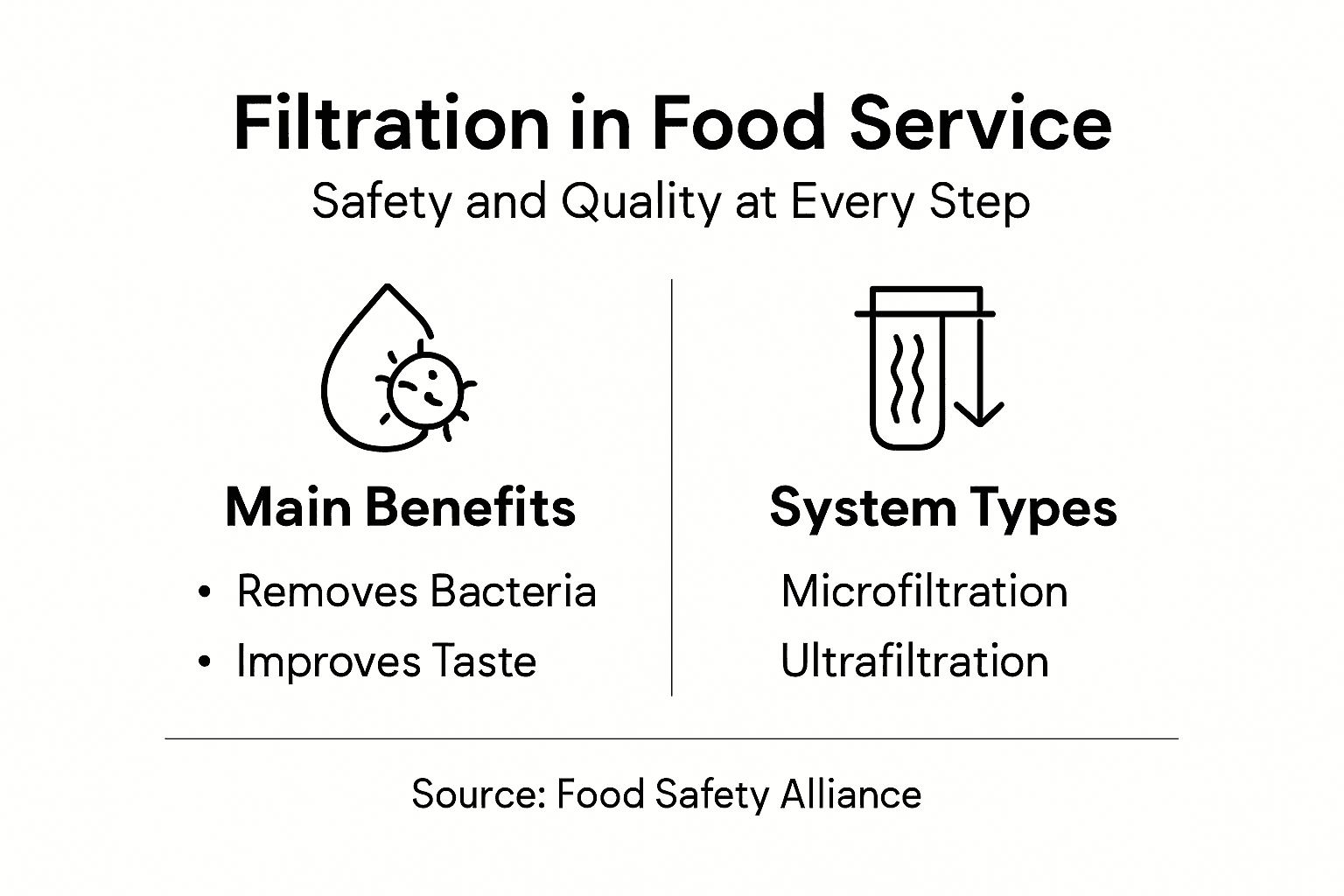
- Microfiltration: Removes bacteria and larger particulate matter
- Ultrafiltration: Concentrates proteins and separates complex molecular structures
- Nanofiltration: Eliminates small molecular contaminants
- Reverse Osmosis: Provides comprehensive water purification
Ultrafiltration membrane technologies represent a particularly advanced approach in food processing. These systems offer significant advantages, including gentle product treatment, reduced energy consumption, and precise molecular separation. Specialized membrane materials like polyacrylonitrile and polyether sulfone enable sophisticated filtration processes across various food service applications.
Technical Characteristics of these filtration systems vary based on their specific pore sizes and intended applications. Dairy, juice, and beverage industries particularly benefit from these advanced separation techniques, which help maintain product quality, extend shelf life, and ensure microbiological safety.
Each filtration method serves unique operational needs, from removing microscopic contaminants to concentrating specific protein compounds. Restaurant owners and food manufacturers must carefully select filtration systems that align with their specific product requirements and safety standards.
Here’s a comparison of the main food service filtration methods and their unique business advantages:
| Filtration Type | Primary Application | Benefit for Operations |
|---|---|---|
| Microfiltration | Removes bacteria and particles | Improves product hygiene |
| Ultrafiltration | Protein concentration | Enhances nutritional quality |
| Nanofiltration | Small contaminant removal | Supports regulatory compliance |
| Reverse Osmosis | Purifies water | Reduces water treatment costs |
Pro tip: Consult with filtration technology experts to determine the most appropriate system for your specific food service operation’s unique needs.
How Filtration Enhances Food and Beverage Quality
Filtration processes play a critical role in transforming raw ingredients into high-quality, safe food and beverage products. By systematically removing contaminants, filtration ensures that consumers receive products that meet rigorous quality and safety standards.
Key enhancements provided by advanced filtration include:
- Elimination of harmful microorganisms
- Removal of unwanted particles affecting taste and appearance
- Prevention of chemical contaminant buildup
- Improvement of overall product sensory attributes
- Extension of product shelf life
Sensory Quality Improvements are particularly significant. Effective filtration systems directly impact product taste, color, and consistency by removing elements that could compromise organoleptic characteristics. This process ensures that beverages maintain their intended flavor profile and visual appeal.

Beyond taste and appearance, filtration serves critical safety functions. By systematically removing bacteria, mold, yeast, and potential chemical residues, food service operations can dramatically reduce the risk of contamination. This proactive approach not only protects consumer health but also helps businesses maintain compliance with stringent food safety regulations.
The complex filtration process involves multiple precision techniques that work together to achieve comprehensive product purification. Different filtration methods target specific molecular structures, ensuring that each food or beverage product receives tailored treatment designed to optimize its unique quality characteristics.
This summary highlights how advanced filtration boosts quality and compliance in food service environments:
| Enhancement Area | Filtration Impact | Business Value |
|---|---|---|
| Sensory Quality | Improves taste, color, and texture | Attracts repeat customers |
| Microbial Safety | Eliminates harmful organisms | Prevents recalls and fines |
| Shelf Life | Extends product freshness | Reduces waste and losses |
| Compliance | Supports safety protocols | Simplifies regulatory inspections |
Pro tip: Invest in regular filtration system maintenance and professional assessments to consistently ensure optimal food and beverage quality.
Health Compliance and Safety Regulations Explained
Food service filtration compliance represents a complex framework of regulatory requirements designed to ensure consumer safety and product quality. Navigating these regulations demands meticulous attention to detail and comprehensive understanding of multiple safety standards across different food processing environments.
Key regulatory compliance requirements include:
- Adherence to HACCP (Hazard Analysis and Critical Control Points) principles
- Validation of filtration system effectiveness
- Regular monitoring and documentation
- Comprehensive hazard prevention strategies
- Verification of food contact material safety
Regulatory Frameworks demand rigorous validation processes. Filtration technology standards require food service operators to demonstrate that their filtration systems effectively remove potential contaminants and meet specific safety criteria. This includes comprehensive assessments of filter materials, placement, and ongoing maintenance protocols.
The compliance landscape involves multiple layers of scrutiny, encompassing microbiological testing, chemical residue analysis, and equipment performance evaluations. Food service businesses must develop systematic approaches that not only meet minimum regulatory requirements but also proactively address potential contamination risks.
Global regulatory bodies continuously evolve their standards, requiring food service professionals to remain adaptable and informed. Successful compliance demands a holistic approach that integrates technological capabilities, procedural rigor, and ongoing staff training.
Pro tip: Develop a comprehensive documentation system that tracks filtration system performance, maintenance records, and regulatory compliance to streamline potential inspection processes.
Protecting Equipment and Reducing Operating Costs
Efficient filtration strategies represent a critical approach to managing operational expenses in food service environments. By implementing sophisticated filtration systems, businesses can simultaneously protect expensive equipment and dramatically reduce long-term maintenance and replacement costs.
Key economic benefits of advanced filtration include:
- Preventing equipment fouling and premature wear
- Reducing frequency of mechanical repairs
- Lowering energy consumption
- Minimizing production interruption risks
- Extending equipment operational lifespan
- Improving overall process efficiency
The economic impact of strategic filtration extends beyond immediate equipment protection. Systematic filtration processes help businesses maintain consistent production quality while simultaneously reducing operational overhead. By preventing particulate buildup and potential contamination, food service operations can avoid costly equipment breakdowns and maintain seamless production workflows.
Technical interventions such as regular filter maintenance, precision screening, and proactive monitoring create a comprehensive defense mechanism. These approaches not only protect mechanical systems but also optimize performance metrics, ensuring that every component operates at peak efficiency. Intelligent filtration strategies transform equipment maintenance from a reactive expense to a strategic investment in long-term operational reliability.
Pro tip: Develop a structured preventative maintenance schedule that includes regular filtration system assessments and preemptive component replacements to maximize equipment longevity and minimize unexpected operational disruptions.
Elevate Food Safety and Quality with Advanced Filtration Solutions
Ensuring the highest standards of food safety and quality starts with reliable filtration that removes contaminants and protects every stage of your process. This article highlights the critical role filtration plays in eliminating microorganisms, chemical residues, and particulate matter to safeguard consumer health and enhance product consistency. If you are looking to maintain excellence in your food service operations, it is crucial to invest in trusted filtration technologies that align with stringent safety protocols such as HACCP.
Discover premium water purification and filtration systems at Coway Water Purifier designed to deliver advanced contaminant removal and superior water quality. Whether you need countertop efficiency or large-capacity filtration, Coway offers solutions with innovative features like UV sanitization to support your commitment to health and safety. Explore our full range in the Uncategorized Archives – Coway Water Purifier and take the next step toward elevating your food service environment’s safety standards today.
Frequently Asked Questions
What is the role of filtration in food service operations?
Filtration plays a crucial role in food service operations by removing unwanted particles, contaminants, and potential hazards from liquids and food products, thereby maintaining safety and quality standards.
How does filtration enhance food and beverage quality?
Filtration enhances food and beverage quality by eliminating harmful microorganisms, unwanted particles affecting taste and appearance, and preventing chemical contaminant buildup, which ensures that products meet rigorous safety standards.
What are the main types of food service filtration systems?
The main types of food service filtration systems include microfiltration, ultrafiltration, nanofiltration, and reverse osmosis, each designed for specific purification and quality control challenges in food and beverage production.
How does filtration support compliance with health regulations?
Filtration supports compliance with health regulations by adhering to HACCP principles, validating system effectiveness, monitoring performance, and ensuring the safety of food contact materials, which collectively help maintain consumer safety.
Recommended
- Why Water Purity Matters for Food Businesses – Coway Water Purifier
- Role of Filtration in Health – Why It Matters – Coway Water Purifier
- Role of Filtration Stages: Improving Home Water Safety – Coway Water Purifier
- Role of Microfiltration in Safer Home Water – Coway Water Purifier
- Role of Event Catering in Shaping Luxury Occasions – Winelands Function – For Every Occasion, Your Celebration
