
Uncategorized
Role of Maintenance in Water Purifiers: Complete Guide
Oct
Did you know over 60 percent of household water purifier breakdowns are caused by missed or incomplete maintenance? Clean water is something most people take for granted, but the system that delivers it needs regular care to stay efficient and safe. By understanding how proper upkeep protects both your health and your investment, you can avoid expensive repairs and ensure your purifier works perfectly every time.
Table of Contents
- Defining Maintenance In Water Purifiers
- Types Of Maintenance: Preventive And Corrective
- Key Maintenance Processes And Schedules
- Risks Of Neglecting Regular Maintenance
- Best Practices For Maintenance And Service
Key Takeaways
| Point | Details |
|---|---|
| Importance of Maintenance | Regular maintenance is crucial for ensuring the performance and longevity of water purifiers, safeguarding health and water quality. |
| Preventive vs. Corrective Maintenance | Prioritizing preventive maintenance reduces breakdown risks and costs, while corrective maintenance addresses issues after they occur. |
| Structured Maintenance Schedule | Establishing a routine maintenance schedule with weekly, monthly, and quarterly tasks is essential for optimal system performance. |
| Consequences of Neglect | Failing to maintain water purifiers can lead to health hazards, increased contamination risks, and costly repairs. |
Defining Maintenance in Water Purifiers
Maintenance in water purifiers represents a systematic approach to preserving and optimizing your water filtration system’s performance and longevity. Water purifier maintenance is more than just a routine check—it’s a comprehensive strategy designed to ensure consistent water quality, prevent potential system failures, and protect your investment.
According to research from water treatment experts, maintenance encompasses regular, planned activities specifically aimed at preventing breakdowns and guaranteeing water treatment systems operate at peak effectiveness. These activities typically include periodic inspections, filter replacements, component cleaning, and diagnostic assessments that proactively identify potential issues before they escalate into significant problems.
Key maintenance components for water purifiers include:
- Regular filter replacements
- Comprehensive system cleaning
- Performance diagnostics
- Component integrity checks
- Water quality testing
Understanding maintenance isn’t just about technical procedures—it’s about safeguarding your health and ensuring reliable access to clean water. For an in-depth exploration of maintenance strategies, see our guide on understanding maintenance in purifiers.
Types of Maintenance: Preventive and Corrective
Water purifier maintenance is typically categorized into two primary approaches: preventive maintenance and corrective maintenance. These distinct strategies serve different purposes in ensuring the long-term performance and reliability of water purification systems.
According to research from water treatment experts, preventive maintenance aims to minimize potential malfunctions through regular, scheduled inspections and proactive servicing. As documented in water systems research, this approach involves planned activities designed to address potential issues before they escalate. The goal is simple: catch and resolve potential problems early, reducing the likelihood of unexpected system failures and extending the overall lifespan of your water purifier.
Key differences between preventive and corrective maintenance include:
Here’s a comparison of preventive and corrective maintenance approaches for water purifiers:
| Aspect | Preventive Maintenance | Corrective Maintenance |
|---|---|---|
| Timing | Scheduled Routine |
After failure As needed |
| Approach | Proactive Issue avoidance |
Reactive Problem resolution |
| Tasks | Inspections Filter changes System checks |
Repairs Component replacement |
| Impact | Fewer breakdowns Longer lifespan |
Higher risk Potential higher costs |
-
Preventive Maintenance
- Scheduled regular inspections
- Proactive component checks
- Routine filter replacements
- Predictive system monitoring
-
Corrective Maintenance
- Reactive problem resolution
- Repairs after system failure
- Component replacement when broken
- Addressing unexpected performance issues
Corrective maintenance, in contrast, is a reactive approach focused on fixing components after they have failed. While less ideal, it remains a necessary strategy when unexpected issues arise. Pro tip: Investing more time in preventive maintenance can significantly reduce the frequency and cost of corrective interventions. For a comprehensive exploration of maintenance strategies, check out our guide on understanding maintenance in purifiers.
Key Maintenance Processes and Schedules
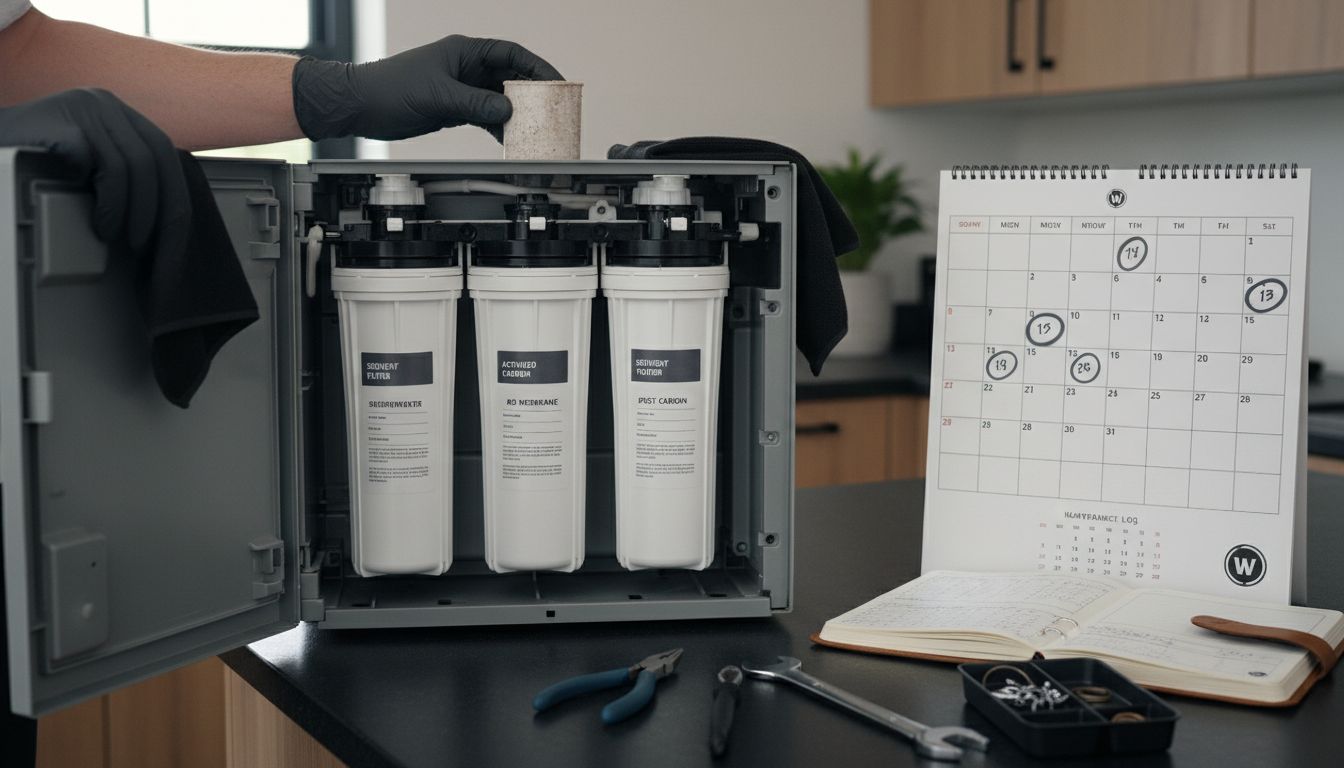
Maintaining a water purifier requires a structured approach that combines systematic processes and strategic scheduling. Water system maintenance is not a one-time event but a continuous commitment to ensuring optimal performance and water quality.
According to research from water care services, key maintenance processes encompass several critical activities. These include comprehensive filter cleaning, detailed membrane servicing, and meticulous inspections of essential components like pumps and valves. By establishing a routine water moving program, you can significantly reduce contamination risks and maintain consistent system efficiency.
Recommended Maintenance Schedule:
-
Weekly Tasks
- Visual system inspection
- Check for water leaks
- Verify water pressure
- Clean external surfaces
-
Monthly Tasks
- Detailed filter examination
- Replace pre-filters
- Check water quality indicators
- Sanitize external connections
-
Quarterly Tasks
- Comprehensive membrane cleaning
- Valve and pump performance assessment
- Detailed system diagnostics
- Water quality comprehensive testing
Maintaining a proactive maintenance schedule is your best defense against potential system failures. For more detailed insights into maintenance strategies, explore our guide on understanding maintenance in purifiers. Regular attention ensures your water purifier continues delivering clean, safe water with maximum reliability.
Risks of Neglecting Regular Maintenance
Water purifier maintenance is not optional—it’s a critical investment in your health and system longevity. Neglecting regular maintenance transforms a precision water filtration system into a potential health hazard and financial burden.
According to the Centers for Disease Control, inadequate maintenance can lead to severe consequences, including valve failures that dramatically increase contamination risks. These failures can create environments conducive to dangerous bacterial growth, such as Legionella, which poses significant health threats to users. The consequences extend beyond immediate health risks, potentially compromising the entire water purification system’s effectiveness and reliability.
Potential Risks of Maintenance Neglect:
- Reduced water quality and purity
- Increased bacterial contamination
- Accelerated system component degradation
- Higher likelihood of expensive emergency repairs
- Potential health hazards from compromised water filtration
- Shortened overall water purifier lifespan
The financial implications of neglecting maintenance are substantial. What might seem like a minor inconvenience or cost-saving measure can quickly escalate into significant expenses. A small, unaddressed issue can trigger a cascade of system failures, potentially requiring complete water purifier replacement. For a comprehensive understanding of maintenance strategies that protect your investment, explore our guide on understanding maintenance in purifiers. Your water purifier is more than an appliance—it’s a critical guardian of your family’s health.
Best Practices for Maintenance and Service
Water purifier maintenance is a precision process that requires strategic planning, consistent execution, and expert knowledge. Successful maintenance goes far beyond simple filter replacements—it’s about creating a comprehensive approach to system health and water quality.
According to water care services research, implementing best practices involves three critical dimensions: preventive maintenance scheduling, real-time system monitoring, and utilizing certified replacement components. Developing a robust water quality management plan is essential, which includes routine system flushing, meticulous filter maintenance, and systematic performance tracking.
Key Best Practices for Water Purifier Maintenance:
-
Proactive Monitoring
- Regular performance diagnostics
- Real-time system health tracking
- Predictive maintenance indicators
- Early warning detection systems
-
Quality Component Management
- Use manufacturer-certified replacement parts
- Maintain original system specifications
- Document component replacement history
- Verify component compatibility
-
Professional Service Integration
- Annual professional system inspections
- Comprehensive diagnostic evaluations
- Expert troubleshooting
- Technical performance optimization
Maintaining your water purifier is an investment in long-term reliability and water quality. Small, consistent efforts can prevent significant future complications. For deeper insights into maintenance strategies, check out our guide on understanding maintenance in purifiers. Your commitment today ensures clean, safe water tomorrow.
Keep Your Water Pure and Your Home Safe with Expert Maintenance Solutions
Understanding the role of maintenance in water purifiers is essential to protecting your family from health risks and costly repairs. The article highlights critical challenges such as avoiding bacterial contamination, preventing valve failures, and ensuring your system runs efficiently through preventive care. Neglecting these maintenance tasks can lead to poor water quality and expensive emergency fixes. By prioritizing scheduled inspections, filter replacements, and professional service integration, you can enjoy peace of mind knowing your water purifier is safeguarding your health.
Discover reliable maintenance plans and advanced water purification systems designed to deliver consistent pure water every day. Explore the Uncategorized Archives to learn more about the best practices and how modern Coway purifiers simplify upkeep.
Don’t wait until problems arise—take proactive steps now. Visit Coway Water Purifier and see our wide selection of expertly engineered water purifiers featuring advanced filtration technology and comprehensive service options. Start protecting your home and health today with thorough maintenance support you can trust. Get yours now and experience clean water without compromise.
Frequently Asked Questions
What is the importance of maintenance in water purifiers?
Maintenance is crucial for ensuring optimal performance, consistent water quality, and longevity of water purifiers. It prevents system failures, reduces contamination risks, and safeguards health by ensuring reliable access to clean water.
What are the key components of water purifier maintenance?
Key components include regular filter replacements, system cleaning, performance diagnostics, component integrity checks, and water quality testing. These activities help maintain the effectiveness of the purification system.
How often should I perform maintenance on my water purifier?
It’s recommended to follow a structured maintenance schedule: weekly inspections, monthly filter replacements, and quarterly detailed system diagnostics. This routine helps identify issues early and maintains system efficiency.
What are the risks of neglecting regular maintenance for water purifiers?
Neglecting maintenance can result in reduced water quality, increased bacterial contamination, accelerated component degradation, more frequent breakdowns, and costly repairs. It can also pose significant health hazards if the water filtration system is compromised.
Recommended
- Understanding the Role of Maintenance in Purifiers – Coway Water Purifier
- 7 Essential Steps for Your Purifier Maintenance Checklist – Coway Water Purifier
- Understanding the Role of Service in Purifier Lifespan – Coway Water Purifier
- Essential Boiler Maintenance Checklist for Homeowners – Skan Plumbing & Heating
- Water Heater Flushing: Complete Guide to Key Benefits – North End Plumbing, Heating and Air
