
Uncategorized
7 Essential Water Purifier Maintenance Tips for Homeowners
Oct
Did you know that over 2 billion people worldwide still lack access to safe drinking water? Even with a reliable purifier at home, ongoing care is critical to keep your water truly clean. A neglected filter or dusty exterior can put your family’s health at risk. Simple, consistent maintenance not only protects your household but also keeps your water purifier running at its best for years to come.
Table of Contents
- 1. Clean The Water Purifier Exterior Regularly
- 2. Replace Filters According To Manufacturer Guidelines
- 3. Sanitize Water Storage Tanks Monthly
- 4. Check For Leaks And Drips Frequently
- 5. Monitor Water Quality And Taste Changes
- 6. Schedule Professional Servicing Annually
- 7. Store And Use The Water Purifier Properly
Quick Summary
| Takeaway | Explanation |
|---|---|
| 1. Regularly clean the purifier’s exterior. | Keeping the exterior clean prevents contaminants and maintains optimal performance. Use mild detergents and microfiber cloths for safety. |
| 2. Replace filters as specified by the manufacturer. | Scheduled filter replacements ensure effective contaminant removal and protect health. Follow guidelines to maintain water quality. |
| 3. Sanitize water storage tanks every month. | Monthly sanitization prevents harmful bacteria and maintains safe drinking water. Use food-grade solutions and follow proper procedures. |
| 4. Check for leaks at connection points frequently. | Regular inspections help catch leaks early, preventing costly damage and ensuring system efficiency. Conduct monthly visual checks. |
| 5. Schedule annual professional servicing. | Annual checkups by certified technicians enhance system performance and catch potential issues before they escalate. Book during low usage times. |
1. Clean the Water Purifier Exterior Regularly
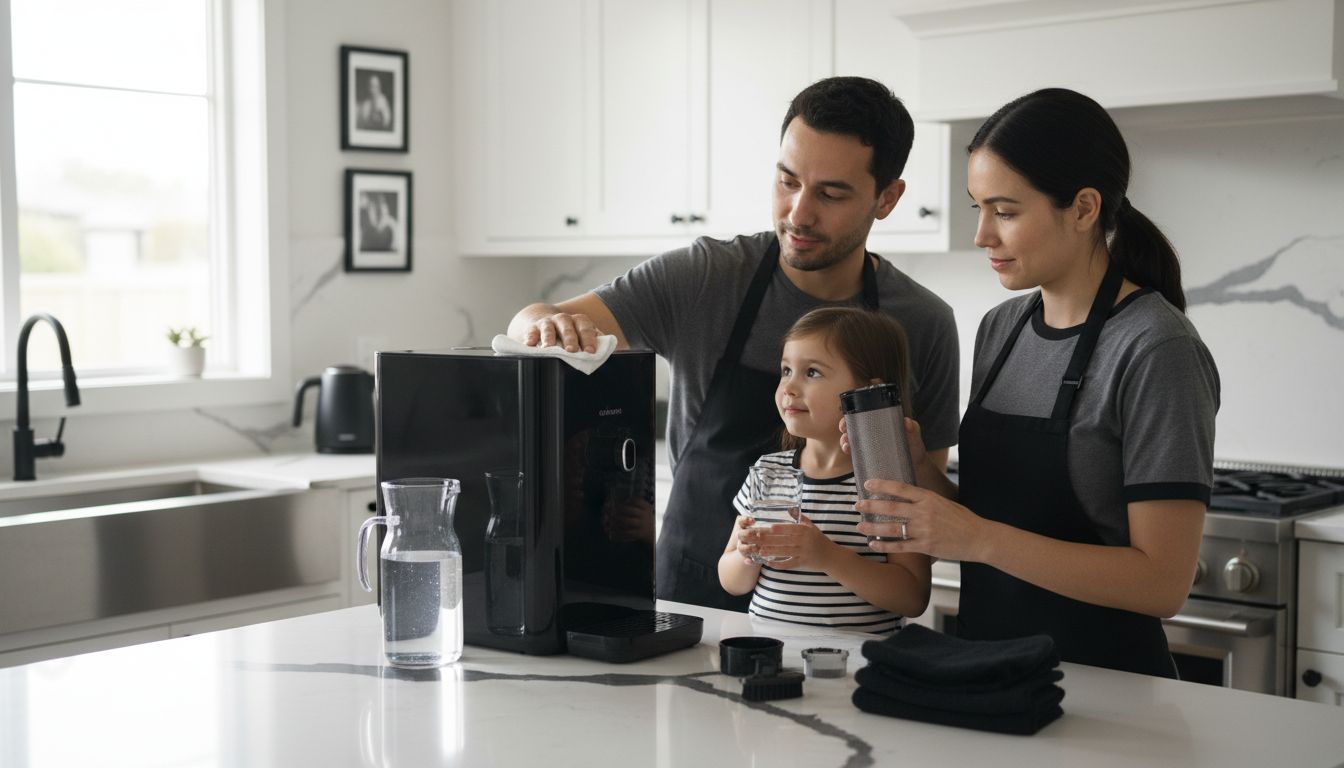
Your water purifier works hard to keep your drinking water clean and safe. But many homeowners forget that maintaining the exterior is just as crucial as caring for the internal filtration system. Regular cleaning prevents dirt, dust, and potential contaminants from compromising your appliance’s performance.
According to the CDC’s guidelines on household water treatment, maintaining the cleanliness of your water purifier’s exterior is essential to prevent contamination and ensure water treatment effectiveness. This means more than just a quick wipe down.
Start by unplugging your water purifier and gathering soft microfiber cloths, mild non abrasive detergent, and warm water. Avoid harsh chemicals or abrasive sponges that could scratch or damage the surface. Gently wipe down all exterior surfaces including the sides, control panel, and dispensing area. Pay special attention to areas where dust and grime tend to accumulate.
A weekly cleaning routine will help you:
- Prevent bacterial growth
- Maintain the appliance’s aesthetic appearance
- Extend the overall lifespan of your water purifier
- Ensure optimal performance
Pro tip: Clean your water purifier’s exterior when it’s least likely to disrupt your daily water access perhaps on a weekend morning or during a time when water usage is low. By making this a consistent habit, you protect your investment and guarantee cleaner, safer drinking water for your household.
2. Replace Filters According to Manufacturer Guidelines
Water purifier filters are the unsung heroes of your home water system working silently to remove contaminants and ensure clean drinking water. Replacing these filters on schedule is not just recommended it is essential for maintaining water quality and protecting your health.
According to the CDC’s guidelines on household water treatment, regularly replacing filters as per manufacturer instructions prevents the accumulation of harmful contaminants. Think of your water filter like the oil filter in your car continuous use without replacement leads to decreased performance and potential system damage.
Each water purifier model has unique filter replacement requirements based on factors like water usage water quality and filter type. Your manufacturer will provide a specific timeline typically ranging from 3 to 12 months. Some advanced water purifiers even include filter replacement indicators or digital reminders to help you track.
To stay on top of filter maintenance:
- Mark your calendar with filter replacement dates
- Set digital reminders on your smartphone
- Keep replacement filters on hand before the current ones expire
- Check your water purifier’s user manual for precise guidelines
Pro tip: Do not wait for a noticeable change in water taste or quality. Proactive filter replacement ensures consistent water purity and protects your family’s health. By following manufacturer guidelines you maximize your water purifier’s efficiency and extend its operational lifespan.
3. Sanitize Water Storage Tanks Monthly
Water storage tanks are more than just containers they are critical guardians of your household water supply. Regular sanitization is not optional but a fundamental health protection strategy that prevents harmful bacterial growth and ensures your drinking water remains pure.
According to the CDC’s guidelines on household water treatment, regular cleaning and sanitization of water storage tanks help prevent microbial growth and maintain water supply safety. Imagine microscopic bacteria multiplying silently in your storage tank transforming what should be clean water into a potential health hazard.
A monthly sanitization routine involves completely draining the tank using a chlorine based solution specifically designed for water systems. This process eliminates biofilm bacterial colonies and mineral deposits that can accumulate over time. Temperature and water quality play significant roles in determining bacterial growth rates making consistent maintenance crucial.
To effectively sanitize your water storage tank:
- Use food grade sanitizing solutions
- Wear protective gloves and eyewear
- Follow manufacturer recommended sanitization procedures
- Thoroughly rinse the tank after cleaning
- Allow complete drying before refilling
Pro tip: Document your sanitization schedule and keep maintenance records. This not only helps you track your water tank’s health but also provides valuable information if you encounter any water quality issues in the future.
4. Check for Leaks and Drips Frequently
A seemingly minor water leak can quickly escalate into a significant problem for your water purification system. Small drips are not just annoying they represent potential damage to your equipment and home infrastructure.
According to the EPA’s best management practices, regularly inspecting your water purifier for leaks and drips can prevent water waste and potential system damage. Water leaks might appear insignificant but can lead to substantial issues if left unchecked.
Leaks typically occur around connection points connections between pipes water storage tanks and filtration units. These vulnerable areas require consistent monitoring. Visual inspection combined with periodic tactile checks helps identify potential problems before they become expensive repairs. Pay special attention to areas near seals joints and connection points where water might accumulate or drip.
To effectively monitor your water purifier for leaks:
- Check underneath and around the entire unit monthly
- Look for water stains or moisture accumulation
- Feel connection points for unexpected dampness
- Listen for unusual sounds that might indicate water movement
- Use a dry paper towel to test potential leak areas
Pro tip: Create a monthly leak inspection checklist. This simple practice can save you hundreds of dollars in potential water damage repairs and help maintain your water purifier in optimal condition. Quick detection means quick resolution.
5. Monitor Water Quality and Taste Changes
Your water purifier works tirelessly to provide clean drinking water but sometimes subtle changes can signal underlying issues. Water taste and quality are your first line of defense in detecting potential filtration problems.
According to the CDC’s guidelines on household water treatment, monitoring changes in water quality and taste can indicate critical issues with your water purification system. Think of these changes as warning signals your water purifier sends when something needs attention.
Unusual taste can manifest in several ways chlorine like flavors metallic undertones or unexpected sweetness. These variations might indicate filter degradation mineral buildup or potential contamination. Professional water quality experts recommend conducting periodic sensory evaluations comparing current water taste with your system’s baseline performance.
To effectively monitor water quality:
- Perform weekly taste tests
- Use clear glasses to visually inspect water clarity
- Note any sudden color changes
- Track unusual odors
- Compare water taste across different dispensing points
Pro tip: Keep a water quality journal documenting your observations. This simple practice helps you track gradual changes and provides valuable information if professional maintenance becomes necessary. Early detection means preventing potential health risks and maintaining your water purifier’s optimal performance.
6. Schedule Professional Servicing Annually
Your water purifier is a sophisticated piece of technology that requires expert attention beyond routine maintenance. Annual professional servicing is like an annual health checkup for your water filtration system protecting your investment and ensuring optimal performance.
According to the CDC’s guidelines on household water treatment, scheduling yearly maintenance can significantly enhance the longevity and performance of your water purification system. Think of professional servicing as preventive care that catches potential issues before they become expensive repairs.
Professional technicians conduct comprehensive assessments that go beyond surface level cleaning. They perform intricate diagnostic tests checking internal components water pressure sensor calibration and comprehensive system performance. These experts use specialized equipment to detect microscopic issues that might escape untrained eyes detecting early signs of wear degradation or potential contamination risks.
To maximize your annual professional servicing:
- Choose certified water purifier technicians
- Request a detailed diagnostic report
- Ask about recommended component replacements
- Discuss your water usage patterns
- Review maintenance history
Pro tip: Book your annual service during a low water usage period such as early morning or during a weekday when household water demand is minimal. This ensures minimal disruption to your daily routine while keeping your water purifier in peak condition.
7. Store and Use the Water Purifier Properly
Your water purifier is a precision instrument that requires thoughtful handling and strategic placement. Proper storage and usage are not just recommendations they are critical to maintaining water quality and system performance.
According to the CDC’s guidelines on household water treatment, following correct procedures for storing and using your water purifier prevents contamination and ensures optimal performance. Your device is more than an appliance it is a guardian of your family’s health.
Location matters significantly when storing your water purifier. Choose a cool dry area away from direct sunlight heat sources and potential chemical contamination. Avoid placing the unit near cleaning supplies cooking areas or spaces with high humidity. Temperature and environmental conditions directly impact your purifier’s internal components and filtration effectiveness.
To ensure proper water purifier storage and usage:
- Keep the unit on a stable flat surface
- Maintain at least 6 inches of clearance around the device
- Protect from direct sunlight and temperature extremes
- Ensure children and pets cannot accidentally knock over the unit
- Disconnect during extended periods of non use
Pro tip: Develop a consistent interaction routine with your water purifier. Treat it like a valuable piece of health technology checking its positioning cleanliness and performance regularly. This mindful approach transforms maintenance from a chore into a proactive health strategy.
This table summarizes key maintenance strategies for water purifiers, highlighting the main steps, actions, and benefits.
| Main Step | Key Points & Actions | Benefits/Outcomes |
|---|---|---|
| Clean the Exterior | Use microfiber cloths, mild detergent, and warm water; avoid harsh chemicals; clean all surfaces. | Prevents bacterial growth, maintains appearance, extends lifespan. |
| Replace Filters | Follow manufacturer guidelines for replacement timelines; mark calendar; set reminders; keep spare filters. | Ensures water quality, protects health, maximizes efficiency. |
| Sanitize Water Storage Tanks | Drain tank; use chlorine-based solution; wear protective gear; follow manufacturer procedures. | Prevents bacterial growth, ensures water safety. |
| Check for Leaks and Drips | Inspect monthly; pay attention to connection points; use a paper towel to detect moisture. | Prevents water waste, avoids system damage. |
| Monitor Water Quality and Taste | Perform taste tests weekly; use clear glasses for inspection; track odors and color changes. | Detects filtration issues early, maintains water purity. |
| Schedule Professional Servicing | Hire certified technicians annually; obtain a diagnostic report; discuss water usage. | Enhances system longevity, prevents costly repairs. |
| Store and Use Properly | Place in a cool, dry environment; keep away from sunlight and chemicals; disconnect when not in use. | Prevents contamination, ensures optimal performance. |
Keep Your Water Purifier Performing at Its Best Every Day
Maintaining your water purifier is a crucial step to ensure clean and safe water for your family. This article highlights common challenges like timely filter replacement, regular sanitization, and leak detection that many homeowners face. Taking control of these key maintenance areas protects your health and extends the life of your purifier. If you want a solution designed with advanced filtration and easy maintenance in mind, explore trusted options crafted to simplify your routine and guarantee pure water.
Discover a wide selection of premium water purifiers at Coway Water Purifier that blend innovation with reliability. Learn practical tips and insights in our Uncategorized Archives – Coway Water Purifier to enhance your purifier care. Ready to upgrade your water experience and start benefiting from expert-backed products today? Visit https://cowayswaterpurifier.com now and take the first step toward a healthier home.
Frequently Asked Questions
How often should I clean the water purifier exterior?
Regularly clean the exterior of your water purifier at least once a week. Use a soft microfiber cloth and mild detergent to wipe down all surfaces to prevent dirt and bacteria buildup.
When should I replace the filters in my water purifier?
Replace the filters in your water purifier as per the manufacturer’s guidelines, usually every 3 to 12 months. Mark your calendar with the replacement dates to ensure consistent water quality.
What steps should I take to sanitize the water storage tank?
Sanitize your water storage tank monthly by draining it and using a food-grade chlorine solution. Follow the manufacturer’s recommended sanitization procedures to eliminate bacteria and biofilm.
How can I check for leaks in my water purifier?
Check for leaks in your water purifier by inspecting it monthly for water stains or moisture accumulation around connection points. Use a dry paper towel to test these areas and look for any signs of dampness.
What should I do if I notice changes in the taste or quality of my water?
If you notice changes in taste or quality, perform weekly taste tests and document any unusual flavors or visual changes. This proactive approach will help identify potential filtration problems early.
Why is professional servicing important for my water purifier?
Schedule annual professional servicing for your water purifier to ensure optimal performance and longevity. Technicians can catch potential issues early and carry out detailed inspections that go beyond everyday maintenance.
Recommended
- 7 Essential Steps for Your Purifier Maintenance Checklist – Coway Water Purifier
- Essential Water Purification Maintenance Schedule for 2025 – Coway Water Purifier
- 7 Key Benefits of Water Purification for Your Home – Coway Water Purifier
- Understanding the Role of Maintenance in Purifiers – Coway Water Purifier
